
Cyberbullying can be devastating. You deserve support and there are practical steps to stop it.
Cyberbullying can affect anyone, but it is especially harmful when it targets young people or continues over time. It includes harassment, humiliation, threats, spreading rumours and sharing embarrassing content. If this is happening to you or someone you care about, help is available.
This guide focuses on practical steps. If anyone is in danger or feels unable to cope, contact emergency services or a crisis line in your country.
- Document, report and block.
- Involve schools, employers or police when needed.
- Seek support from people you trust.
Steps
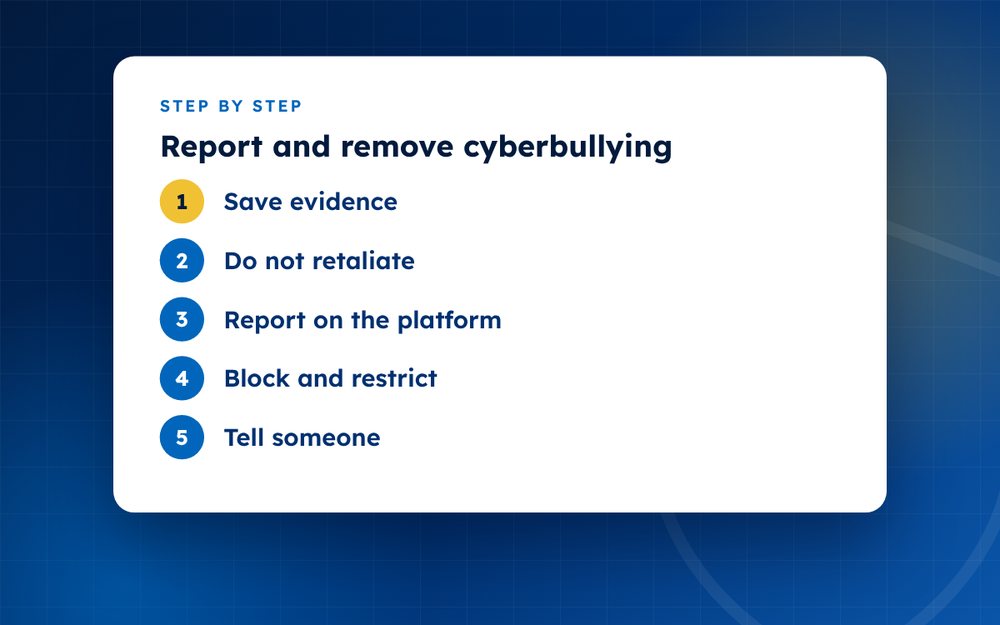
- Save evidenceScreenshots with dates.
- Do not retaliateIt can make things worse.
- Report on the platformUse harassment and bullying options.
- Block and restrictLimit contact.
- Tell someoneA trusted adult, friend or professional.
- Involve the school or employerThey may have policies.
- Contact the police for threatsSerious harassment can be a crime.
- Request search removalIf posts appear in Google, ask for removal when eligible.
Save evidence, then act
Take screenshots of the messages, posts, profiles and dates. Save links. Do this before you report or block, because content may disappear. Store the evidence securely, and share it only with people who need it, such as a trusted adult, a school, a platform or the police.
Use platform tools
- Report posts, comments and accounts for bullying or harassment
- Block or restrict the account
- Turn on filters for offensive words and limit who can message you
- Review privacy settings and remove personal information from public profiles
- Ask trusted friends to report as well
Involving others
Tell someone you trust, such as a parent, friend, teacher or manager. If bullying involves a school or workplace, report it to the person responsible for such matters, and ask about their policy. If it includes threats, sexual content, stalking or hate crimes, report to the police.
Looking after yourself
Take breaks from the platforms involved. Talk to a friend or a counsellor. Many countries have helplines for people who are being bullied online. You are not to blame, and asking for help is a sign of strength.
If you are a parent or teacher
Listen without judgement and thank the young person for telling you. Help them save evidence and report. Avoid taking away their devices as a first response, because it can feel like punishment. Contact the school or relevant authority if the bullying involves classmates, and follow up. Offer emotional support and consider professional help if needed.
Building a safer online environment
- Review privacy settings together
- Talk about what to do if someone is unkind online
- Encourage young people to speak up about problems
- Model respectful behaviour online
- Know where to find local support services
Open conversations make it easier for young people to ask for help early.
If you need help with removals, email us in confidence.
Frequently asked questions
Will the platform remove it?
Usually if it breaks the rules on harassment or bullying. Report each piece of content, include details and keep records. If the platform does not act, escalate through its help forms or ask for advice from a support organisation.
Is it illegal?
Often, especially threats, stalking, harassment and sharing intimate images. Laws differ by country. If you are unsure, ask the police or a legal adviser.
Should I confront the bully?
No. Confronting can make things worse. Block, report and let others who can help handle the situation. If it is someone you know in person, involve a trusted adult or the relevant authority.
Where can I get support?
Local helplines, school counsellors, workplace support services and online organisations offer help. If you do not know where to start, ask a doctor, a teacher or a friend to help you find support.
What if the content is spreading widely?
Report it on every platform, ask friends to help and request search removal if it appears in results. Consider involving a specialist to coordinate takedowns.
What if the bully is anonymous?
Platforms may be able to act on reports without knowing the identity. The police can request information from platforms in serious cases.
Need help with this?
Every situation is different. Email us the details in confidence and we will reply with an honest assessment of what can be done.
Contact us by email Harassment and Doxxing ResponseThis guide is general information, not legal advice. DMCA Reputation is not a law firm.
Related guides
What to Do When You Are Doxxed: A Step-by-Step Guide
What to do when you are doxxed: safety steps, removing personal information, reporting, securing accounts and getting support.
Read the guide · 4 min
How to Handle a Viral Negative Post About You or Your Business
How to handle a viral negative post about you or your business: first response, facts, communication and recovery.
Read the guide · 3 min
How to Respond to a Smear Campaign
How to respond to a smear campaign: document, report, communicate, build positive content and consider legal advice.
Read the guide · 3 min