
A negative post going viral is stressful. Speed and calm matter. Do not delete, argue or panic.
When a negative post about you or your business goes viral, you may feel the urge to act immediately: delete, argue, apologise or explain. Most mistakes in a crisis happen in the first hour. Taking a short pause to think usually leads to a better outcome.
This guide offers a calm, practical approach.
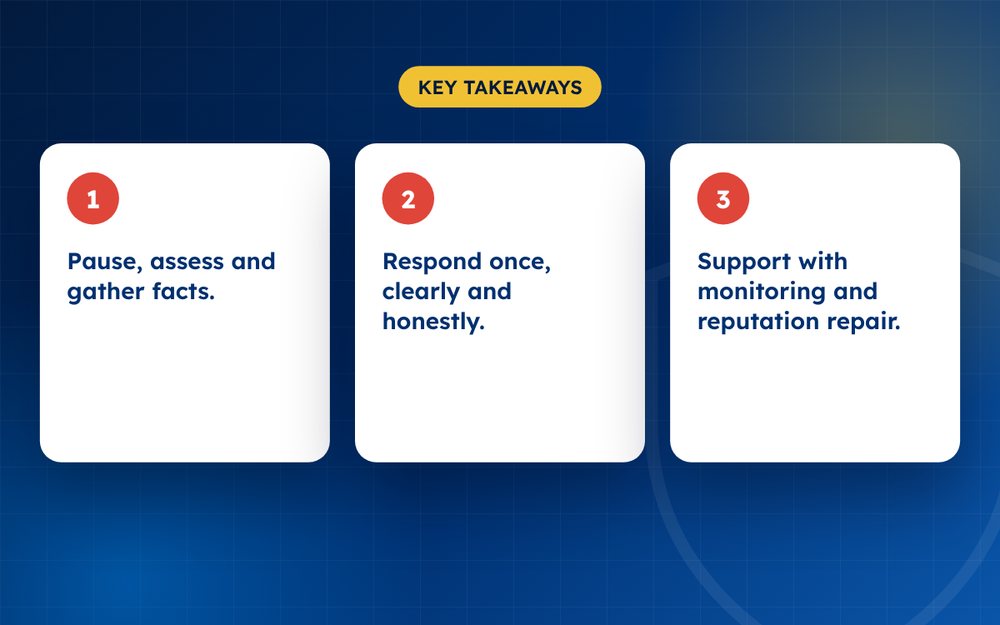
- Pause, assess and gather facts.
- Respond once, clearly and honestly.
- Support with monitoring and reputation repair.
Steps
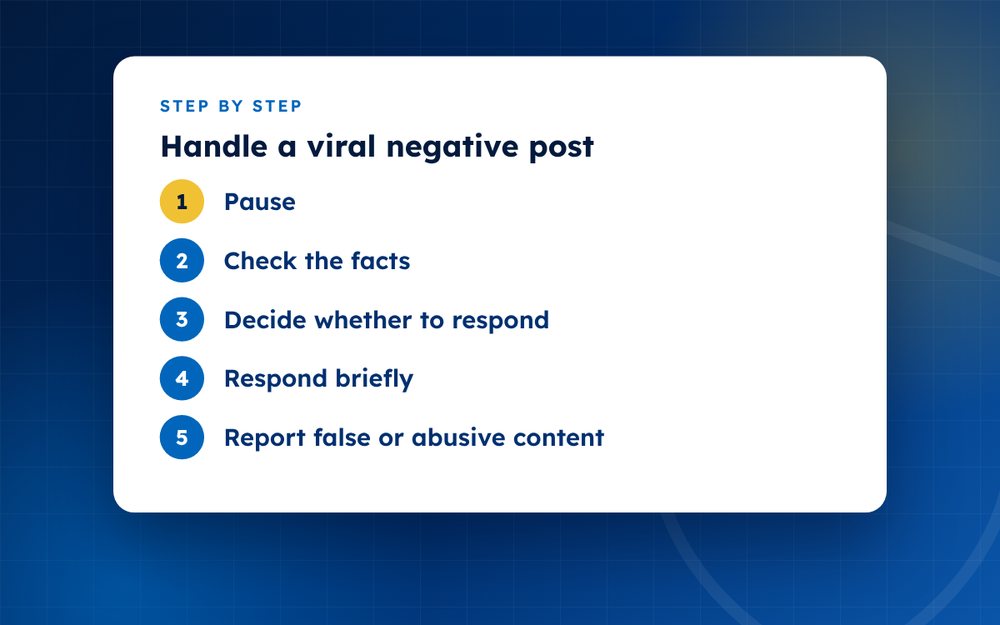
- PauseDo not respond emotionally.
- Check the factsFind out what is true.
- Decide whether to respondNot every post needs a reply.
- Respond brieflyState the facts, take responsibility where due and say what you will do.
- Report false or abusive contentUse platform tools.
- Brief your teamMake sure everyone gives the same message.
- MonitorTrack spread and tone.
- RebuildPublish positive, accurate content afterwards.
The first hour
- Do not post or reply yet
- Take screenshots and save links
- Find out what is true, including what you did or did not do
- Alert the people who need to know, such as colleagues and advisers
- Decide who will speak and who will manage messages
Deciding whether to respond
Not every viral post needs a public reply. If the post is small, inaccurate and unlikely to last, silence may be best. If it concerns safety, health or serious wrongdoing, or if the story is spreading to the press, a response is needed. If you respond, keep it brief, factual and human.
What a good response looks like
Acknowledge the concern, state what you know, say what you are doing about it and give a way to contact you. Take responsibility where it is due. Avoid defensiveness, sarcasm and attacks on the person who posted. If you do not yet know the facts, say that you are looking into it and will update.
Reporting and recovery
Report content that breaks platform rules, such as harassment, private information or false claims about safety. Monitor mentions and comments. After the peak passes, publish positive, accurate content and let your actions show your values. Review what happened and update your crisis plan.
A short crisis plan to prepare now
- Name a person who leads the response
- List who needs to be told and how
- Prepare a holding statement that can be adapted
- Keep a list of contacts for platforms, advisers and the press
- Decide in advance what approvals are needed
- Practice once a year
Having a plan before a crisis reduces stress and speeds up your response.
After the storm
Once the attention fades, review what happened. What was the trigger? How did you respond? What would you do differently? Update your plan, thank those who helped and consider whether any changes to your products, policies or communication would prevent a repeat.
Email us in a crisis and we will respond as soon as we can.
Frequently asked questions
Should I delete my own posts?
Be careful. Deleting posts that are part of the controversy can look like concealment and may fuel more attention. Archive them, consider adding a note and take advice before deleting, particularly if there may be legal consequences.
Should I ignore it?
Sometimes. If the post is minor and not spreading, silence can allow it to fade. If the story is growing or involves serious allegations, a calm response is better.
How long does it last?
Most viral posts peak within days and fade within weeks, but the content can remain in search results. Plan for follow-up work.
Can it be removed?
Only if it breaks platform rules or the law, such as harassment, private information or impersonation. Honest criticism and opinions usually cannot be removed.
Should I contact the person who posted it?
If it is a customer with a genuine complaint, a calm, private message may help. If the person is hostile, avoid contact. Do not offer incentives.
Do I need a professional?
If the situation is serious, involves legal risk or affects your livelihood, yes. A communications adviser and a lawyer can help you respond well.
Need help with this?
Every situation is different. Email us the details in confidence and we will reply with an honest assessment of what can be done.
Contact us by email Crisis ManagementThis guide is general information, not legal advice. DMCA Reputation is not a law firm.
Related guides
What to Do When You Are Doxxed: A Step-by-Step Guide
What to do when you are doxxed: safety steps, removing personal information, reporting, securing accounts and getting support.
Read the guide · 4 min
How to Respond to a Smear Campaign
How to respond to a smear campaign: document, report, communicate, build positive content and consider legal advice.
Read the guide · 3 min
What Is Online Defamation? How to Know If You Have a Case
What is online defamation? How to know if you have a case, the elements involved and what to do first.
Read the guide · 3 min