
Defamation law differs by country, so this is general information, not legal advice. In many places a defamation case requires a false statement of fact that is published and causes harm.
Defamation is a legal term that means different things in different places. This guide gives a general picture, not legal advice. If you are considering action, speak to a lawyer in the country where you or the publisher are based.
Understanding the basic ideas helps you decide whether a negative statement is a legal issue, a platform issue or simply criticism.
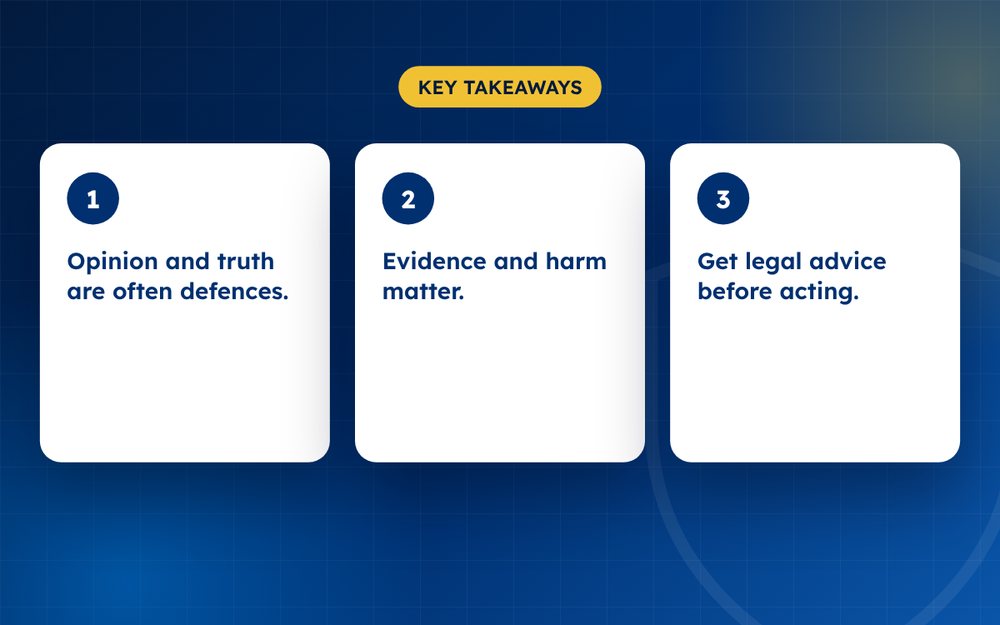
- Opinion and truth are often defences.
- Evidence and harm matter.
- Get legal advice before acting.
Common elements
- A statement of fact, not opinion
- The statement is false
- It was published to others
- It identifies you
- It caused or is likely to cause serious harm
Steps
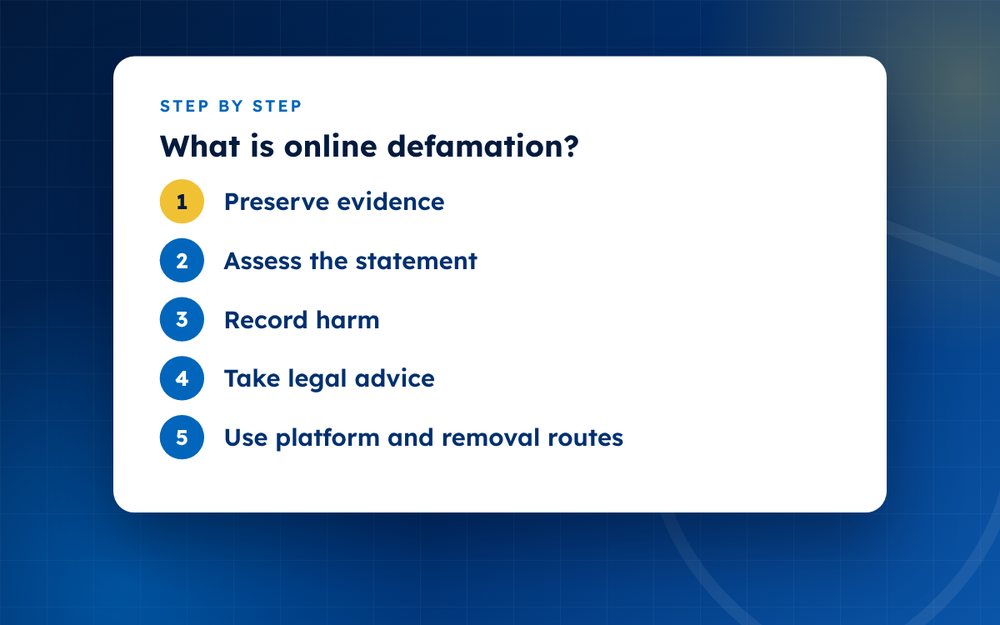
- Preserve evidenceScreenshots, URLs and dates.
- Assess the statementIs it factual or opinion?
- Record harmLost clients, income or distress.
- Take legal adviceA local lawyer can assess.
- Use platform and removal routesReport and request removal.
- Consider alternativesCorrection requests and suppression.
Typical elements
- A statement that is presented as fact
- The statement is false
- It has been communicated to others
- It identifies you
- It has caused, or is likely to cause, serious harm to your reputation
Defences and limits
Truth is a defence in many countries. Honest opinion, fair comment and statements on matters of public interest may also be protected. Some places have short time limits for bringing claims. Others require you to show serious financial harm. These differences are why local advice is essential.
Practical first steps
Save evidence, including links, screenshots and dates. Write down each statement and what is false about it. Record the impact, such as lost clients or cancelled contracts. Avoid replying publicly in a way that could worsen matters. Speak to a lawyer to assess the strength of your case.
Alternatives to court
Many cases are resolved without litigation. You can ask platforms to remove content that breaks their rules, request corrections from publishers, send a letter through a lawyer, publish your own account and build positive content. These routes are often faster and cheaper than court action.
Questions to ask a lawyer
- Do the statements meet the legal test where we are based?
- What are the time limits for a claim?
- What are the likely costs and outcomes?
- Are there cheaper alternatives, such as a correction or a letter?
- What evidence do we need?
- How would the case affect my privacy and reputation?
Preparing these questions helps you get value from a first consultation.
Reputation outside the courtroom
Even if a legal case is not appropriate, you can protect your name by publishing a calm, factual account and by building positive content. Over time, accurate information outweighs false claims in search results and in the minds of readers.
We are not a law firm. We can support the practical work alongside your lawyer.
Frequently asked questions
Is a bad review defamation?
Usually not. A review that describes a genuine experience or expresses an opinion is typically protected. A review that makes false statements of fact, such as accusing you of a crime, may be defamatory. Seek legal advice before acting.
How long do I have to act?
Time limits differ by country and can be short, sometimes a year or less. If you are considering a claim, speak to a lawyer promptly.
Is it costly?
Legal action can be expensive and slow, and the outcome is uncertain. Ask a lawyer about costs and alternatives before you start.
Does it apply to anonymous posts?
Yes, though identifying the author can be hard. Some courts can order platforms to disclose information. A lawyer can advise whether it is realistic.
Can I ask a platform to remove defamatory content?
Platforms often have policies on harassment and false information and may remove content that breaks them. For defamation specifically, many require a court order or a valid legal request.
Does DMCA apply to defamation?
No. DMCA deals with copyright. Using it to remove defamation can be abusive and create legal risks.
Need help with this?
Every situation is different. Email us the details in confidence and we will reply with an honest assessment of what can be done.
Contact us by email Defamation RemovalThis guide is general information, not legal advice. DMCA Reputation is not a law firm.
Related guides
What to Do When You Are Doxxed: A Step-by-Step Guide
What to do when you are doxxed: safety steps, removing personal information, reporting, securing accounts and getting support.
Read the guide · 4 min
How to Handle a Viral Negative Post About You or Your Business
How to handle a viral negative post about you or your business: first response, facts, communication and recovery.
Read the guide · 3 min
How to Respond to a Smear Campaign
How to respond to a smear campaign: document, report, communicate, build positive content and consider legal advice.
Read the guide · 3 min