
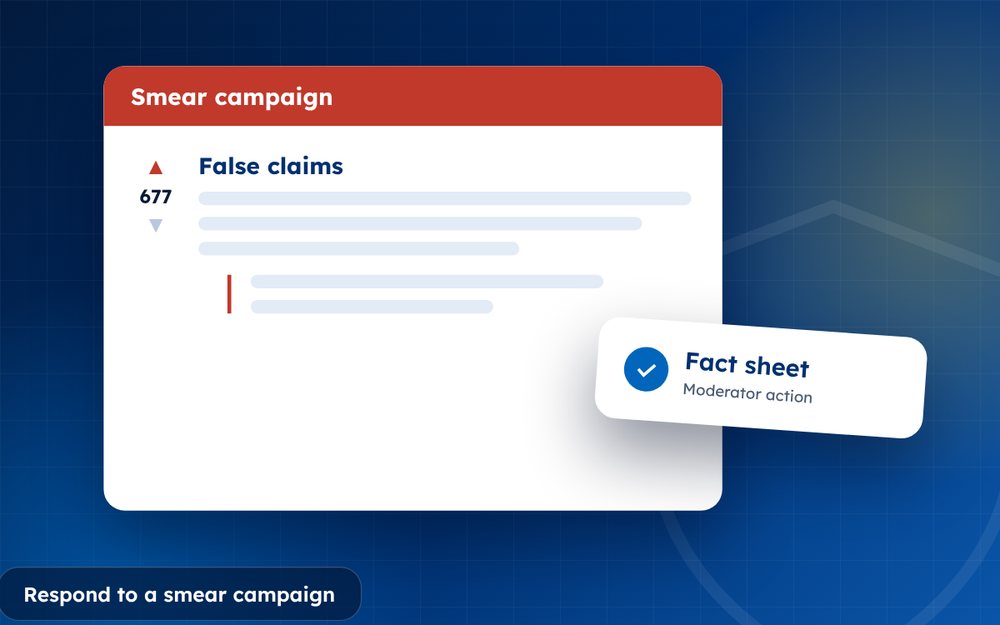
A smear campaign is a coordinated effort to damage your reputation with false or misleading claims. A structured response limits the harm.
A smear campaign is more than a few critical posts. It is a coordinated effort to damage a person or business with false or misleading claims, often repeated across many channels. It may come from a competitor, a former partner or an angry individual.
The aim of the response is to protect your reputation without feeding the campaign.
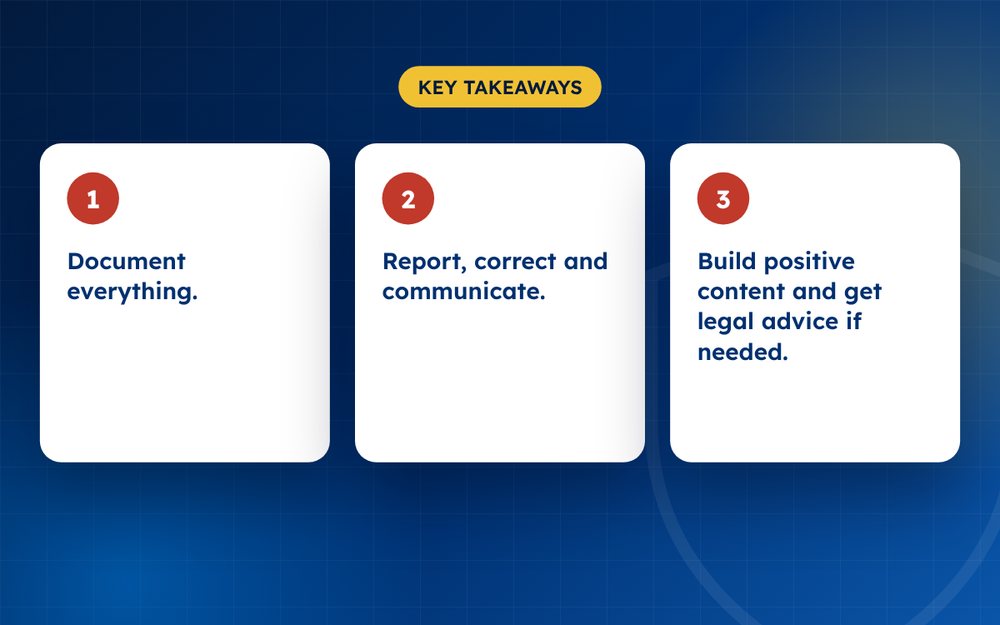
- Document everything.
- Report, correct and communicate.
- Build positive content and get legal advice if needed.
Steps
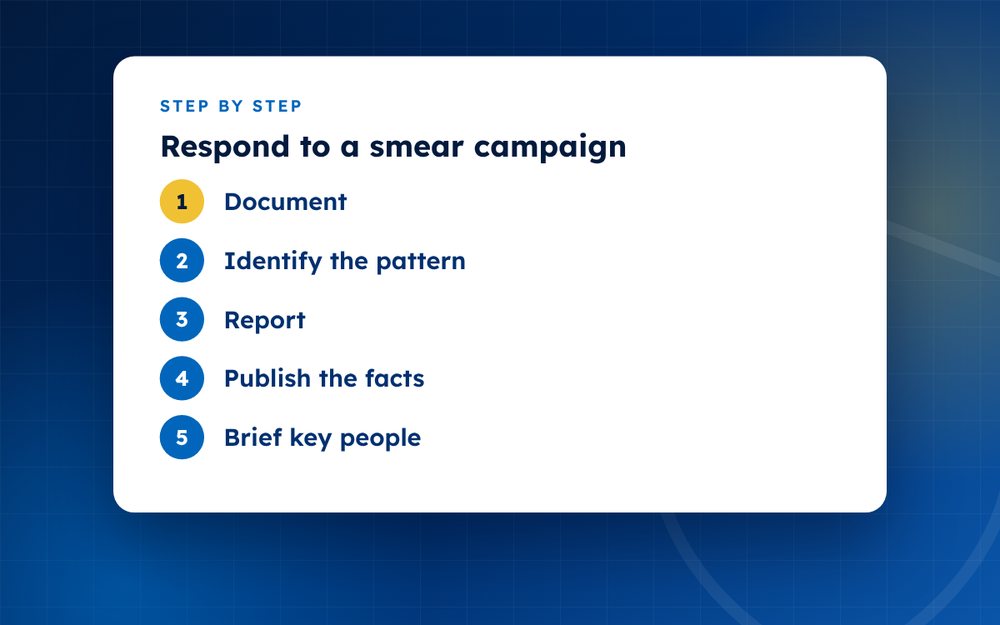
- DocumentCollect posts, accounts and dates.
- Identify the patternLook for coordination or repeated claims.
- ReportUse platform tools for harassment and false information.
- Publish the factsPut a clear statement on your website.
- Brief key peopleTell clients, partners and staff.
- Build positive contentPublish accurate material to dilute results.
- Take legal adviceA lawyer can advise on defamation or harassment.
- MonitorKeep watching for new attacks.
Identify the pattern
Look for repeated claims, similar wording, new accounts, bursts of posts and links between channels. Create a timeline of what appeared where. Record the claims one by one and note which are false, which are exaggerations and which have a basis in fact. This analysis shapes your response.
Take the right actions
- Report content that breaks platform rules, such as harassment, impersonation or fake reviews
- Publish a clear statement of facts on your own website
- Inform key people, such as clients, staff and partners, in a calm, factual way
- Ask trusted people to share accurate information
- Seek legal advice if the claims are defamatory
Do not feed the fire
Responding to every claim can amplify the campaign. Publish one authoritative response, and refer to it. Avoid attacks, speculation about who is behind it and emotional language. A steady, professional tone reassures people and makes the campaign look weaker.
Rebuild
Publish positive, accurate content that shows your work and values. Encourage genuine reviews and testimonials. Monitor for new claims. Over time, strong, truthful content outweighs a campaign of falsehoods.
Protecting your team
A smear campaign can affect employees, partners and family as well as you. Tell them what is happening, give them a short, factual statement and explain how to refer enquiries. Remind them not to engage with attackers online. Support them if they are targeted. A united, calm response protects everyone.
Keeping a record
Maintain a log of every incident, report and response, with dates and links. This helps you show a pattern to platforms, regulators or courts, and it keeps your team aligned. Store it securely, and share it only on a need-to-know basis.
Email us in confidence for help.
Frequently asked questions
Should I reply to each claim?
Usually not. Replying to every claim can amplify them. Publish one clear, factual statement that addresses the main points and refer people to it. Respond individually only when it adds value.
Can I find who is behind it?
Sometimes through patterns or through legal processes. Platforms do not usually share identities, but courts can order disclosure in some cases. A lawyer can advise on whether it is worth pursuing.
Is it illegal?
False and harmful statements can amount to defamation, harassment or unfair competition, depending on the country and the facts. Seek legal advice.
How long does it take to recover?
Months, depending on the scale and your response. Quick action and consistent communication help.
Should I involve the police?
If there are threats, stalking, extortion or other crimes, yes. Provide your evidence and ask what steps they can take.
Can I get help managing it?
Yes. A reputation specialist can monitor, report content and build positive material, working alongside your lawyer. Choose someone who explains their methods clearly.
Need help with this?
Every situation is different. Email us the details in confidence and we will reply with an honest assessment of what can be done.
Contact us by email Smear Campaign DefenceThis guide is general information, not legal advice. DMCA Reputation is not a law firm.
Related guides
What to Do When You Are Doxxed: A Step-by-Step Guide
What to do when you are doxxed: safety steps, removing personal information, reporting, securing accounts and getting support.
Read the guide · 4 min
How to Handle a Viral Negative Post About You or Your Business
How to handle a viral negative post about you or your business: first response, facts, communication and recovery.
Read the guide · 3 min
What Is Online Defamation? How to Know If You Have a Case
What is online defamation? How to know if you have a case, the elements involved and what to do first.
Read the guide · 3 min