
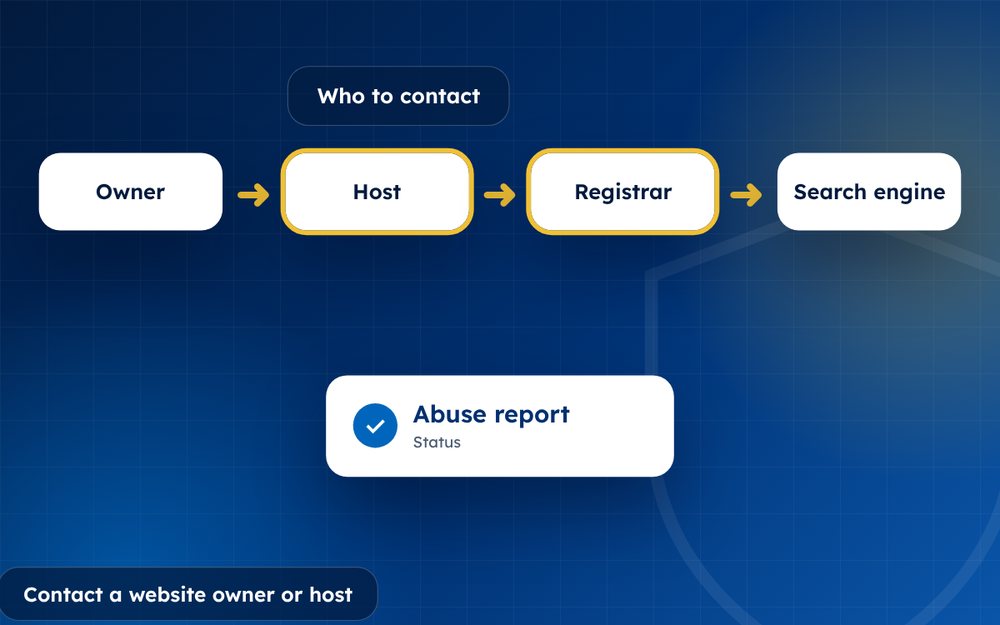
Removing content at the source is the most reliable fix. That means getting the website owner, or its hosting company, to take it down. Here is how to find them and write a request that gets results.
Many content problems are solved not by a clever strategy but by a clear message sent to the right person. The challenge is working out who that person is, because websites are run by owners, hosted by providers, registered through registrars and sometimes protected by content delivery networks.
Each of those companies has its own rules and its own incentives, and a well-aimed message can save weeks of effort.
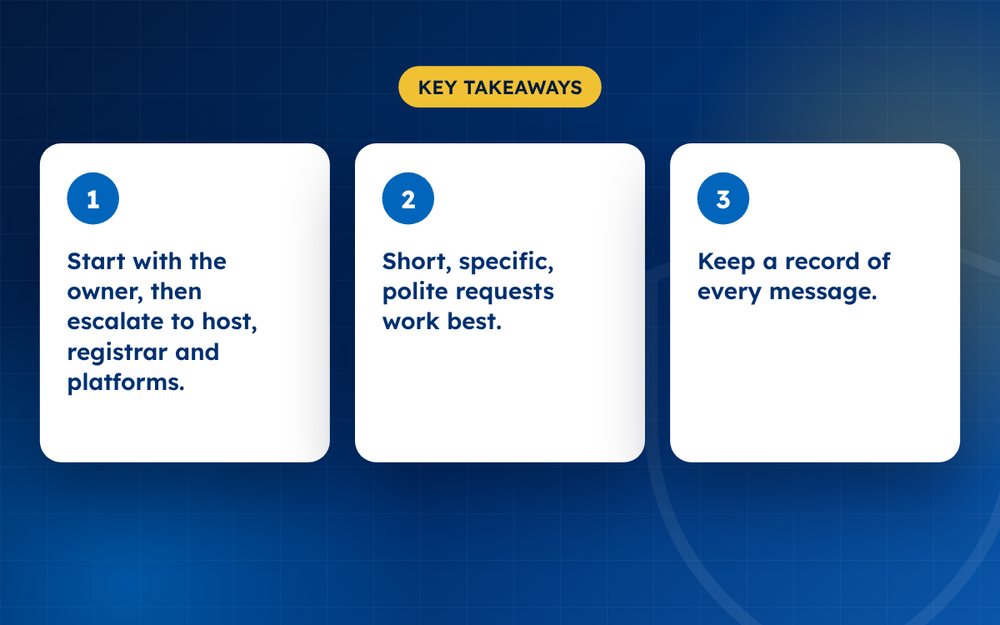
- Start with the owner, then escalate to host, registrar and platforms.
- Short, specific, polite requests work best.
- Keep a record of every message.
Steps
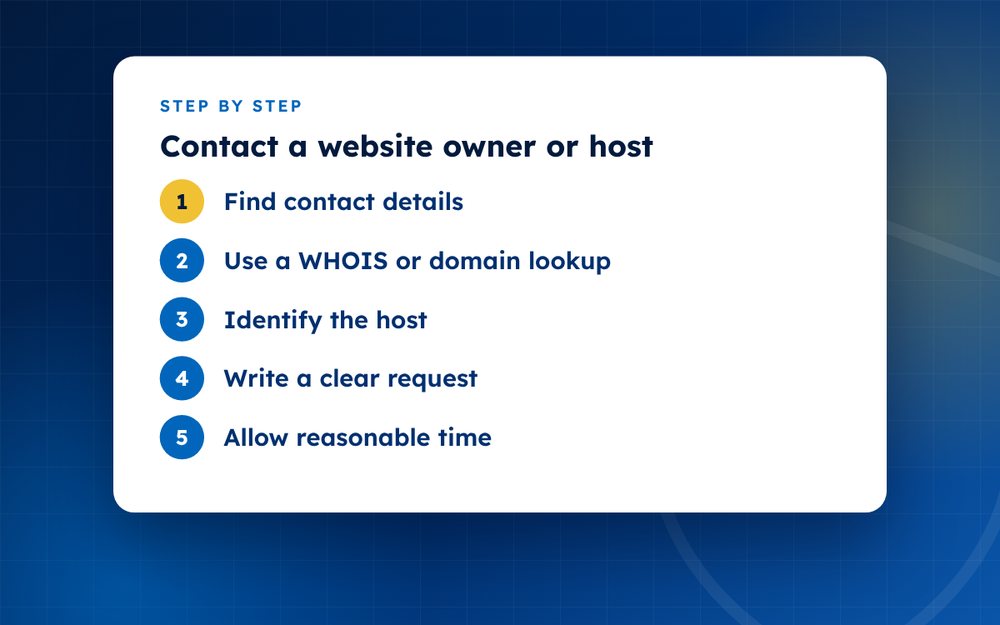
- Find contact detailsCheck the Contact, About or Privacy pages. Look for a DMCA, abuse or legal contact.
- Use a WHOIS or domain lookupA lookup can show the registrar and sometimes the hosting provider.
- Identify the hostHosting lookup tools show who runs the server. If a CDN such as Cloudflare is used, the CDN has an abuse process that can forward complaints.
- Write a clear requestState your name, the exact URL, what is wrong, what you want done and a reason such as copyright, privacy or policy breach.
- Allow reasonable timeGive them a few days before escalating.
- EscalateContact the host, then the registrar, then search engines.
- Keep recordsSave emails and dates in case you need legal action.
Understanding the chain
The website owner controls the content. The hosting company stores it and responds to abuse reports. The domain registrar manages the domain name. A content delivery network, such as Cloudflare, may sit in front of the site, hide the host and forward complaints. Most companies in this chain prefer to remove clearly problematic content than to risk legal trouble, so a precise complaint often works.
Writing the message
- Start with who you are and what you are asking
- Give the exact URLs, not just the domain
- State the reason in one or two sentences, for example copyright, privacy or a policy breach
- Attach evidence where relevant
- Say what you would like them to do and by when
- Thank them for their time
Where to send it
Look for a contact page, privacy policy or terms of service that lists an email address. Many hosts publish an abuse address, such as abuse@ followed by their domain, and some have web forms. Use the form where one exists, because it is more likely to be monitored.
Following up without causing problems
Wait a few days, then follow up politely. If you escalate to a host or registrar, keep your tone professional and cite your earlier message. Avoid threats, which can slow things down or lead to your message being ignored. Keep a log with dates, names and replies.
A short example message
Hello, I am writing about the page at the address below, which publishes my home address without my consent. I would be grateful if you could remove the page or the address. I have attached a screenshot and can provide further details if needed. Thank you for your help.
A message like this works because it is short, polite, specific and gives the recipient an easy decision. Adapt the reason to your situation, and keep a copy for your records.
What to avoid
- Threats or abusive language
- Vague complaints without URLs
- Claiming rights you do not hold
Email us if you have many sites to deal with, and we will manage the contact and follow ups.
Frequently asked questions
What if the owner is anonymous?
Contact the host and the registrar. Even when a domain uses privacy protection, the registrar and host have abuse contacts and can act on complaints that breach their terms. You can also use the contact form on the site if there is one, though anonymous owners may ignore it.
Do hosts always act?
No. Hosts act when the content breaks their terms or the law and when your complaint is clear and specific. Reputable hosts respond to valid copyright and abuse complaints quickly. Some hosts in other jurisdictions ignore complaints, in which case search engine requests become more important.
Should I mention a lawyer?
Only if you have actually involved one or intend to. Empty threats damage your credibility. If a lawyer is helping you, a letter from them can be effective, but it is not necessary for straightforward copyright or abuse complaints.
What if the site is overseas?
Most hosts and platforms have abuse processes that work regardless of location. The legal basis for your complaint may differ, so describe your issue in terms of the host's own rules. You can also ask search engines to remove the pages, which does not depend on where the site is hosted.
How long should I wait before escalating?
A few days to a week is reasonable for a first reply. If you receive no response, escalate to the host and then the registrar. For urgent safety issues, such as doxxing or threats, escalate sooner and consider contacting the police.
Can I use a template?
Yes, as long as you customise the details. A template saves time, and it helps you include the information that recipients need. Keep the message short, factual and polite.
Need help with this?
Every situation is different. Email us the details in confidence and we will reply with an honest assessment of what can be done.
Contact us by email Negative Content RemovalThis guide is general information, not legal advice. DMCA Reputation is not a law firm.
Related guides
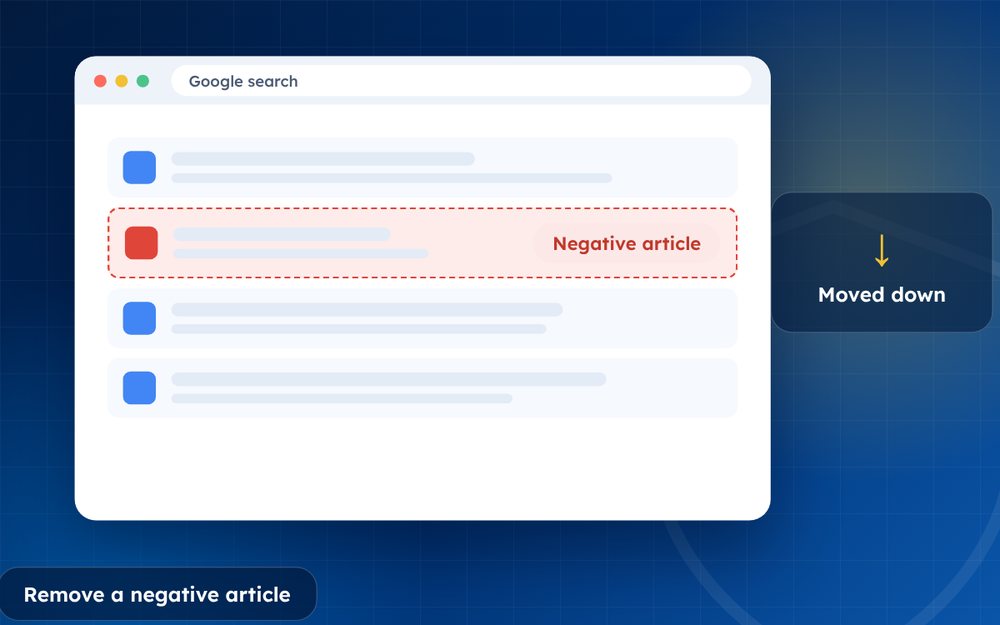
How to Remove a Negative Article From Google Search
How to remove a negative article from Google search: contact the publisher, use Google's tools and legal routes, or suppress it when removal fails.
Read the guide · 4 min
How to Remove a News Article From the Internet
How to remove a news article from the internet: approaching publishers, correction and anonymisation requests, legal grounds and search options.
Read the guide · 4 min
How to Remove Your Name From Google Search Results
How to remove your name from Google search results: what you can remove, Google's results about you tool, data brokers and what to do about the rest.
Read the guide · 4 min