
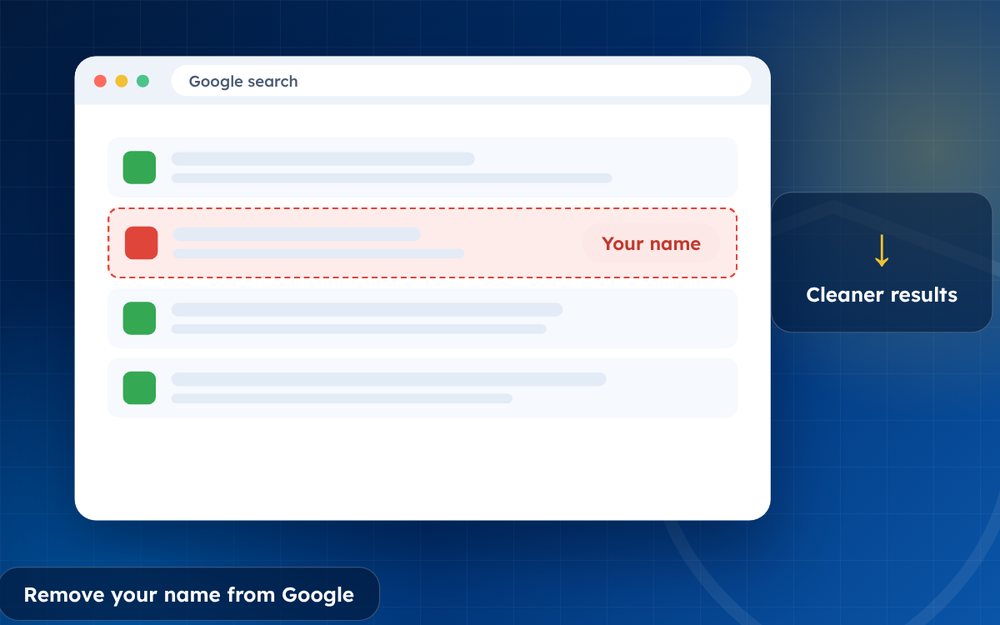
Searching your own name and finding things you wish were not there is unsettling. You usually cannot erase your name from Google altogether, but you can often remove personal details, harmful pages and some results, and reduce what appears for the rest.
Most people search their own name at some point and find something they did not expect: an old profile, a forum post, a people-search listing or a news story. It is natural to wonder whether there is a button that removes everything. There is not, but there is a structured way to reduce what appears.
The key is to treat your name as a search result problem with three parts: personal details that should not be public, pages that can be removed at the source and results that you can only push down with better content.
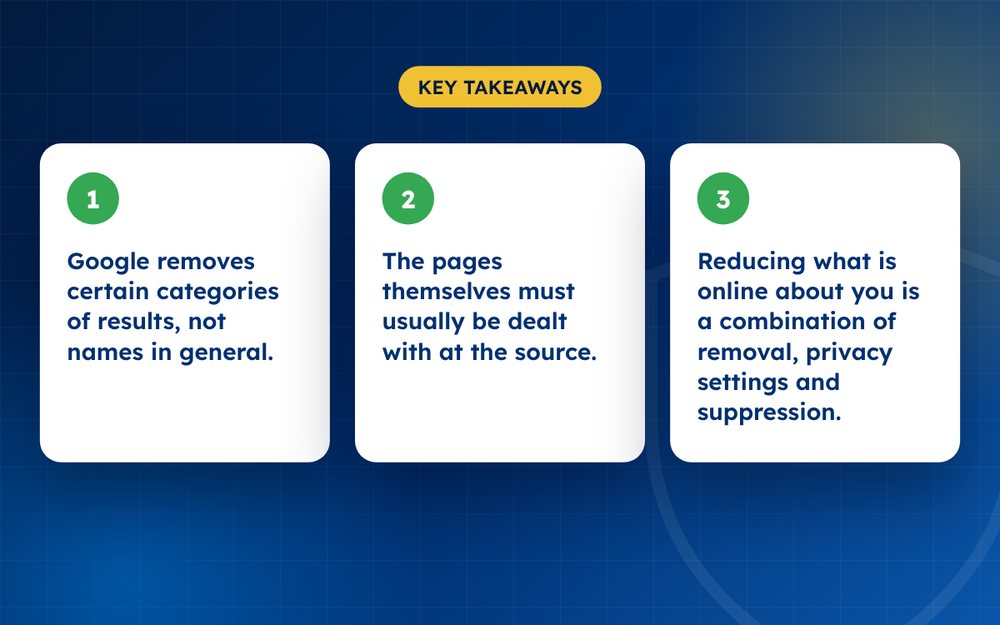
- Google removes certain categories of results, not names in general.
- The pages themselves must usually be dealt with at the source.
- Reducing what is online about you is a combination of removal, privacy settings and suppression.
What Google can remove
- Results showing personal contact details such as your phone number, home address or email
- Doxxing content and threats
- Non-consensual explicit imagery
- Some sensitive identity, financial or medical details
- Pages removed from the web but still in search
- Results Google must delist under privacy or legal rules, for example in the EU and UK
Step by step
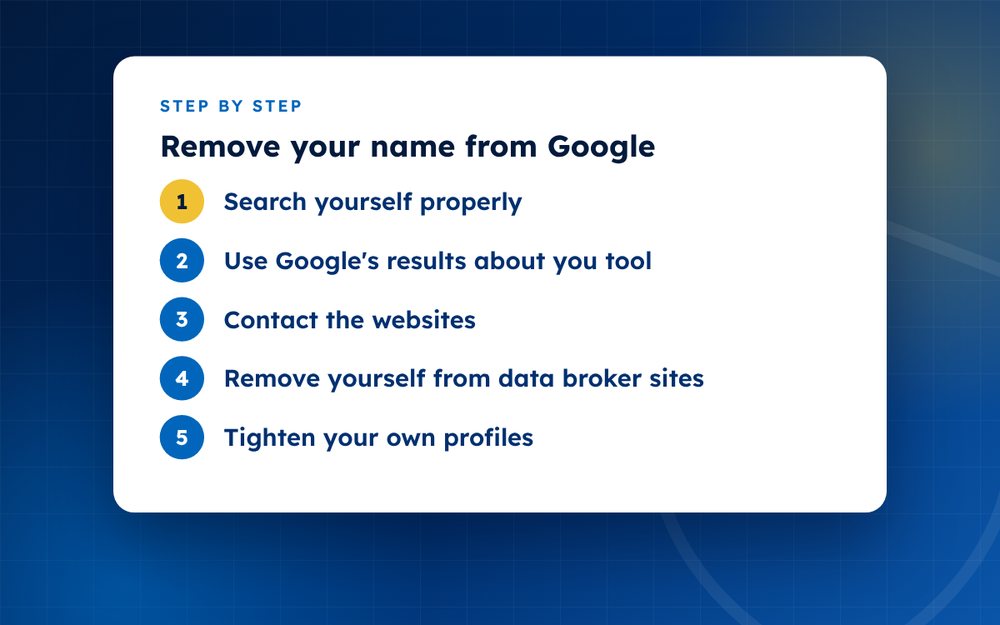
- Search yourself properlySearch your full name, nicknames, past employers, your city and your phone number. Use a private window and note every result you want gone.
- Use Google's results about you toolGoogle's tools let you request removal of results that contain personal contact information. Follow the prompts for each URL.
- Contact the websitesAsk the site owner to remove or anonymise the page. Include the exact URL and explain why.
- Remove yourself from data broker sitesPeople search and data broker sites repost addresses and phone numbers. Each has its own opt-out process.
- Tighten your own profilesReview privacy settings on social media, remove old posts you do not want found and update public biographies.
- Request delisting under privacy law if it appliesIf you live in a region with a right to be forgotten, you can ask Google to delist certain results. Each request is balanced against public interest.
- Push down what remainsPublish accurate profiles that you control, for example a LinkedIn page or professional site, so these appear first.
Personal details versus reputation problems
Google treats these differently. Personal contact details, doxxing and some sensitive identity data fall under policies where Google will often remove results on request. Reputation problems, such as negative articles or reviews, are usually not removable from search unless the page itself changes or a legal or privacy rule applies. Knowing which category you are in saves time.
Data brokers and people search sites
Many results for a name come from data brokers that collect public records and publish profiles with addresses, ages and relatives. Each site has its own opt-out process, and many republish after a few months. Keep a list of the sites you have contacted and check again every quarter. Some privacy services automate this, but doing it by hand is possible if you have time.
Your own profiles matter
Old social media accounts, forum usernames and blog posts often rank for your name. Review each one, delete what you no longer need and tighten privacy settings on what remains. Replace them with a small number of professional, accurate profiles that you control. This is often the quickest way to change what appears on the first page.
Know when to stop and get help
If the results include harassment, threats or content connected to abuse, do not spend weeks on this alone. A specialist can coordinate requests, track responses and monitor for new results while you focus on your wellbeing.
Monitor regularly. Data brokers often republish information after it has been removed.
When to get help
If the results are numerous, harmful or tied to harassment, a managed approach saves time and avoids mistakes. We can assess your search results and tell you what is realistic.
Frequently asked questions
Can I make my name disappear from Google?
Not completely. You can remove some results, reduce others and replace what remains with accurate content. The aim is realistic control. Some results may remain, especially if they are accurate and in the public interest, but you can change what appears first.
Does deleting my social media remove me from search?
It helps, but cached copies and reposted content can remain for a while. Use Google's refresh tool if the old version still appears after deletion, and check again after a few weeks.
How long does it take?
Individual requests to Google may take days to weeks. Contacting websites varies, and data brokers can take a month or more. A complete clean-up, including new content, usually takes several months. Keep a record of each request and check your results regularly.
Are there tools to find where my details appear?
Yes. Search engines, people search sites and monitoring services help you track mentions. Set up Google Alerts for your name and check the first three pages of results regularly.
What if I share my name with someone else?
Common names are harder to manage. Add your profession or city to your own profiles so that they stand out, and make sure your pages clearly state who you are.
Is it worth paying someone to do this?
It depends on volume and urgency. A few results can be handled yourself. If you face many results, harassment or a time-sensitive situation, specialist help can save weeks of effort.
Need help with this?
Every situation is different. Email us the details in confidence and we will reply with an honest assessment of what can be done.
Contact us by email Google Search Result RemovalThis guide is general information, not legal advice. DMCA Reputation is not a law firm.
Related guides
How to Remove a Negative Article From Google Search
How to remove a negative article from Google search: contact the publisher, use Google's tools and legal routes, or suppress it when removal fails.
Read the guide · 4 min
How to Remove a News Article From the Internet
How to remove a news article from the internet: approaching publishers, correction and anonymisation requests, legal grounds and search options.
Read the guide · 4 min
How to Remove Personal Information From Google (Results About You Guide)
How to remove personal information from Google using the Results about you tool: what qualifies, how to request and how to monitor.
Read the guide · 4 min