
A single unfair Google review can sit at the top of your business profile for years. The good news is that Google does remove reviews that break its rules. The bad news is that it will not remove a review just because it is negative, harsh or inaccurate. This guide explains what is removable, how to report it properly and what to do if the review stays.
Most owners find the first bad review stressful because it feels personal and permanent. In reality, Google receives millions of review reports, and the moderation team looks at a narrow question: does this content break a written policy? If you frame your report around that question, with evidence, you give yourself the best chance of a fast and fair decision.
It also helps to separate two goals. The first is removing a review that should not be there. The second is protecting your rating and reputation whether or not a particular review is removed. This guide covers both, because a calm reply and a steady stream of genuine reviews often do more for your business than any single removal.
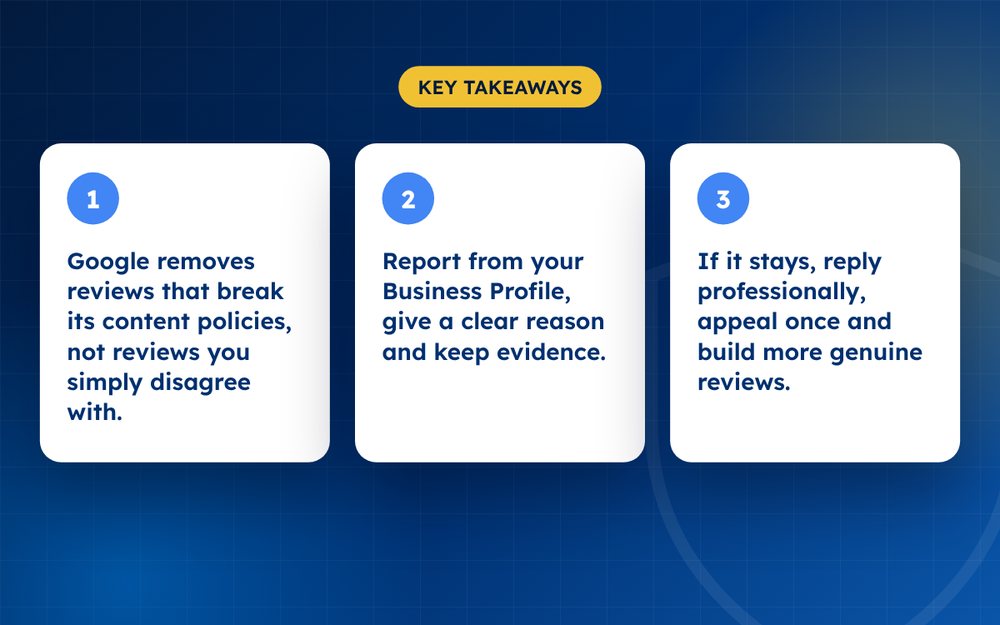
- Google removes reviews that break its content policies, not reviews you simply disagree with.
- Report from your Business Profile, give a clear reason and keep evidence.
- If it stays, reply professionally, appeal once and build more genuine reviews.
Which Google reviews can be removed?
Google only removes a review when it violates its policies. In practice these are the strongest grounds:
- Fake or spam reviews, including reviews from people who never visited or used your business
- Conflict of interest, such as reviews from competitors, former staff with a grievance or people connected to you
- Off-topic content that is not about a real experience
- Hate speech, harassment, threats or sexually explicit language
- Personal information such as phone numbers, home addresses or names of private individuals
- Impersonation, where someone pretends to be another person or business
- Content that breaks legal requirements in your country
A review that is rude, one-sided or simply wrong about the facts is usually not removable if it describes a genuine experience.
How to report a Google review, step by step
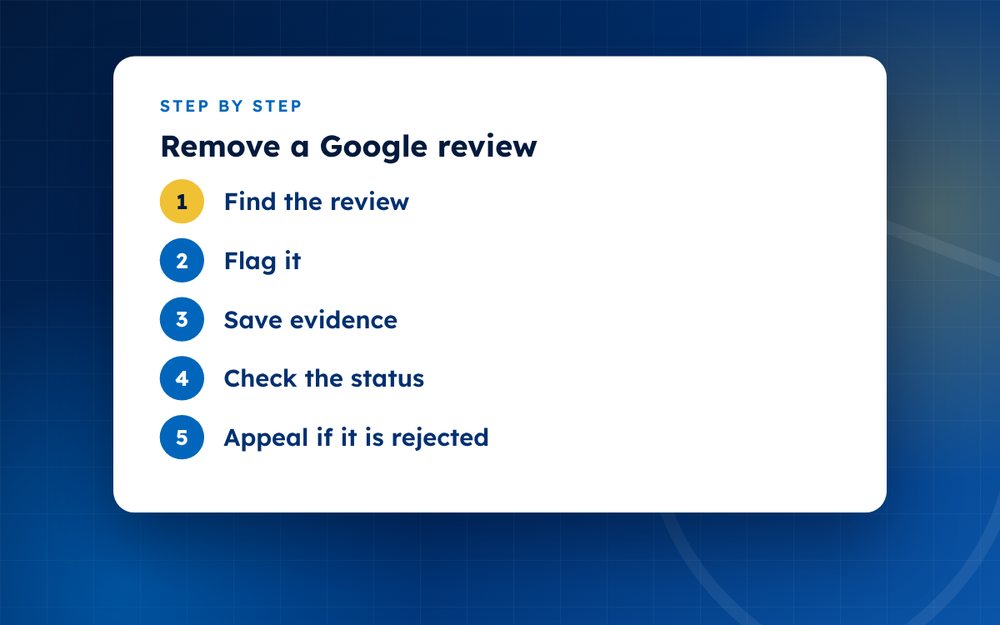
- Find the reviewSign in to the Google account that manages your Business Profile. Search your business name on Google or open Google Maps and find the review.
- Flag itOpen the three-dot menu next to the review and choose to report it. Pick the reason that best matches the problem, for example spam, fake content, off-topic or conflict of interest.
- Save evidenceTake screenshots of the review, the reviewer's profile and any proof that they were never a customer, such as your booking or sales records. You may need them if you appeal.
- Check the statusOpen your Business Profile and look at the reported reviews. Google normally reviews reports within days, though some take longer.
- Appeal if it is rejectedIf Google keeps the review, use the appeal option in the reviews management tool and add context. Be calm and factual, and explain exactly which policy the review breaks.
- Use the legal route when neededIf the review contains a false statement of fact that causes real harm, Google has a legal removal request process. Because laws differ between countries, take advice from a qualified lawyer before relying on this route.
How Google decides
Google uses a mix of automated detection and human reviewers. Automated systems look for patterns such as bursts of reviews, repeated wording, accounts that review dozens of unrelated places and content that matches known spam. When you report a review, a reviewer compares the text against Google's prohibited and restricted content policies. They are not deciding whether the review is fair. They are deciding whether it is allowed.
That is why the reason you choose matters. A review that simply says the service was terrible, and describes a real visit, is allowed even if you disagree. A review that mentions a visit that could not have happened, or that is clearly written by a competitor, is not. Be precise about which policy applies and say so in plain words.
What evidence helps
- Your booking, sales or appointment records showing no matching customer
- Screenshots of the reviewer's profile showing many reviews in a short period or reviews of unrelated businesses
- Proof of a conflict of interest, such as a link between the reviewer and a competitor
- Screenshots of the review itself, with the date and the wording that breaks a policy
- Copies of any messages that show the reviewer was told the review would be removed in exchange for something
Keep your report short and factual. Long emotional explanations rarely help. Two or three clear sentences that name the policy and the evidence are better than a page of frustration.
A realistic timeline
Many straightforward reports are decided within a few days. Reports that need more checks, appeals and legal requests take longer, sometimes several weeks. While you wait, do not report the same review again and again, because repeated identical reports do not speed things up and can make your account look careless. Use the time to reply to the review and encourage genuine reviews.
Mistakes that make removal harder
- Reporting every bad review. Only report those that clearly break a policy
- Arguing with the reviewer publicly, which draws more attention
- Offering discounts or gifts in exchange for deleting or changing a review, which breaks Google's rules
- Asking friends and staff to mass report. Genuine, accurate reports work better
What to do if the review stays
Reply to it. A short, calm and professional response shows other readers how you handle problems. Acknowledge the experience, state the facts briefly and offer to resolve things offline. Then dilute the impact by inviting customers consistently to leave honest reviews. A steady flow of new reviews pushes older ones down and improves your average rating.
When to get help
If you are facing a wave of fake reviews, a coordinated attack or a review you cannot get removed, it is worth speaking to a specialist. We assess each case honestly and tell you what is realistic before any work starts.
Official sources
Frequently asked questions
Can I delete a Google review myself?
No. Only the person who wrote the review, or Google itself, can delete it. As the owner of the Business Profile you can report it for Google to assess, and you can reply publicly. If you try to get around this by creating pressure on the reviewer, offering incentives or using unofficial methods, you risk breaking Google's rules and making your situation worse.
How long does Google take to remove a review?
Often a few days, but there is no guaranteed timeline. Clear, well documented reports of obvious spam can be handled quickly. Cases that need a second look, an appeal or a legal request can take weeks. Check the status in your Business Profile rather than resubmitting the same report.
Will Google remove a review that is false?
Not automatically. If the review describes a genuine experience, even one you think is unfair or inaccurate, it usually stays. The clearest cases are reviews from people who never used your business, reviews by competitors and content that breaks other policies, such as threats or personal information. If you believe a statement is defamatory, you may be able to use Google's legal removal process, but take legal advice first.
Does a lawyer's letter work?
Sometimes, but it is not a shortcut. A legal removal request must meet the requirements of your country and the specific statement must usually be a false statement of fact that causes real harm. It also carries cost and risk. Ask a lawyer whether the review is worth that route before you start.
What should I do if the review stays?
Reply politely and factually, and focus on growing your genuine reviews. A short, calm reply shows future customers how you handle problems, and a steady stream of fresh reviews pushes older ones further down and improves your average rating.
Can I stop competitors from leaving fake reviews?
You cannot block reviews in advance, but you can monitor your profile, report fake reviews promptly and keep records. If you see a pattern, such as several suspicious reviews in a short time, document them together and mention the pattern in your report.
Need help with this?
Every situation is different. Email us the details in confidence and we will reply with an honest assessment of what can be done.
Contact us by email Google ReviewsThis guide is general information, not legal advice. DMCA Reputation is not a law firm.
Related guides
Can You Delete a Google Review? What Google Will and Won't Remove
Can you delete a Google review? Learn who can delete one, what Google removes on request, and what your options are when a review will not come down.
Read the guide · 5 min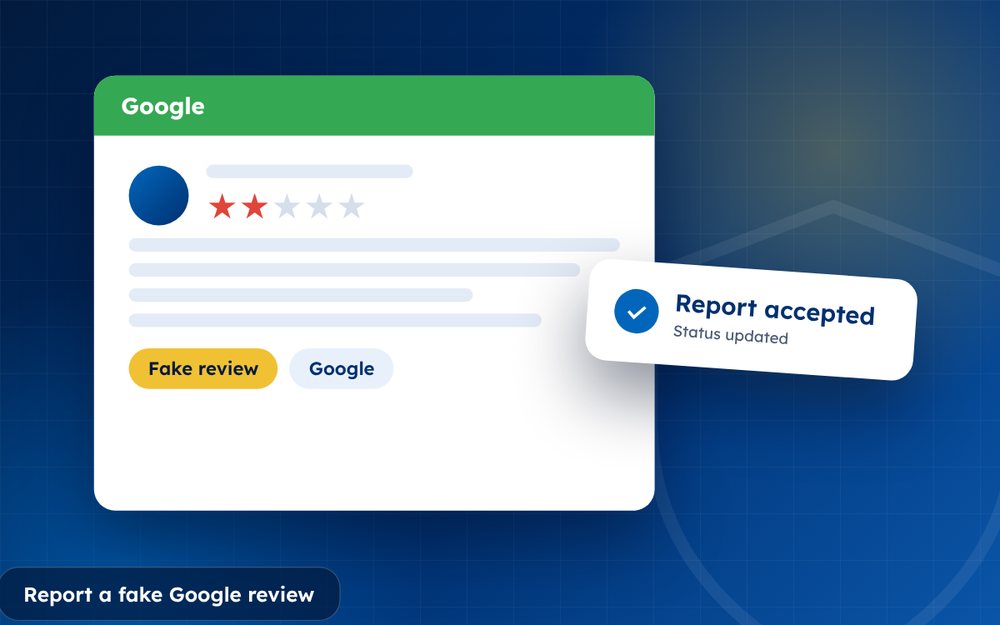
How to Report a Fake Google Review, Step by Step
How to report a fake Google review step by step: spotting fakes, flagging from your Business Profile, evidence to gather and what to do if it stays.
Read the guide · 5 min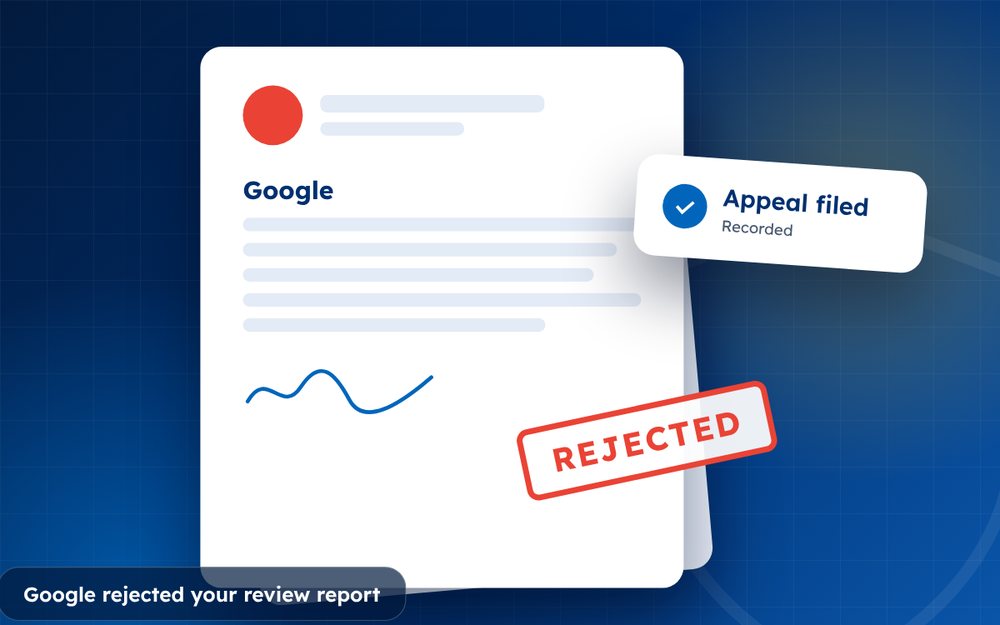
What to Do When Google Rejects Your Review Removal Request
What to do when Google rejects your review removal request: why it happens, how to appeal, how to strengthen the case and what else you can try.
Read the guide · 5 min