
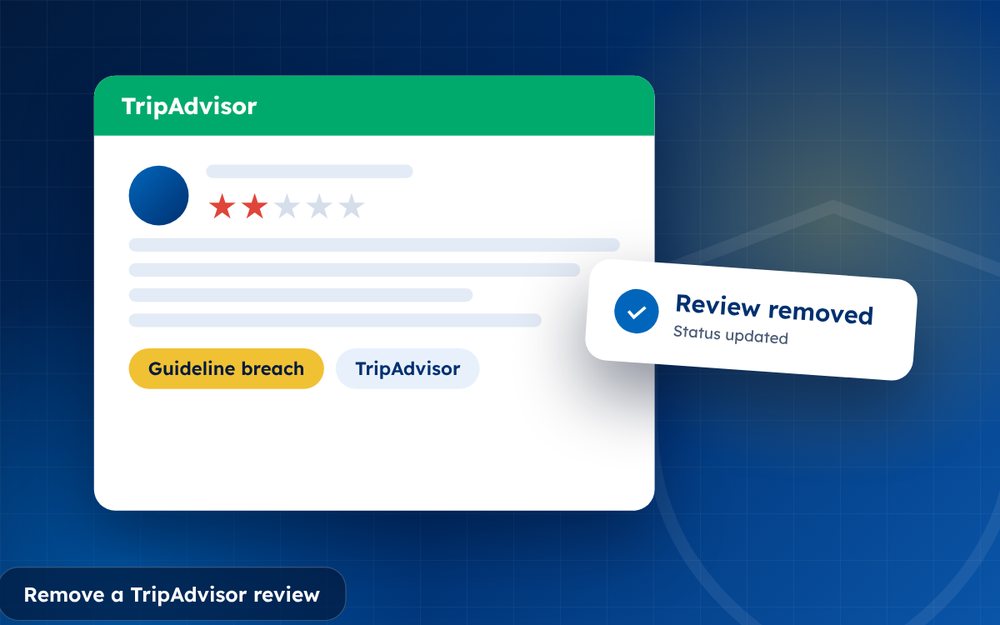
TripAdvisor reviews can make or break a hotel or restaurant. Owners can report reviews that break the site's guidelines, and every business can respond publicly.
For hotels, restaurants and attractions, TripAdvisor ratings shape bookings directly. A drop in the average can cost real revenue. TripAdvisor gives owners tools, but its guidelines keep a clear line between unfair and prohibited.
Here is how to use the system effectively.
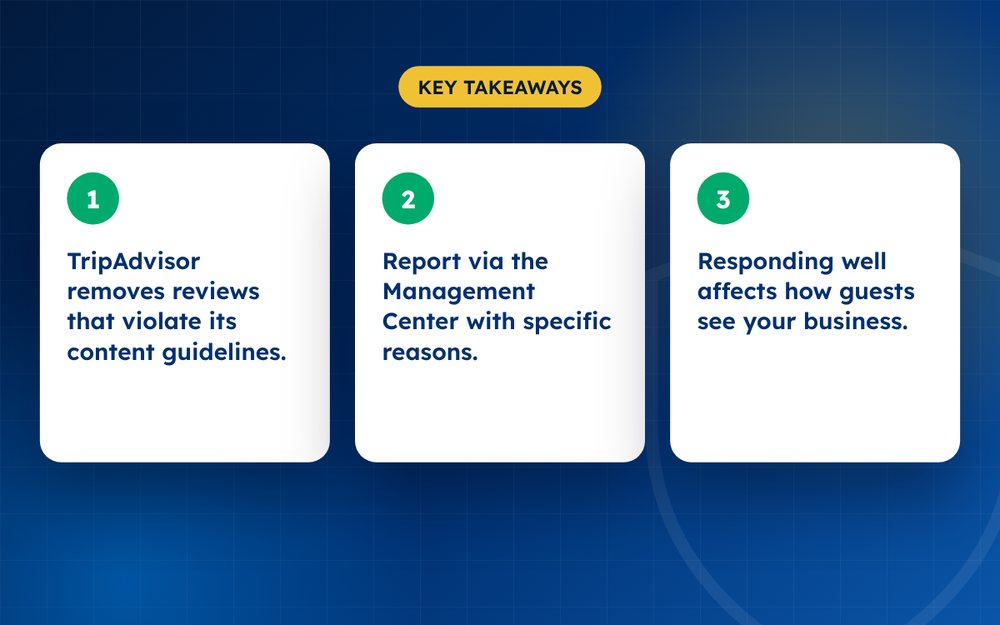
- TripAdvisor removes reviews that violate its content guidelines.
- Report via the Management Center with specific reasons.
- Responding well affects how guests see your business.
Reviews that may qualify
- Fake reviews or reviews from someone who did not visit
- Competitor or employee conflicts of interest
- Reviews with profanity, threats, hate speech or private information
- Reviews about issues outside your control that are not about the experience, such as a dispute with a third party
- Duplicate or off-topic content
Steps
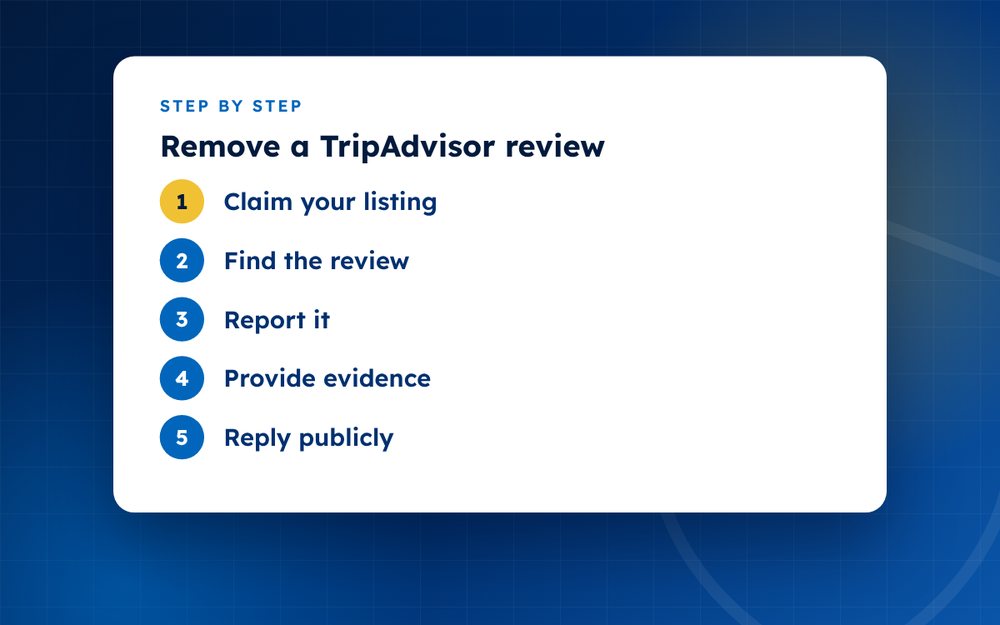
- Claim your listingUse the TripAdvisor Management Center.
- Find the reviewLocate it in your reviews list.
- Report itSelect the report option and choose the most accurate reason.
- Provide evidenceAdd booking records or details showing the guest never stayed or visited.
- Reply publiclyWrite a polite and factual management response.
- Follow upCheck the status and appeal only with new information.
Using the Management Center
Claiming your listing gives you access to reviews, analytics and the ability to respond. From there, you can report reviews that break the guidelines and track your cases. Keep your listing details accurate and add photos that show your business at its best.
What strengthens a report
- Booking or reservation records showing the reviewer was not a guest
- Evidence that the review is about a different property
- A pattern of suspicious reviews posted close together
- Clear breaches of language or privacy rules
- A conflict of interest, such as a review from a competitor or a former employee
Responding well
Management responses are public and visible to future guests. Thank the reviewer, describe what you are doing to address any issue and invite them to contact you. Avoid blaming the guest or revealing private information. A consistent, professional tone builds trust.
Seasonal and group effects
Hotels and restaurants often see patterns in reviews. Peak season can lead to complaints about crowding or slower service, and large groups can produce clusters of reviews with similar themes. Look at your reviews in context and plan for peaks, for example by adding staff or setting clear expectations in confirmation messages.
If you receive a cluster of negative reviews from a single event, such as a wedding or a tour group, mention it in your reports if the reviews seem coordinated, and explain what happened in your responses.
Encourage satisfied guests to review you after their stay. A steady flow of recent reviews matters more than a single bad one. Email us if you face a coordinated attack.
Frequently asked questions
Can the owner delete a review?
No. Only TripAdvisor or the reviewer can remove a review. As an owner you can report reviews that break the guidelines, respond publicly and encourage guests to review you. Reports are assessed by TripAdvisor's moderators against its content policies.
Can I find out who wrote it?
Not usually. Reviewers remain anonymous to owners, and TripAdvisor does not share personal details. You can check your booking records to see whether a stay matches, but you cannot identify the reviewer through the platform. Trying to confront suspected reviewers can create legal and reputational risks.
Does responding help?
Yes. Guests read management responses and often judge a business by how it deals with criticism. A polite, specific reply that says what you are doing to improve can reassure future guests. Avoid blaming the reviewer, and never reveal private details of the stay.
Will TripAdvisor remove a harsh review?
Only if it breaks the guidelines, such as containing hate speech, threats, personal information or content that is clearly fake. Harsh but genuine experiences generally stay. If you think a review is unfair, respond calmly and focus on improving the experience for future guests.
What about reviews of problems outside my control?
Some may be eligible for removal if they are not about the guest experience, for example complaints about a third-party booking site or local construction that was not your doing. Explain the circumstances clearly in your report. If the review stays, mention in your reply what you did to help.
How can I improve my ranking?
Encourage satisfied guests to review you, respond to reviews and keep your listing complete and current. TripAdvisor's ranking considers the quality, quantity and recency of reviews, so a steady stream of fresh positive reviews makes a real difference. Maintain high standards and fix recurring problems.
Need help with this?
Every situation is different. Email us the details in confidence and we will reply with an honest assessment of what can be done.
Contact us by email TripAdvisor ReviewsThis guide is general information, not legal advice. DMCA Reputation is not a law firm.
Related guides
How to Remove a Google Review: A Complete Guide for Business Owners
How to remove a Google review: what Google will remove, how to report it, how to appeal and what to do if it stays. A guide for business owners.
Read the guide · 6 min
Can You Delete a Google Review? What Google Will and Won't Remove
Can you delete a Google review? Learn who can delete one, what Google removes on request, and what your options are when a review will not come down.
Read the guide · 5 min
How to Report a Fake Google Review, Step by Step
How to report a fake Google review step by step: spotting fakes, flagging from your Business Profile, evidence to gather and what to do if it stays.
Read the guide · 5 min