
A strong online reputation is not luck. It is built by deciding what you want to be known for and creating consistent, credible evidence of it. The same steps help individuals, entrepreneurs and companies.
A positive reputation comes from three things: what you do, what you say and what other people say about you. Online, all three show up in search results and on review sites. You cannot control everything people say, but you can strongly influence what is easy to find.
The steps below are ordered so that you build a solid base first and then expand.
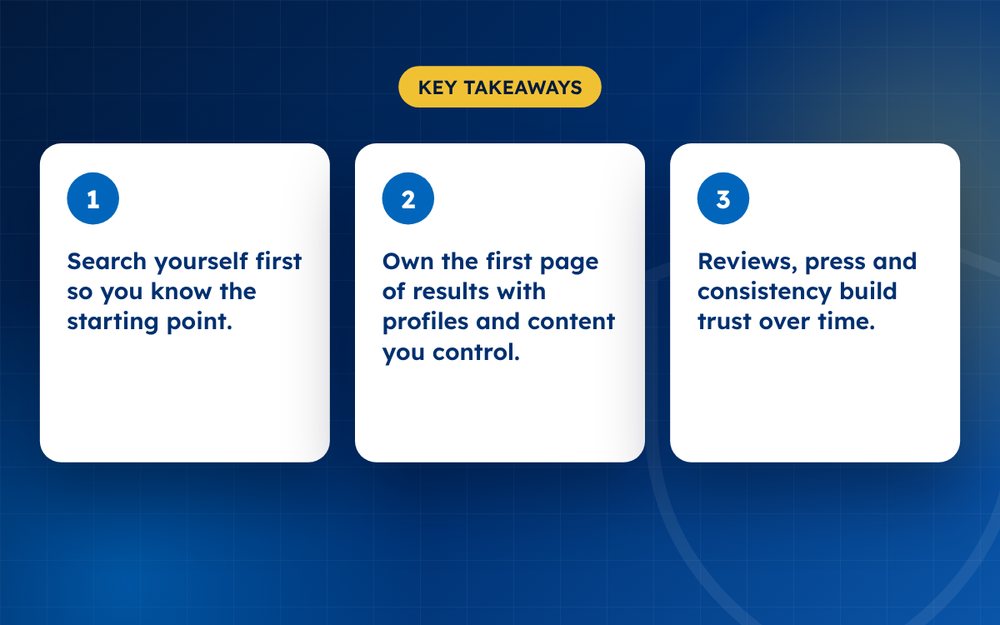
- Search yourself first so you know the starting point.
- Own the first page of results with profiles and content you control.
- Reviews, press and consistency build trust over time.
Step by step
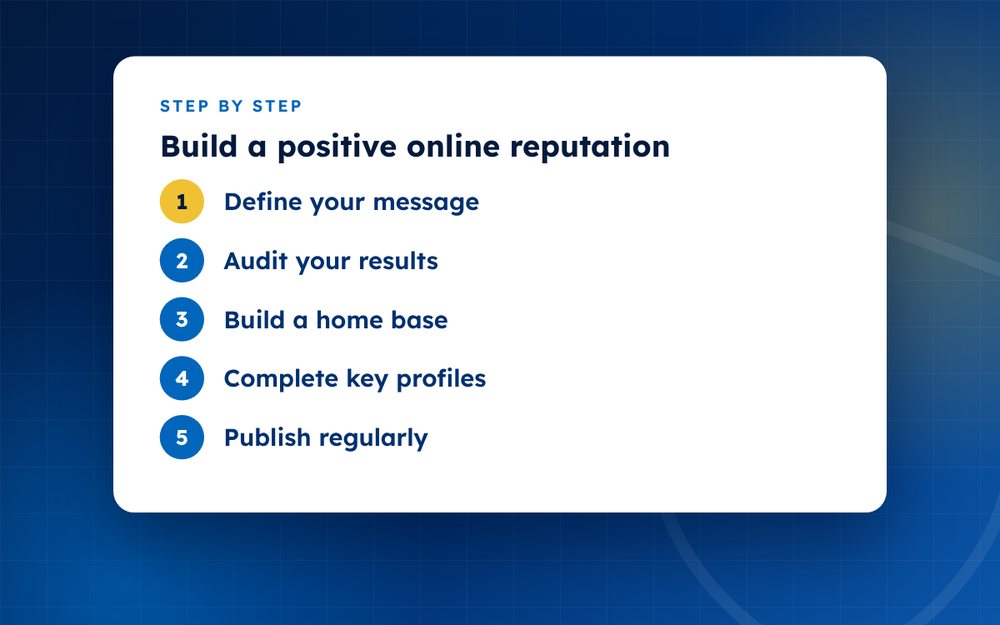
- Define your messageDecide what you want people to know: your expertise, values and the audience you serve.
- Audit your resultsSearch your name and business and list what appears, noting gaps and risks.
- Build a home baseCreate a website with an About page, services or portfolio and clear contact details. Use your full name or brand name in titles.
- Complete key profilesLinkedIn, Google Business Profile, industry directories and social profiles should be complete and consistent.
- Publish regularlyArticles, videos or talks that demonstrate your knowledge earn trust and rankings.
- Collect genuine reviewsInvite customers or clients consistently to leave honest reviews on the platforms that matter in your field, following each platform’s rules.
- Earn press and partnershipsInterviews, podcasts, awards and collaborations bring credibility and links.
- Respond professionallyReply to praise and criticism calmly and promptly.
- MonitorSet alerts for your name so you can act early on anything negative.
Start with evidence, not slogans
The most persuasive reputation is built on proof. Case studies, testimonials, awards and examples of your work carry more weight than adjectives. Collect these and display them clearly on your website and profiles.
Consistency across platforms
Search engines and people both look for consistent information. Use the same name, photo and description across your website, LinkedIn, social media and directories. Inconsistencies create doubt and make it harder for search engines to connect your pages.
Reviews and testimonials
Invite customers or clients consistently to leave honest reviews, and make it easy by sending a direct link. Respond to every review, including negative ones. A thoughtful response shows maturity and builds trust.
Press and partnerships
Being mentioned by credible third parties is powerful. Look for opportunities such as guest articles, interviews, podcasts, awards and collaborations. Each mention can create links and visibility, and it shows that others value what you do.
Monitoring and maintenance
Set alerts for your name and brand, check your results monthly and update your profiles regularly. A reputation is not a project that finishes. It needs regular attention.
A simple ninety-day plan
In the first month, search yourself, fix inconsistencies and complete your main profiles. In the second month, publish a few pieces of useful content and invite five customers or clients, selected without regard to expected sentiment, to leave honest reviews. In the third month, look for opportunities for interviews, guest posts or partnerships and set up monitoring. At the end of the ninety days, review your search results and decide what to improve next.
This kind of plan is modest, but it builds momentum, and each step makes the next easier.
Common mistakes
- Buying reviews or followers
- Inconsistent names or details across profiles
- Ignoring negative feedback
- Waiting for a crisis before acting
If you would like a plan tailored to you or your business, email us and we will outline sensible next steps.
Frequently asked questions
How long does it take to build a reputation online?
Expect three to six months for noticeable change, and longer for competitive names or industries. Consistent effort matters more than speed. Early steps such as completing profiles can have an effect within weeks.
Do I need a website?
It is strongly recommended because it is the one property you fully control. It also gives you a place to present your work in your own words and to rank for your name. A simple site with clear information is enough to start.
Are paid reviews okay?
No. They break platform rules, can be unlawful in some countries and damage trust if discovered. Instead, ask real customers or clients for honest feedback and make it easy for them to leave it.
Can I do this myself?
Yes, many steps are simple. Specialists help with complex or urgent cases, or when you lack time. Start with an audit of your search results, complete your profiles and publish useful content, then decide whether you need help.
What if I have no online presence?
That is a good starting point. Begin with a website and a LinkedIn profile, and build from there. A blank slate gives you the chance to shape what people see, without having to deal with old content.
How do I handle negative comments?
Respond calmly, acknowledge the concern and offer to resolve it privately. Avoid arguments in public. If the comment breaks platform rules, report it. Over time, a record of professional responses builds trust.
Need help with this?
Every situation is different. Email us the details in confidence and we will reply with an honest assessment of what can be done.
Contact us by email Brand BuildingThis guide is general information, not legal advice. DMCA Reputation is not a law firm.
Related guides
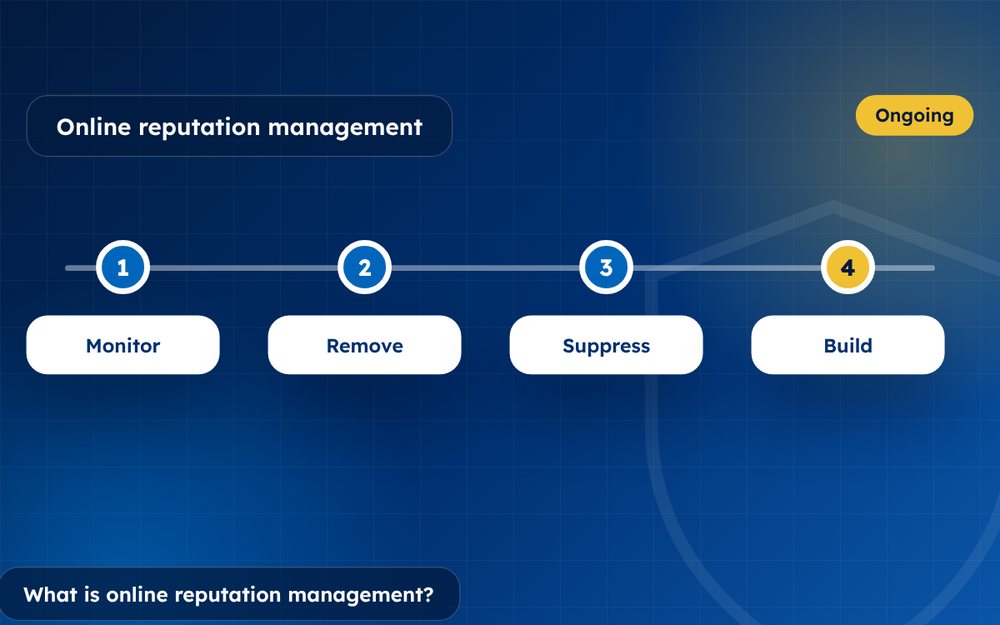
What Is Online Reputation Management? A Beginner's Guide
What is online reputation management? A beginner's guide to monitoring, removal, suppression and building a positive online presence.
Read the guide · 4 min
Personal Branding: How to Build a Strong Personal Brand Online
Personal branding guide: how to build a strong personal brand online with a clear message, a website, profiles and consistent content.
Read the guide · 3 min
How to Optimize Your LinkedIn Profile to Rank on Google
How to optimise your LinkedIn profile to rank on Google: custom URL, headline, About section and public profile settings.
Read the guide · 3 min