
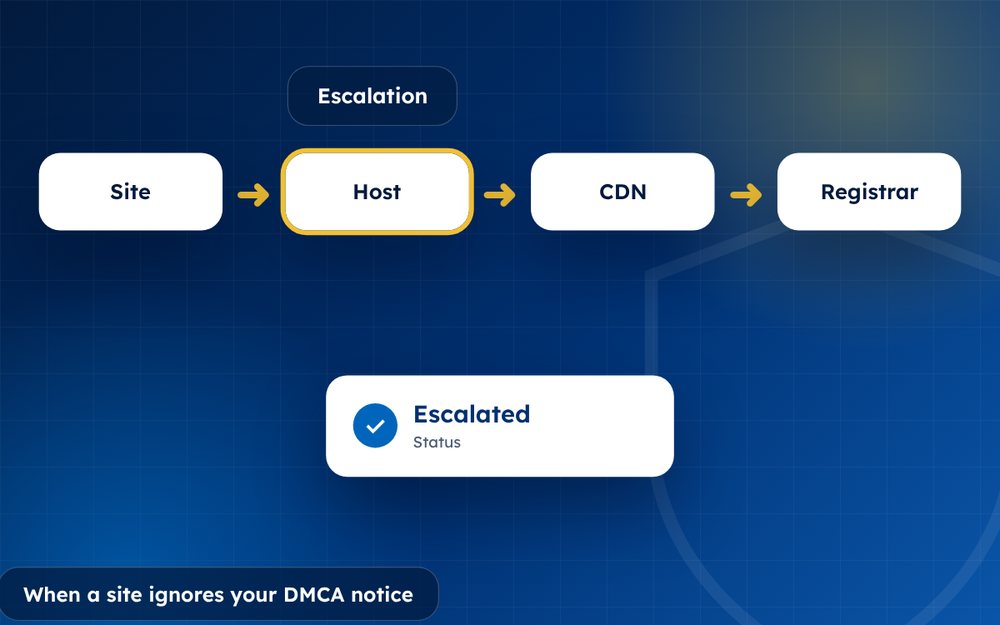
Many pirate sites ignore DMCA notices. That does not mean you are out of options. The pressure moves to the companies that keep the site running.
A site that ignores your DMCA notice is not unusual. Many pirate sites operate from places with weak enforcement and rely on the fact that most rights holders give up. You have more options than the site operator would like you to believe.
The strategy is to apply pressure to the companies that provide the site's infrastructure and income.
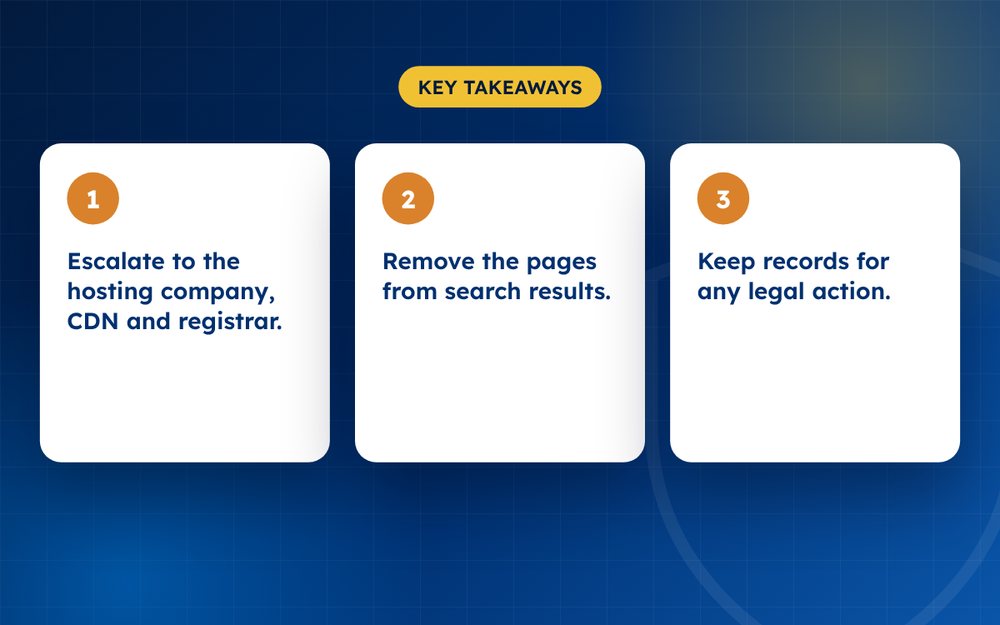
- Escalate to the hosting company, CDN and registrar.
- Remove the pages from search results.
- Keep records for any legal action.
Escalation steps
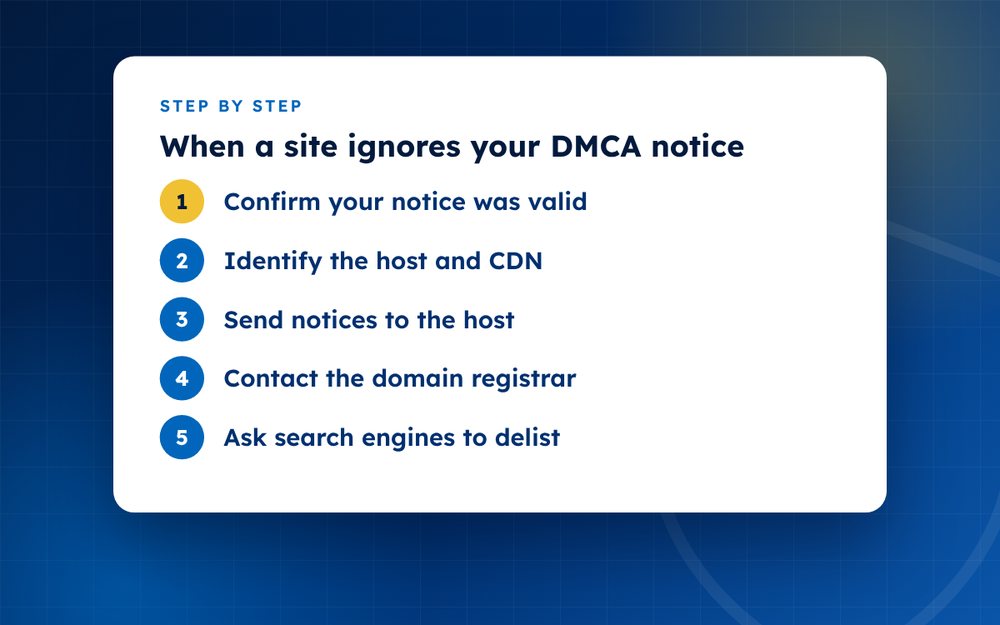
- Confirm your notice was validCheck it includes the required elements and exact URLs.
- Identify the host and CDNUse hosting lookups. If Cloudflare is in front, use its abuse form to find the real host.
- Send notices to the hostHosts risk losing safe harbour if they ignore valid notices.
- Contact the domain registrarSome registrars act on repeated infringement.
- Ask search engines to delistSubmit copyright removal requests to Google and Bing.
- Report to ad networks and payment providersSites rely on income, and many providers have policies against infringement.
- Consider legal adviceA lawyer can send a formal demand or start proceedings.
- Keep a logRecord each notice, date and reply.
Starting with the facts
Before escalating, check that your notice was valid and complete. Make sure it listed exact URLs, identified your work and contained the required statements. If you sent it to the wrong address, resend it. Keep copies of everything.
The infrastructure layer
- Hosting provider: can disable the content or the site
- Content delivery network: forwards complaints and may reveal the host
- Domain registrar: can suspend a domain in cases of repeated or clear abuse
- DNS providers: sometimes respond to abuse complaints
The money layer
Many pirate sites earn money through advertising and subscriptions. Advertising networks and payment processors have policies against supporting infringement, and a report can lead to the site losing income. Provide evidence, such as screenshots of ads, to make your report effective.
The visibility layer
Search engines do not depend on the cooperation of the site. A removal request to Google and Bing reduces how many people find the pages. Even if the site stays online, a drop in traffic can reduce its income and its appeal to uploaders.
If the infringement is large, ongoing and commercial, speak to a lawyer about a formal demand or court action. A lawyer can also advise on cross-border enforcement.
Setting realistic expectations
Some sites will never comply, and some will reappear under new domains. The aim is not to win every battle but to make infringement less profitable and less visible. By removing search results, cutting off advertising and pressing hosts, you make life harder for the operators. Many creators find that this reduces the volume of leaks over time.
Set a budget of time or money for enforcement and review the results regularly, so that your efforts remain proportionate.
We can handle escalations on your behalf. Email us the URLs.
Frequently asked questions
Why do some sites ignore notices?
Some are based in places where enforcement is weak, some rely on anonymity and some simply do not care. They often count on rights holders giving up. That is why escalation to hosts, registrars and search engines is so important.
Does Cloudflare remove content?
Cloudflare forwards complaints to the host and to the website owner, and it will tell you who the host is. It does not usually remove content from sites that it only proxies, but it can act in some cases. Use its abuse form to find the host and send a notice to them.
Will it be fast?
Hosts can act within days. Others take weeks. Search engine removals are often fast, so start them in parallel. Keep records and follow up politely, and expect that persistent sites may need repeated attention.
Is it worth continuing?
Yes, in most cases. Each removal reduces exposure, and consistent action makes a site less attractive to uploaders. Consider setting limits on time and cost, and use a service if the volume becomes too large.
What if the host is also ignoring me?
Escalate to the registrar and to the host's upstream providers. Search engine removals still work, and you can report the site to advertisers and payment providers. For serious cases, take legal advice.
Can I send notices as a group of creators?
Yes, working together can be effective, particularly if the same site targets several people. Share templates and information, and be careful to keep each notice accurate and specific to the owner of the work.
Need help with this?
Every situation is different. Email us the details in confidence and we will reply with an honest assessment of what can be done.
Contact us by email DMCA TakedownThis guide is general information, not legal advice. DMCA Reputation is not a law firm.
Related guides
How to Remove Leaked Photos or Videos From the Internet
How to remove leaked photos or videos from the internet: evidence, platform reports, DMCA, search removal and prevention. A calm step-by-step guide.
Read the guide · 4 min
How to Remove Non-Consensual Intimate Images (NCII), Step by Step
How to remove non-consensual intimate images (NCII): reporting, StopNCII.org, Google removal, legal options and support. A step-by-step guide.
Read the guide · 4 min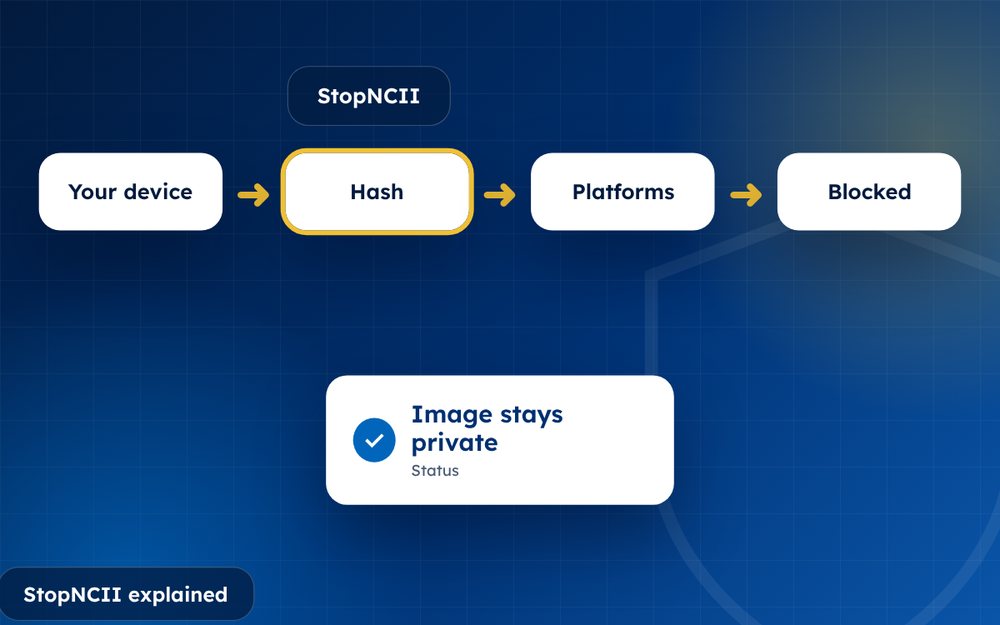
StopNCII Explained: How to Stop Your Images From Spreading
StopNCII explained: how the free hash-matching tool works, who can use it, which platforms take part and what it cannot do.
Read the guide · 4 min