
Non-consensual intimate imagery, often called NCII or image-based abuse, is the sharing of sexual or private images without the consent of the person shown. It includes real images, images shared after a relationship ends and, increasingly, AI-generated fakes. It is not your fault, and there are real tools to get it removed.
Image-based abuse takes many forms, from the sharing of real photos to AI-generated fakes. In all of these cases the person shown is the victim, and the law and most platforms recognise that. You do not need to explain or justify yourself to ask for content to be removed.
This guide focuses on the tools and organisations that exist specifically to help.
- You can ask platforms, websites and search engines to remove NCII, often without needing to prove who shared it.
- StopNCII.org helps block known images across participating platforms.
- Support services exist in many countries. Reporting to the police is your choice.
What counts as NCII
- Private photos or videos shared without your permission
- Images taken without your knowledge
- Content you shared privately that was posted publicly
- Sexual deepfakes created from your face or body
- Content used for blackmail, sometimes called sextortion
Step by step
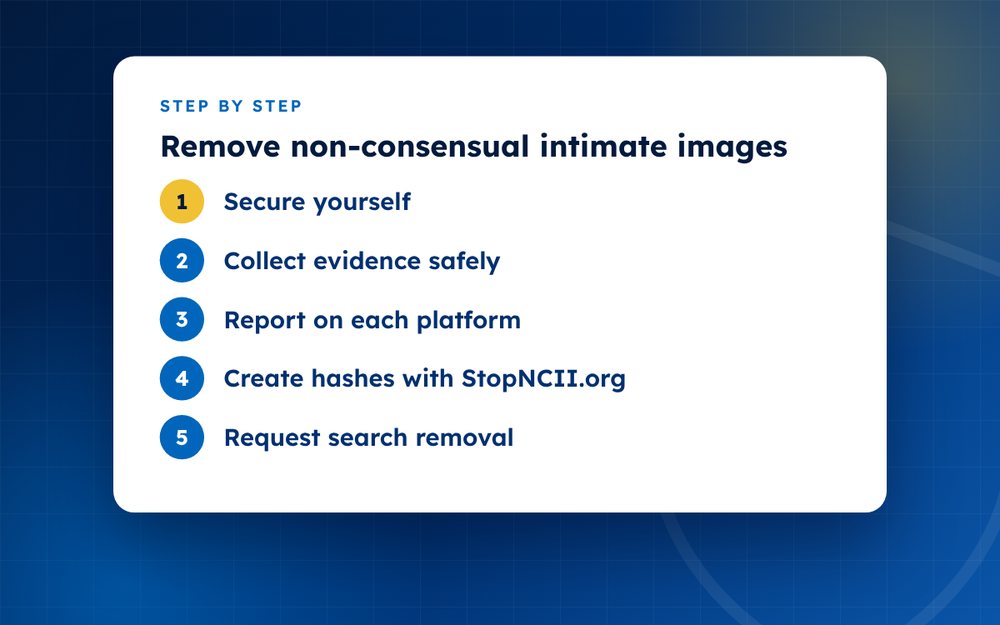
- Secure yourselfIf you are in danger, contact emergency services. Make sure your accounts have strong passwords and two-step verification.
- Collect evidence safelyRecord URLs and take screenshots showing the page and date. If you can, ask a trusted friend to help so you do not need to repeatedly view the material.
- Report on each platformMost major platforms have a specific report option for non-consensual intimate imagery and respond faster to these than to general complaints.
- Create hashes with StopNCII.orgIf you are over 18 and have the images, StopNCII.org generates a unique hash on your device. Partner platforms use it to detect and block matches. The images themselves are not uploaded.
- Request search removalGoogle and Bing have forms for removing non-consensual explicit images from search results. Submit each URL.
- Contact website hostsFor standalone sites, find the host using a WHOIS lookup and send a removal request that cites privacy and consent.
- Explore legal protectionMany countries have criminal or civil laws against NCII. In the US, the federal TAKE IT DOWN Act requires covered platforms to provide a removal process and act on valid requests quickly. Ask a local lawyer about your options.
- Get supportOrganisations such as the Cyber Civil Rights Initiative (US), the Revenge Porn Helpline (UK) and the eSafety Commissioner (Australia) offer guidance and help.
How platforms treat NCII requests
Most large platforms treat non-consensual intimate imagery as a priority category. Reports are often routed to specialised teams, and the content is removed quickly once it is confirmed. Use the specific reporting option for non-consensual intimate content, not a general complaint, because it triggers the right process.
How hashing works
Hash-matching services such as StopNCII.org create a digital fingerprint of an image on your own device. The image is not uploaded. Participating platforms compare uploads to the hash and can block matches. This does not remove images that are already public, but it helps stop them being re-uploaded where the platform takes part.
Evidence and personal safety
Take screenshots of the page, URL and date. If you can, ask a trusted friend to help so that you do not have to view the material repeatedly. If you feel unsafe, contact the police and consider changing your passwords and reviewing your privacy settings. Some organisations offer confidential helplines and advice on legal options.
When the content is AI-generated
Sexual deepfakes are increasingly covered by platform policies and by new laws. Report them in the same way, describing the content as synthetic or manipulated. You do not need to prove that it is fake in detail. The fact that it uses your likeness without consent is enough for most reports.
If someone is threatening you
Do not pay. Keep all messages, stop replying and report to the platform and the police. Blackmail is a serious crime.
If you would like practical help, you can email us in confidence. We handle these cases discreetly and without judgement.
Frequently asked questions
Does StopNCII.org remove images from the whole internet?
No. It helps participating platforms detect and block matching images, but it does not remove content from sites that do not take part, and it does not remove images that are already public. It works alongside removal requests to sites and search engines, not instead of them.
Is AI-generated intimate imagery treated the same?
Many platforms and laws now treat sexual deepfakes as non-consensual intimate imagery. Report them using the same routes and mention that the content is synthetic. Some tools, such as StopNCII.org, support certain kinds of synthetic content, and search engines have policies for synthetic explicit imagery.
What if I do not know who shared it?
You can still report and request removal. Most platform reports do not require you to identify who posted the content. Provide the links and, where asked, a statement that you did not consent. If you need to identify the person for legal reasons, a lawyer can advise.
What if the person shown is under 18?
Use Take It Down, run by the National Center for Missing and Exploited Children, and contact the police. Do not share the images with anyone else, even to ask for help.
Can I get support while this is happening?
Yes. Organisations such as the Cyber Civil Rights Initiative in the US, the Revenge Porn Helpline in the UK and the eSafety Commissioner in Australia provide advice and support. Many other countries have similar services.
Should I report to the police?
That is your decision. Reporting can help, particularly if there are threats, blackmail or a known offender, and it creates an official record. You can still pursue removal without a police report. If you do report, bring screenshots and links, and ask whether specialist officers deal with online abuse.
Need help with this?
Every situation is different. Email us the details in confidence and we will reply with an honest assessment of what can be done.
Contact us by email NCII RemovalThis guide is general information, not legal advice. DMCA Reputation is not a law firm.
Related guides
How to Remove Leaked Photos or Videos From the Internet
How to remove leaked photos or videos from the internet: evidence, platform reports, DMCA, search removal and prevention. A calm step-by-step guide.
Read the guide · 4 min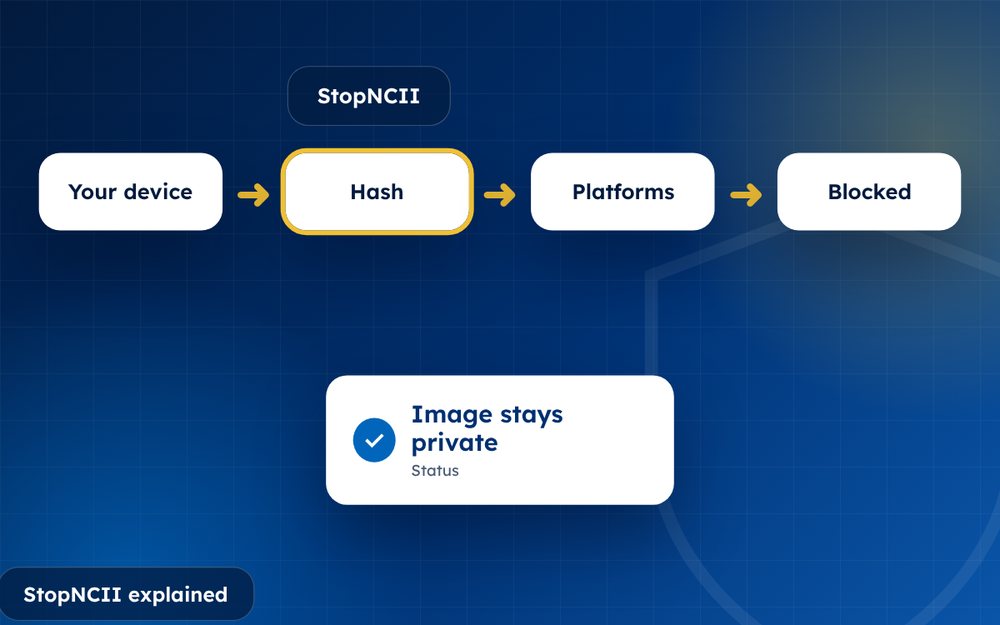
StopNCII Explained: How to Stop Your Images From Spreading
StopNCII explained: how the free hash-matching tool works, who can use it, which platforms take part and what it cannot do.
Read the guide · 4 min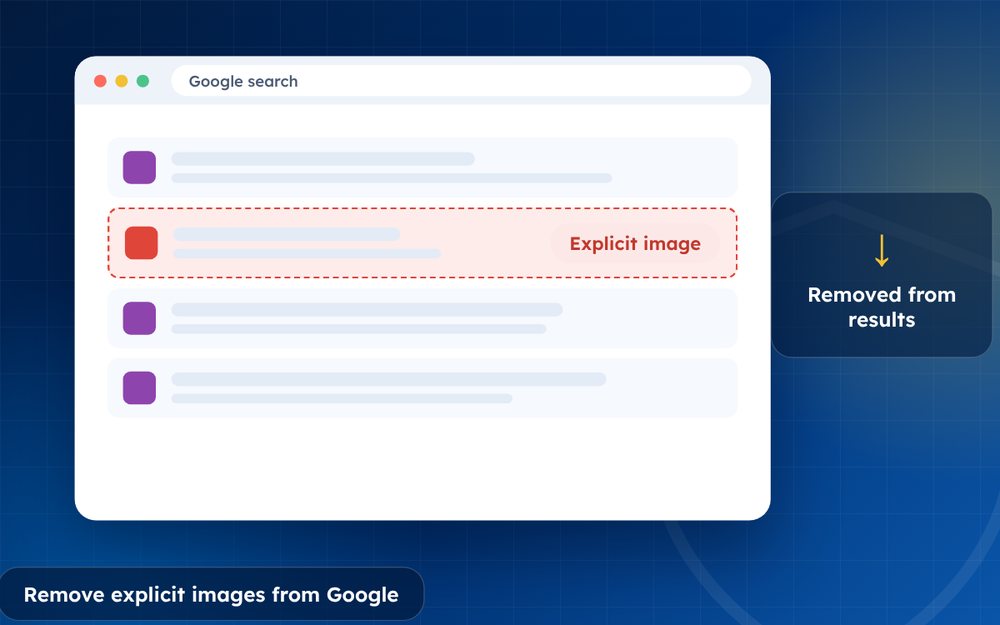
How to Remove Explicit Images of Yourself From Google
How to remove explicit images of yourself from Google: the non-consensual imagery request, what to submit and how to follow up.
Read the guide · 4 min