
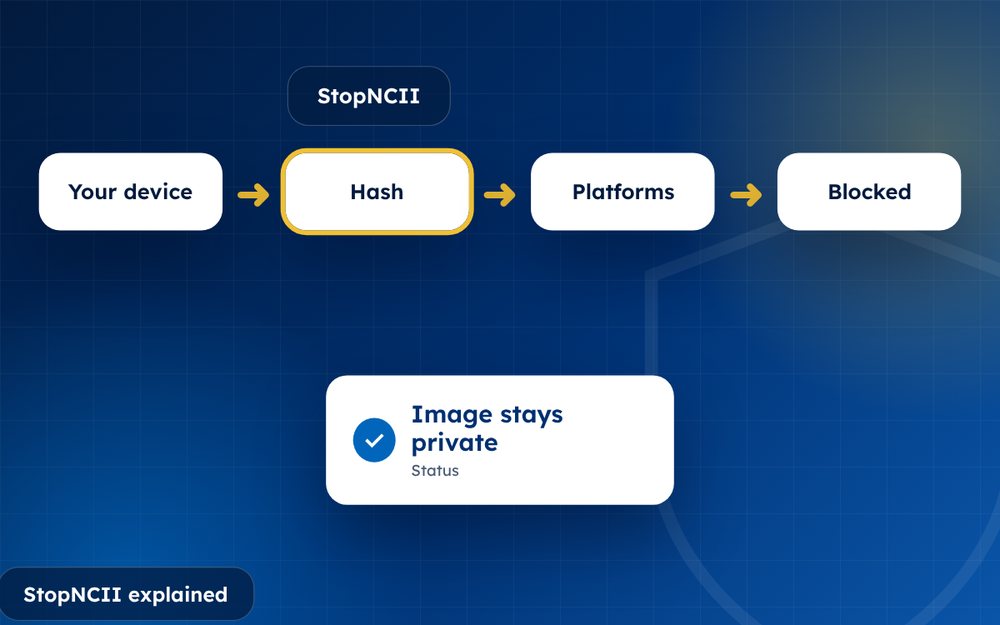
StopNCII.org is a free tool that helps stop intimate images from spreading online. It works by creating a digital fingerprint, called a hash, of an image on your own device. Participating platforms use the hash to find and block matching images.
When intimate images are shared without consent, one of the worst fears is how fast they can spread. StopNCII.org was built to deal with exactly that fear. It is operated by the Revenge Porn Helpline, part of the charity SWGfL, and works with participating technology companies.
The idea is simple: instead of asking you to upload your most private images, it creates a fingerprint of them on your own device and shares only that fingerprint.
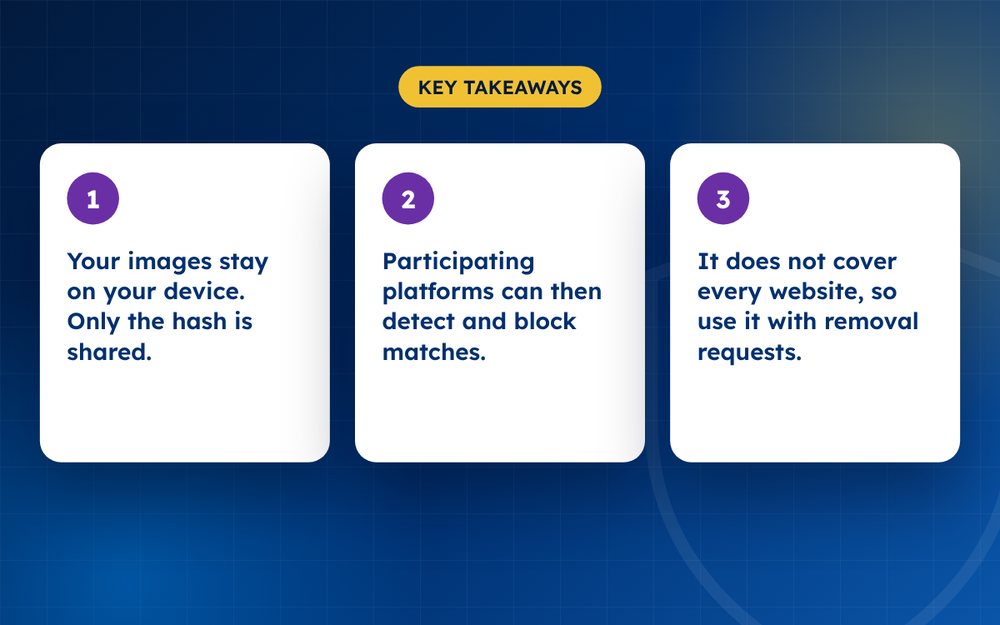
- Your images stay on your device. Only the hash is shared.
- Participating platforms can then detect and block matches.
- It does not cover every website, so use it with removal requests.
How it works
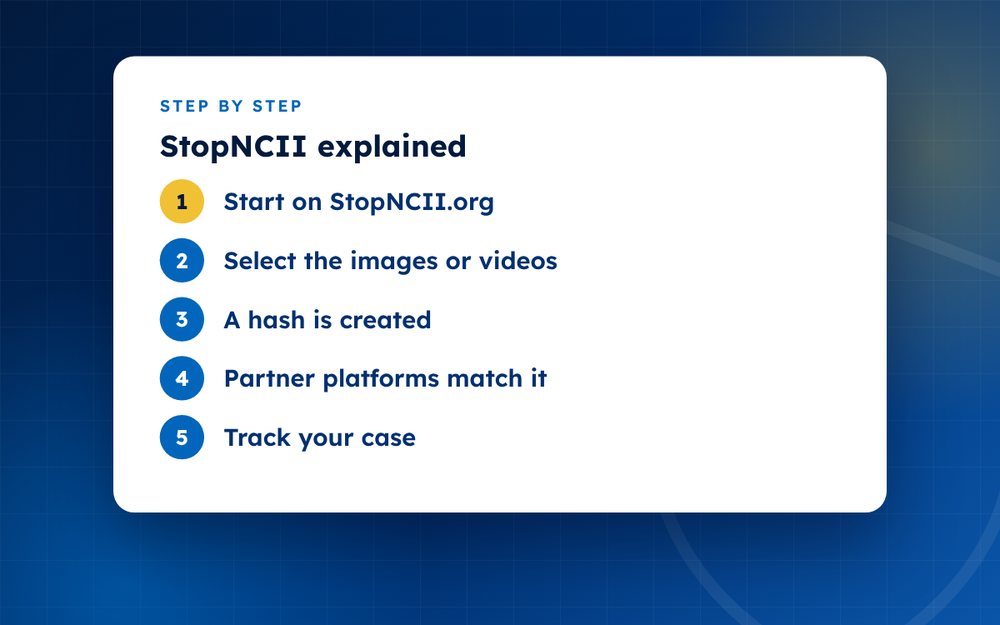
- Start on StopNCII.orgUse the official site and follow the steps for adults concerned about intimate images.
- Select the images or videosThey are processed on your device. They are not uploaded.
- A hash is createdThis is a unique code that represents the file.
- Partner platforms match itParticipating companies check uploads against the hash and can block matches.
- Track your caseKeep your case number and check for updates.
What the fingerprint actually is
A hash is a string of characters generated by a mathematical process from an image or video. It cannot be turned back into the original picture. Two copies of the same image produce the same hash, so a platform can check new uploads against a list of hashes without ever seeing the original content. That is why the service can say your images stay on your device.
Who can use it
StopNCII.org is for adults who are worried that intimate images of them might be shared, or who know that they have been. You need to have the images or videos on the device you are using, because the hash is created there. If you are under 18, a different service called Take It Down, run by the National Center for Missing and Exploited Children, is designed for you.
What happens after you submit
- You receive a case number so that you can check progress
- Participating platforms add your hash to their detection systems
- If someone tries to upload a matching image, the platform can block it or send it for review
- You can withdraw a case if you change your mind
Combining StopNCII with other steps
StopNCII is preventative and works only where platforms take part. You should also report existing posts to platforms, ask search engines to remove links, send removal requests to websites and, if you want, speak to the police or a support organisation. Think of it as one layer in a wider response, not the only one.
Understanding the limits
StopNCII.org is a powerful tool, but it is not magic. It cannot find images that have already been posted on sites that do not take part, and it cannot remove content that is already published. It does not replace reporting to platforms and search engines. Use it as soon as you can, ideally before images are posted, and combine it with the other steps in this guide.
If you are unsure whether it is right for you, a support organisation can talk you through the options.
What it cannot do
- Remove images from sites that do not participate
- Remove images already published unless the platform acts on a match
- Cover every edit of an image. Different versions may need new hashes
- Help under-18s directly. Take It Down covers that case
Use it alongside platform reports, search removal and, where needed, legal help. We can handle the wider removal work in confidence.
Frequently asked questions
Is StopNCII free?
Yes. There is no charge to use StopNCII.org. You do not need to create an account, and you do not have to give a reason beyond confirming that the images are intimate and that you are an adult. If anyone asks for money to create a hash for you, be suspicious.
Is my image uploaded?
No. The hash is created on your device in your browser, and only the hash is sent. The image or video itself does not leave your device. That is the key privacy feature of the service, and it is why many victims feel comfortable using it.
Which platforms take part?
Several large platforms take part, and the list grows over time. Check the StopNCII.org website for the current list of partners. A platform that is not a partner will not use your hash, so you still need to report content there directly.
Can I use it if I have no copy of the image?
Not directly, because the hash needs to be created from a copy on your device. If you do not have a copy, you can still report content to platforms and search engines. A specialist or support organisation can advise on safe ways to proceed.
Does it work for edited versions of an image?
Hash matching is designed to recognise images that are the same or very similar, but significant edits may result in a different hash. If you know of altered versions, you can create hashes for those as well.
What if I am worried about being tracked?
The service is designed to protect your privacy, and it does not require your name. Use a private browsing window if you want extra privacy. If you are concerned for your safety, a support organisation can give you confidential advice.
Need help with this?
Every situation is different. Email us the details in confidence and we will reply with an honest assessment of what can be done.
Contact us by email NCII RemovalThis guide is general information, not legal advice. DMCA Reputation is not a law firm.
Related guides
How to Remove Leaked Photos or Videos From the Internet
How to remove leaked photos or videos from the internet: evidence, platform reports, DMCA, search removal and prevention. A calm step-by-step guide.
Read the guide · 4 min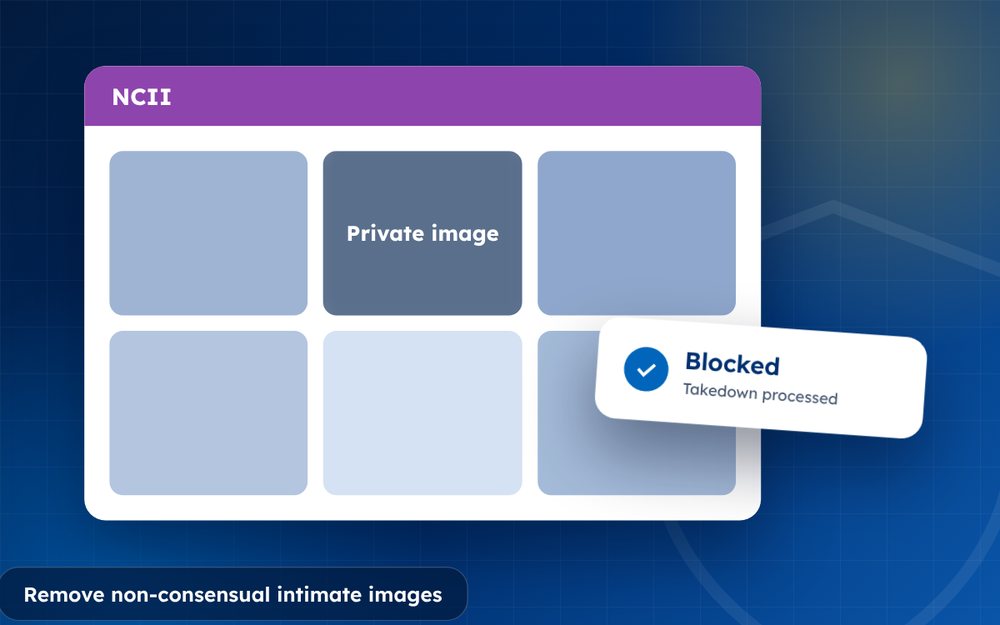
How to Remove Non-Consensual Intimate Images (NCII), Step by Step
How to remove non-consensual intimate images (NCII): reporting, StopNCII.org, Google removal, legal options and support. A step-by-step guide.
Read the guide · 4 min
How to Remove Explicit Images of Yourself From Google
How to remove explicit images of yourself from Google: the non-consensual imagery request, what to submit and how to follow up.
Read the guide · 4 min