
If private photos or videos of you have been leaked, you are not alone and you are not at fault. Quick, organised action gives the best chance of limiting the spread. This guide walks through what to do, in order.
If you are reading this because it has happened to you, the first thing to know is that you did not do anything wrong, and that you are not alone. Leaks of private photos and videos are, sadly, common. The responsibility lies with the person who shared them.
The practical goal is to limit how far the content spreads and to remove as much as possible, as quickly as possible. That means acting in an order that protects you and keeps evidence safe.
- Preserve evidence first, then report. Do not engage with the person sharing it.
- Use platform reports, DMCA notices where you own the content, and search engine removal requests.
- Specialist hash-matching services help stop re-uploads of intimate images.
Before you start
If you feel unsafe or threatened, contact local police or emergency services. If you want emotional support, speak to someone you trust or a helpline in your country. You do not have to deal with this alone.
The steps
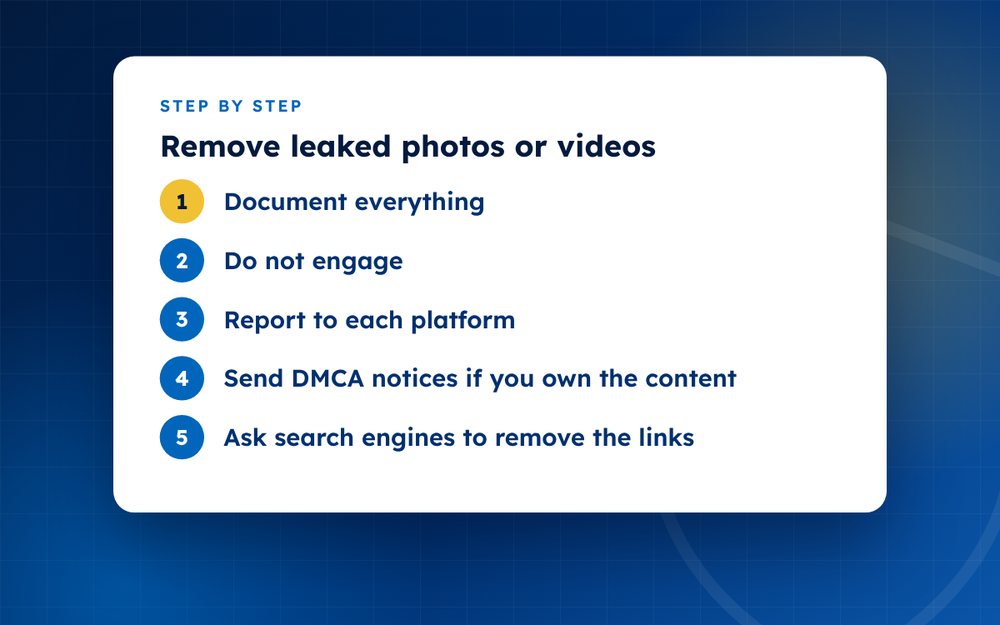
- Document everythingTake screenshots showing the URL, date and the account sharing the content. Save links in a document. Do this before reporting, because content disappears when removed.
- Do not engageDo not negotiate, pay or reply to blackmail. It rarely stops the problem and can escalate it.
- Report to each platformSocial networks, video sites and forums have reporting tools for intimate or private content. Use the category for non-consensual sharing.
- Send DMCA notices if you own the contentIf you created the photo or video, you usually own the copyright. A DMCA notice to the website, its host and Google can force removal.
- Ask search engines to remove the linksEven if a site stays online, you can ask Google and Bing to stop showing it in search.
- Use hash-matching tools for intimate imagesServices such as StopNCII.org create a digital fingerprint of the image on your device, without uploading it, so participating platforms can block it. Under-18s can use Take It Down.
- Monitor and repeatLeaks often reappear on new sites. Keep a record, check regularly and file new requests quickly.
- Consider legal and police optionsSharing intimate images without consent is a crime or civil wrong in many countries. A lawyer or police report may be appropriate.
Why speed and order matter
Leaked content tends to move in waves. It appears on one site, is copied to others and then indexed by search engines. Each stage makes it harder to deal with. Reporting to the main platforms and search engines early prevents the content from reaching a wider audience and gives later requests more weight.
At the same time, rushing can cause mistakes. Do not delete messages or accounts before you have saved evidence. Do not reply to the person who leaked the content. Take screenshots first, then report.
The tools you can use
- Platform reporting forms for non-consensual intimate content, which are usually reviewed faster than general complaints
- DMCA notices where you took the photo or video yourself and therefore own the copyright
- Search engine forms for removing explicit or private content from results
- Hash-matching services such as StopNCII.org for adults and Take It Down for people under 18
- Police reports and legal advice where threats, blackmail or harassment are involved
Looking after yourself
Searching for your own images is distressing. Consider asking a trusted friend or a professional service to do the searching for you. Talk to someone about how you feel, whether that is a friend, a helpline or a counsellor. Taking breaks does not slow the process down, and it protects your wellbeing.
How a specialist can help
The work is time consuming and emotionally draining. A discreet specialist team can handle identifying copies, preparing notices and following up with platforms while you focus on yourself. Email us in confidence to talk it through.
Frequently asked questions
Can leaked content be removed completely?
Often much of it can be removed, but no honest provider can promise total removal. The goal is to remove as much as possible, reduce visibility in search and monitor for new copies.
Should I contact the person who leaked it?
Usually not. Contact can escalate the situation or give the person a chance to delete evidence or threaten you. Keep records, report through official channels and speak to the police or a lawyer if there are threats, blackmail or harassment. If you feel safe and a lawyer advises it, a formal letter may be an option.
Is it a crime?
In many countries sharing intimate images without consent is a criminal offence or a civil wrong. Laws differ widely, so speak to a local lawyer or a victim support organisation to understand your options.
Will search engines remove it?
Search engines have dedicated forms for non-consensual intimate imagery, and they respond to copyright notices. Submit each URL with a clear explanation, and keep a record of your requests. Removal from search reduces visibility even if the website refuses to act, so it is one of the most useful steps.
How long does it take?
Some platforms act within hours or days. Others take weeks, and some ignore requests, which requires escalation to hosts and search engines. Expect an ongoing process, not a single step.
What if the images appear again later?
This happens often. Keep a list of the sites involved, check regularly and repeat your requests quickly, referring to earlier reports. Hash-matching tools such as StopNCII.org help prevent re-uploads on participating platforms. A monitoring service can save you from searching repeatedly.
Need help with this?
Every situation is different. Email us the details in confidence and we will reply with an honest assessment of what can be done.
Contact us by email Leak Content RemovalThis guide is general information, not legal advice. DMCA Reputation is not a law firm.
Related guides
How to Remove Non-Consensual Intimate Images (NCII), Step by Step
How to remove non-consensual intimate images (NCII): reporting, StopNCII.org, Google removal, legal options and support. A step-by-step guide.
Read the guide · 4 min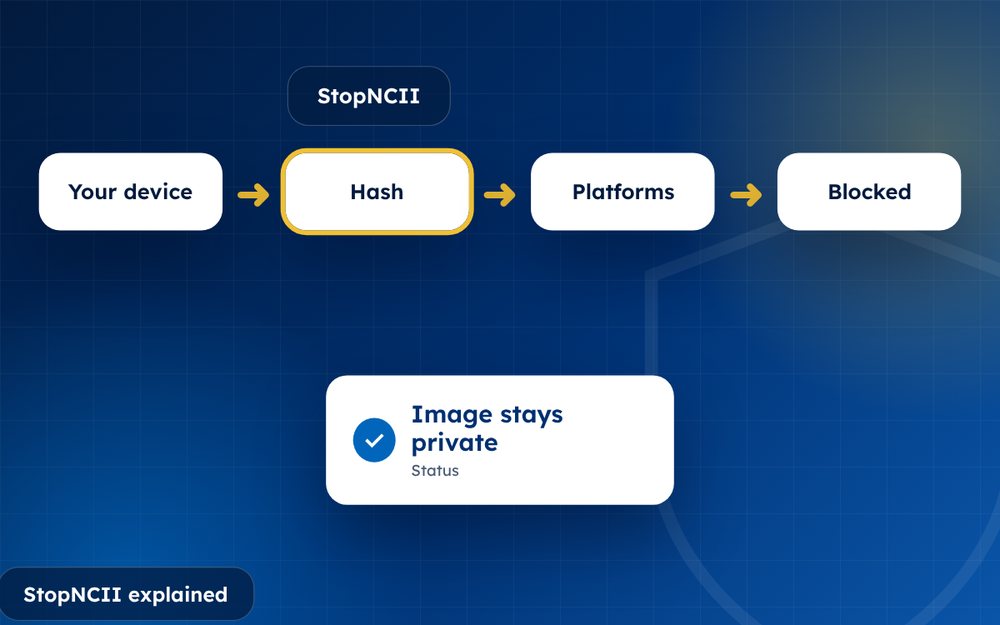
StopNCII Explained: How to Stop Your Images From Spreading
StopNCII explained: how the free hash-matching tool works, who can use it, which platforms take part and what it cannot do.
Read the guide · 4 min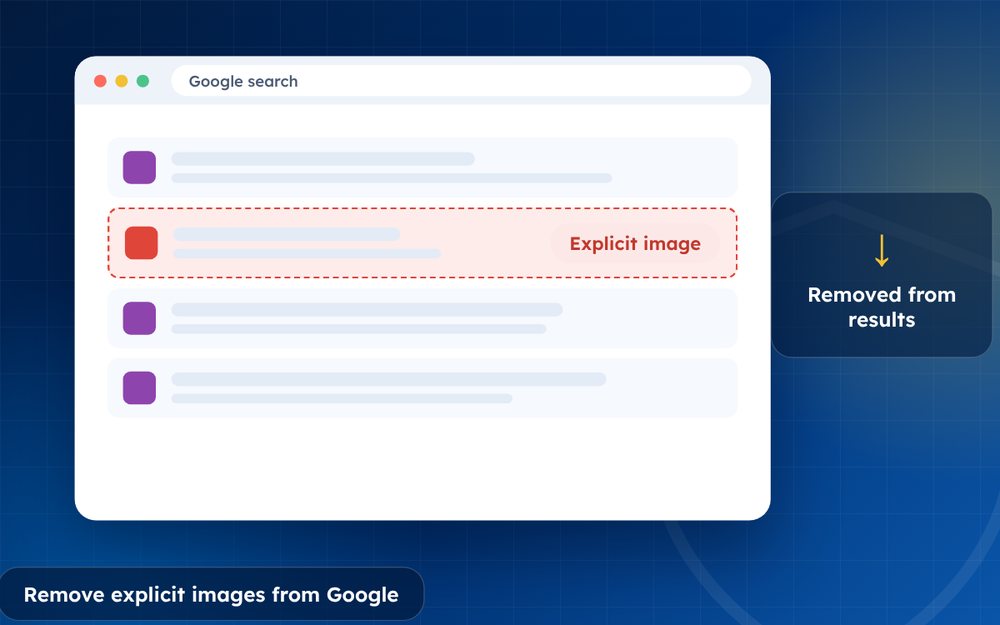
How to Remove Explicit Images of Yourself From Google
How to remove explicit images of yourself from Google: the non-consensual imagery request, what to submit and how to follow up.
Read the guide · 4 min