
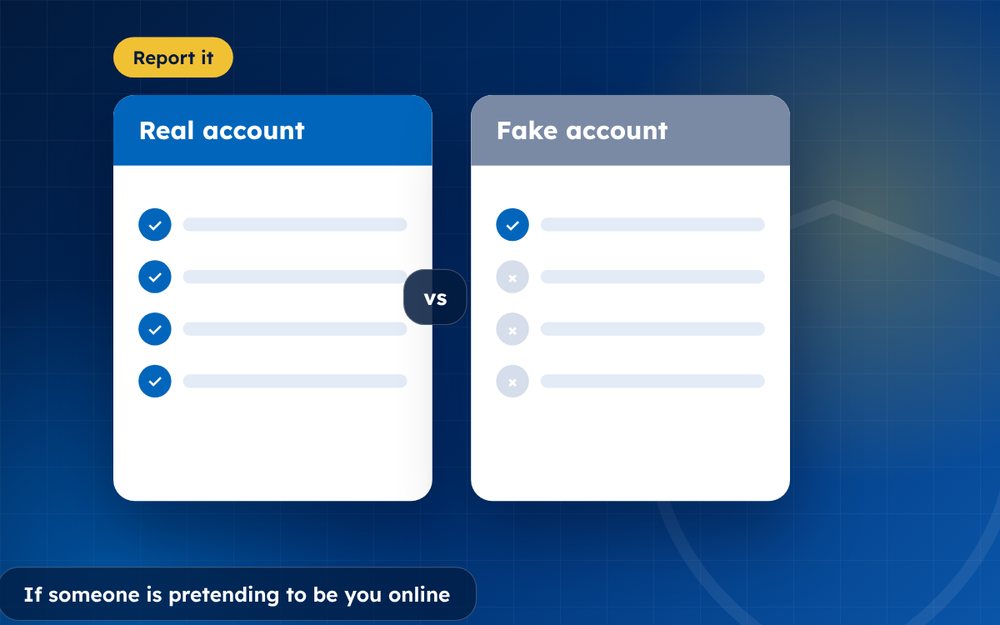
Online impersonation can harm your reputation, your relationships and your finances. A calm plan helps you shut it down.
Being impersonated online is unsettling because it takes your identity and uses it in ways you did not choose. It can involve fake social media profiles, cloned websites, fake emails or even messages sent in your name.
Whatever form it takes, the response has the same structure: record, report, warn and protect.
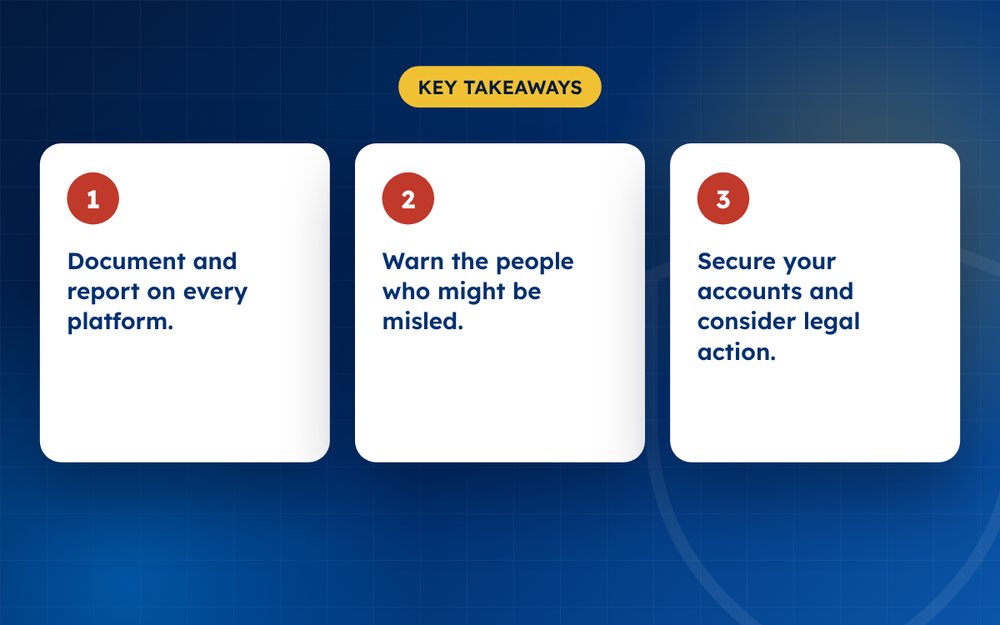
- Document and report on every platform.
- Warn the people who might be misled.
- Secure your accounts and consider legal action.
Steps
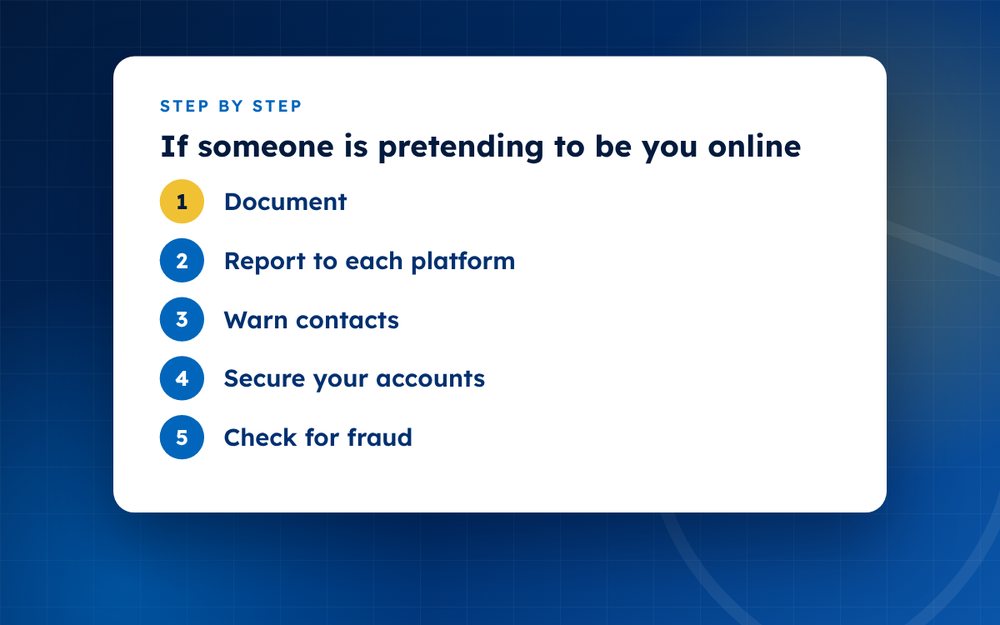
- DocumentTake screenshots with URLs and dates.
- Report to each platformUse the impersonation or fake profile options.
- Warn contactsTell friends, family, colleagues and clients.
- Secure your accountsChange passwords, turn on two-factor authentication and review recovery details.
- Check for fraudIf money or documents are involved, tell your bank and local fraud authority.
- Ask search engines to remove resultsIf a fake profile appears in search, request removal.
- Consider legal helpImpersonation can be a crime or civil wrong depending on where you live.
- MonitorSet alerts for your name and images.
Record everything
Take screenshots and save links, usernames and dates. Capture messages sent to others and any money requests. Save the evidence somewhere that only you can access, and avoid sharing it widely, which can spread the impersonation further.
Report to each service
- Social platforms: use the impersonation or fake profile options
- Websites: contact the host and registrar about cloned or fake sites
- Email providers: report spoofed or fraudulent messages
- Marketplaces: report listings that use your name or brand
- Search engines: ask for removal of results that expose private information
Tell the right people
Let friends, family, colleagues and clients know that someone is pretending to be you. Give them a simple way to verify messages, such as calling you on a known number. If the impersonator has used your professional identity, tell your employer or clients and give them advice on what to do if they were contacted.
Look at legal and financial steps
If money or sensitive data is involved, contact your bank and relevant authorities. Impersonation can be a crime or a civil wrong depending on where you live. A lawyer can explain your options and help you if you want to take formal action.
Impersonation of a business or professional
If the impersonation affects your business, treat it as a brand protection issue. Contact the platforms with your business registration and trademark details if you have them. Update your website with a list of official accounts. Alert your customers through channels you control, such as email newsletters.
If clients have lost money, they may need to report to their banks. Help them by providing a clear statement that the account was not yours.
Email us in confidence for help coordinating reports.
Frequently asked questions
Is impersonation illegal?
Often, particularly when it is used for fraud, harassment or identity theft. The exact rules differ by country, and some places have specific laws on online impersonation. Report to the police and ask a lawyer about your options.
Can I find out who is doing it?
Platforms do not share this information without legal process. Sometimes the identity becomes clear from the context, such as a personal dispute. If you want to pursue the person, a lawyer can advise on legal routes, though they can be costly.
Should I confront them?
No. Confronting someone can escalate the situation or lead to deletion of evidence. Document and report, and let the platforms, police or lawyers deal with the rest.
What if they use my photos?
Report it as impersonation. If you took the photos, you can also use copyright reporting. Keep originals with dates as proof of ownership.
What if the fake account is not removed?
Report again with more evidence and ask friends to report accurately. Escalate through the platform's help forms. Consider specialist help, and make sure you have reported the account for every rule it breaks.
How can I prevent it happening again?
Review your privacy settings, limit the personal information you share publicly, monitor for your name and photos and consider registering your name on key platforms. Prevention reduces the risk but cannot remove it.
Need help with this?
Every situation is different. Email us the details in confidence and we will reply with an honest assessment of what can be done.
Contact us by email Fake Social Media ProfilesThis guide is general information, not legal advice. DMCA Reputation is not a law firm.
Related guides
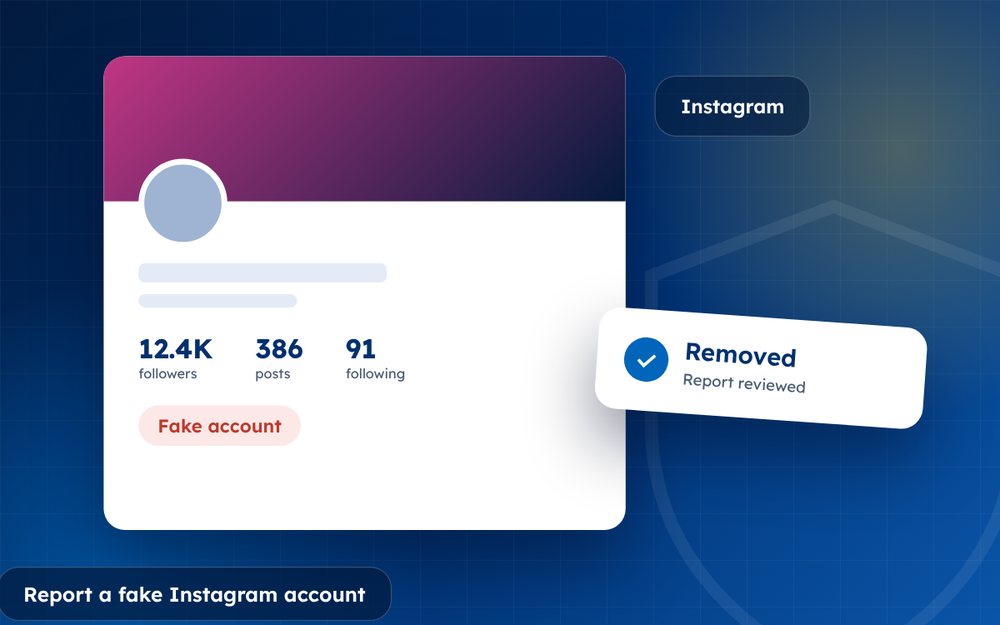
How to Report a Fake Instagram Account Impersonating You
How to report a fake Instagram account impersonating you: reporting steps, what to do without an account, evidence and next steps.
Read the guide · 4 min
How to Remove a Fake Facebook Profile
How to remove a fake Facebook profile impersonating you: reporting steps, the impersonation form and protecting your real account.
Read the guide · 3 min
How to Report a Fake X (Twitter) Account
How to report a fake X (Twitter) account impersonating you: what X's impersonation policy covers and how to report.
Read the guide · 3 min