
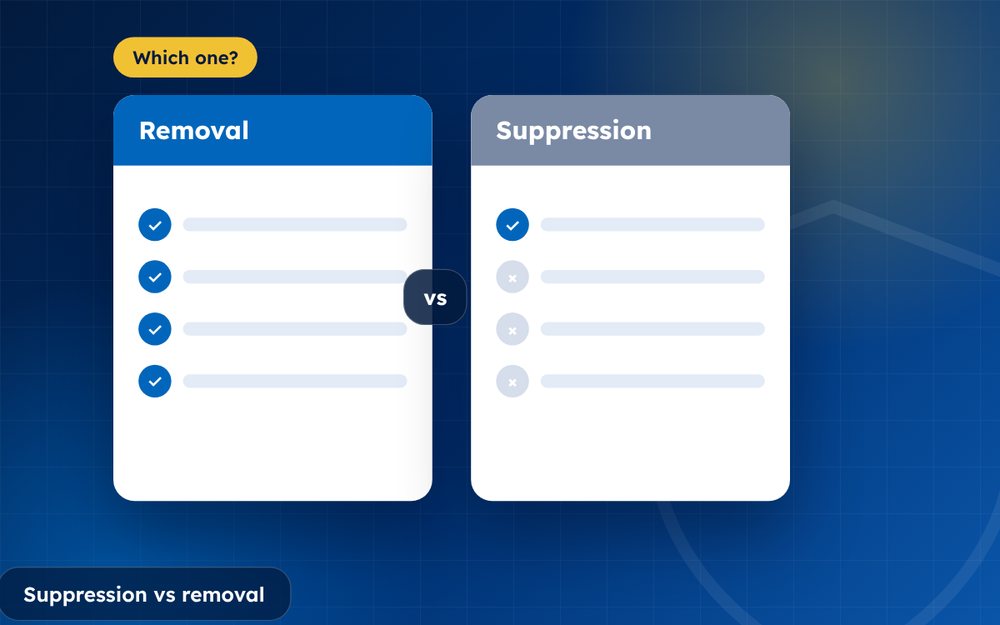
Removal deletes or delists content. Suppression pushes it down so fewer people see it. Many cases need both. Here is how to choose.
When someone is struggling with a harmful search result, the first question is often whether to remove it or to push it down. They are different strategies with different strengths, and many cases benefit from both.
Choosing well saves time and money, and it prevents the frustration of pursuing something that cannot succeed.
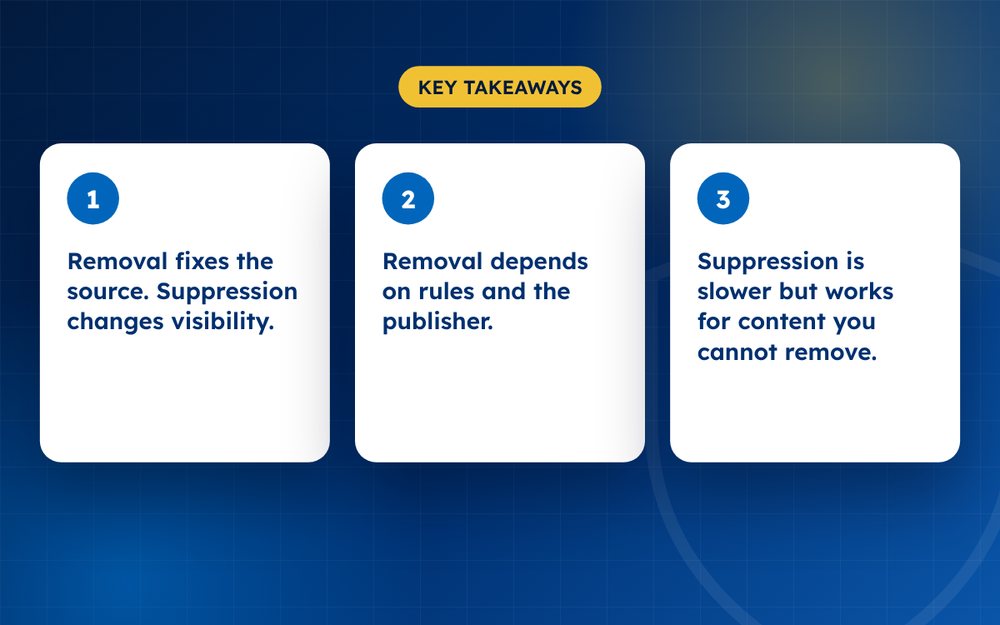
- Removal fixes the source. Suppression changes visibility.
- Removal depends on rules and the publisher.
- Suppression is slower but works for content you cannot remove.
Quick comparison
- Removal: deleted at the source or delisted from search, can be fast, not always possible
- Suppression: new content outranks the old, takes months, does not delete anything
- Together: remove what you can and suppress the rest
How to decide
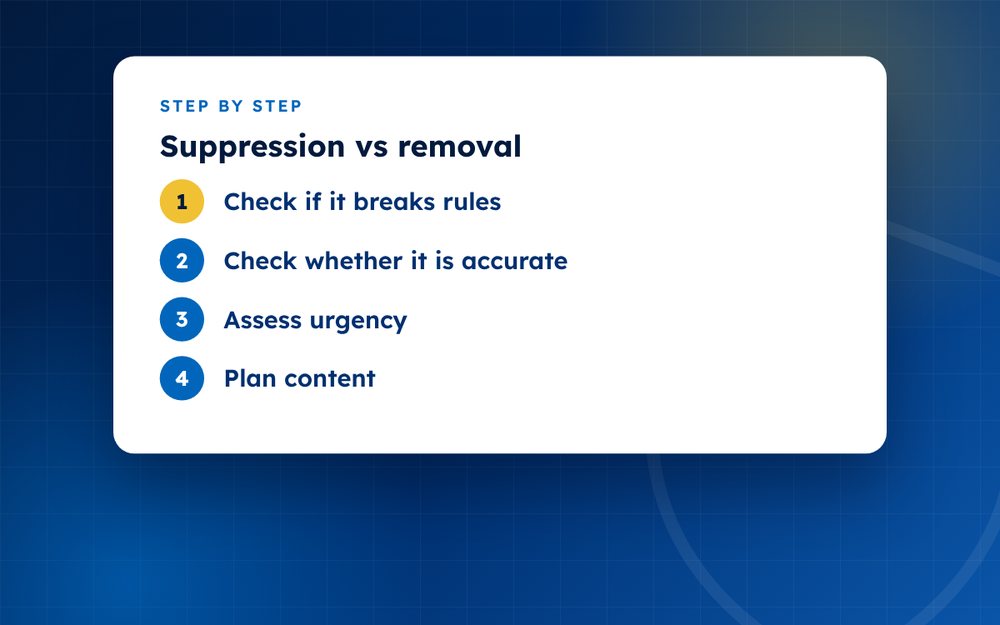
- Check if it breaks rulesFake reviews, leaks, privacy violations and clear policy breaches are candidates for removal.
- Check whether it is accurateAccurate reporting is hard to remove. Suppression may be your path.
- Assess urgencyRemoval can bring faster relief if it is possible.
- Plan contentEven when removing, build positive content to protect against future problems.
What removal can and cannot do
Removal means getting content taken down or delisted. It works when the content breaks a platform's rules, infringes copyright, contains private information or is unlawful. It can be fast and complete when it succeeds. It cannot succeed when the content is accurate, lawful and published by someone who will not agree to remove it.
What suppression can and cannot do
Suppression builds better results around the negative one. It works for almost any kind of content, including accurate reporting, because it does not require anyone's permission. It is slower, it does not delete anything and it requires ongoing effort to maintain. It can reduce visibility but cannot guarantee that no one will find the content.
A decision guide
- If the content breaks a rule or the law, try removal first
- If it is accurate and lawful, plan for suppression
- If it is outdated or private, consider delisting requests as well
- If the content is serious and urgent, run removal and suppression together
- If you are unsure, get an honest assessment before spending money
Why combining them works
Even when removal succeeds, building positive content protects you from future problems. And even when suppression is the main strategy, you may still be able to remove parts of the problem, such as personal information. The two approaches support each other.
An example comparison
Suppose two people face problems. One is a restaurant owner with a fake review from a competitor. Removal is the right strategy because the review breaks the rules. The other is a manager named in an accurate news story from five years ago. Removal is unlikely, so suppression and perhaps a delisting request are better. Both benefit from monitoring and positive content.
Looking at your own situation in this way, by asking what the content is and which rules apply, makes the choice much clearer.
Email us the links and we will advise on the best mix.
Frequently asked questions
Which is cheaper?
It depends on the case. A simple removal request may be cheap or free, while a difficult one can be costly. Suppression is usually a longer project and may cost more in total. Ask for an assessment before you decide, and be wary of fixed prices offered without seeing your situation.
Which is permanent?
Removal at the source is the most lasting, because the content no longer exists. Suppression requires maintenance, because new content or changes in search can bring negative results back. For lasting protection, keep building positive content.
Can suppression fail?
Yes, if the negative page is very strong or the name is very competitive. Results vary, which is why honest providers explain the risks. Combining suppression with removal requests and ongoing monitoring improves the odds.
Do I need both?
Often yes. Removal handles what can be removed. Suppression covers what cannot. A balanced plan also includes monitoring so that new problems are caught early.
How do I know which applies?
Look at what the content says and where it is published. Check whether it breaks a rule, contains private information or infringes your rights. If you are unsure, get advice. Do not assume that anything can be removed.
Is suppression a trick?
No. It is a legitimate approach that involves publishing accurate, useful content. It becomes a problem only when it uses deceptive tactics.
Need help with this?
Every situation is different. Email us the details in confidence and we will reply with an honest assessment of what can be done.
Contact us by email Search SuppressionThis guide is general information, not legal advice. DMCA Reputation is not a law firm.
Related guides
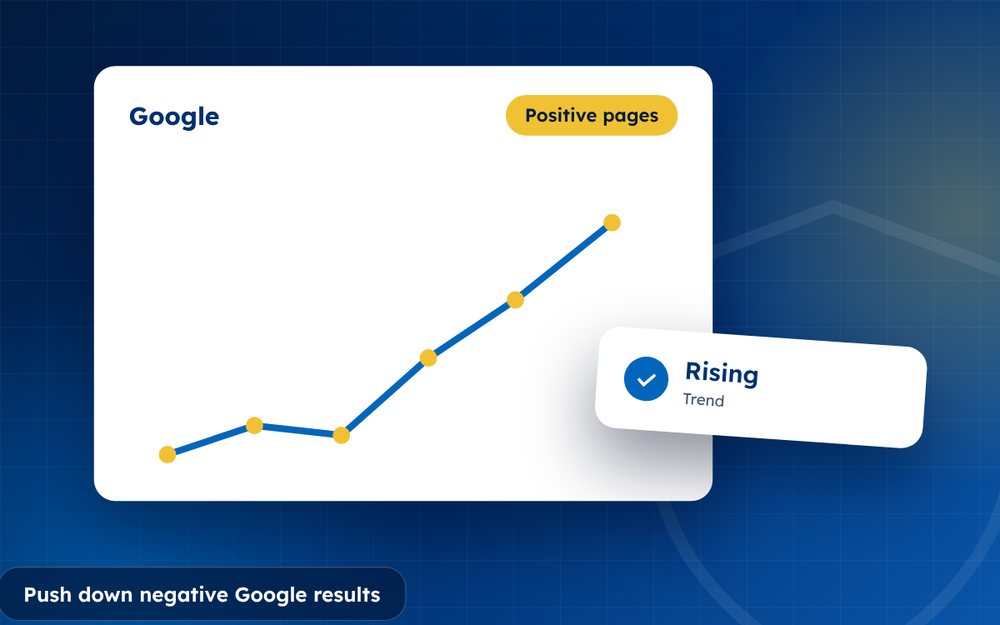
How to Push Down Negative Google Results
How to push down negative Google results: a step-by-step suppression strategy with owned profiles, quality content and realistic timelines.
Read the guide · 4 min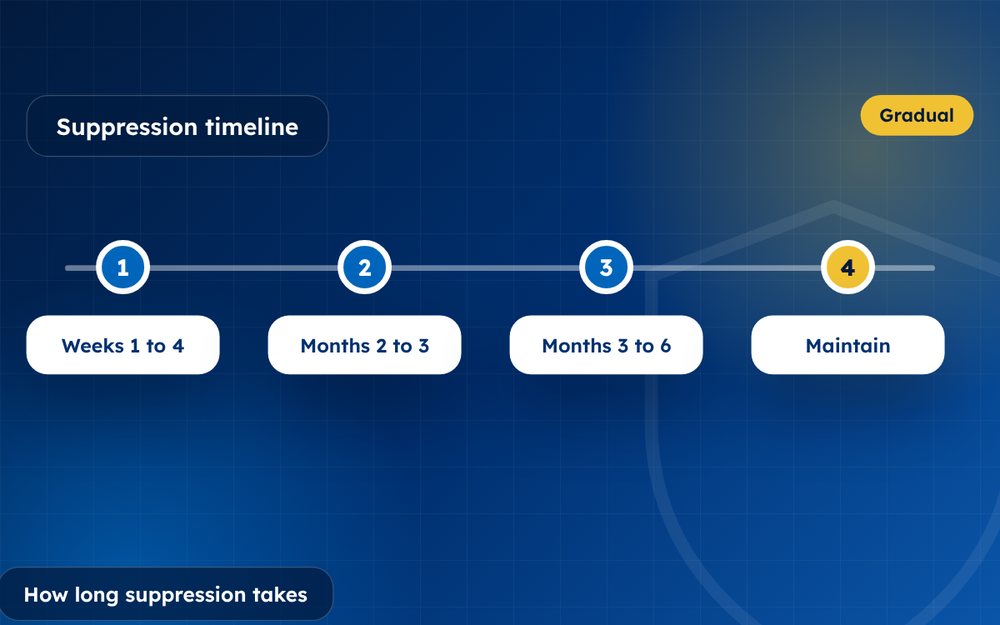
How Long Does Search Suppression Take?
How long does search suppression take? Typical timelines and the factors that make it faster or slower.
Read the guide · 3 min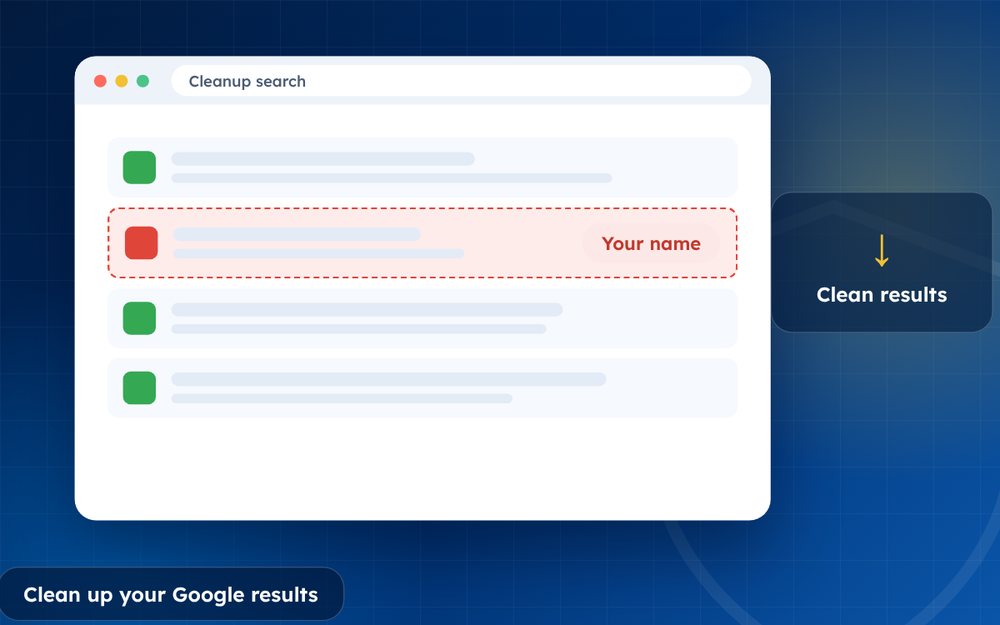
How to Clean Up Your Google Search Results
How to clean up your Google search results: audit, removal, privacy, profile building and monitoring in a clear step-by-step plan.
Read the guide · 3 min