
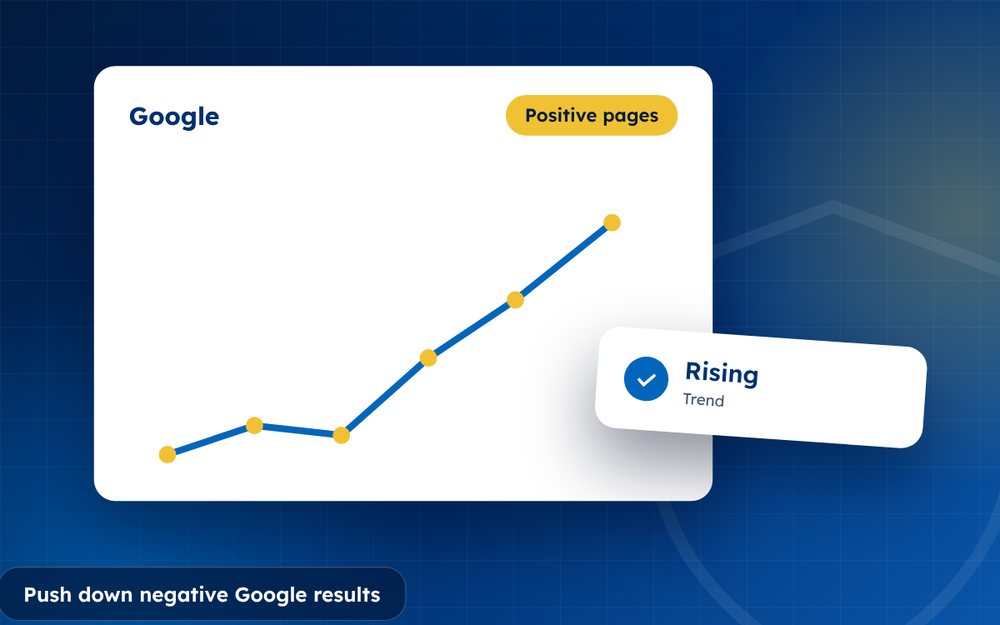
When a negative result cannot be removed, the next best thing is to make it less visible. Most people never go past the first page of Google, so the aim is to fill that page with accurate, positive and professional content about you. This is called search suppression.
Pushing down negative results is a process of competition. Google chooses what to show on the first page based on relevance, authority and usefulness. If your positive pages are stronger than the negative page, they rise. If they are weaker, they do not.
That is why suppression is both a technical and an editorial task. You need pages that deserve to rank, and you need them to be visible to search engines.
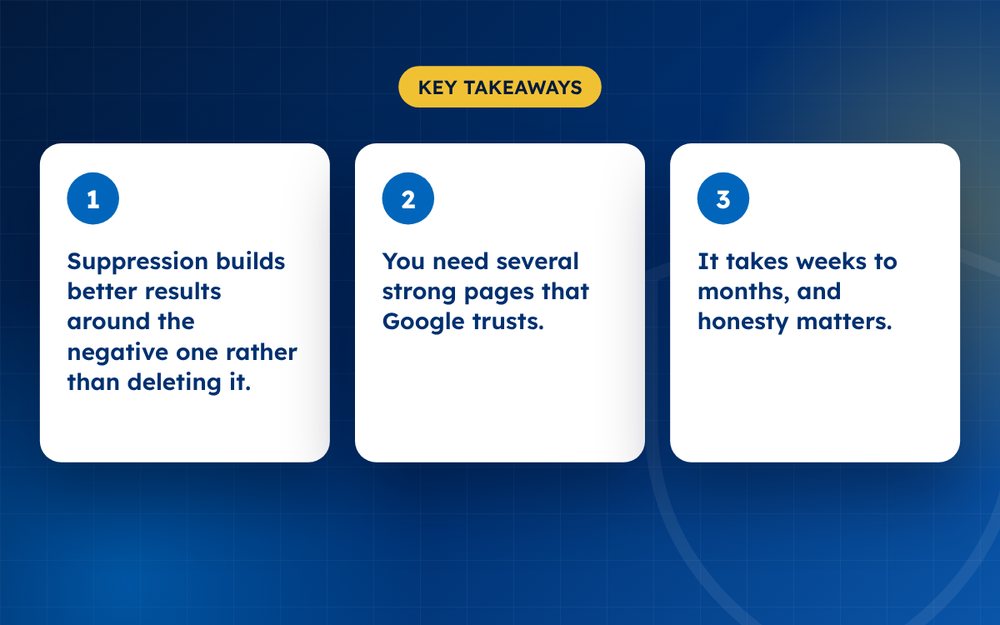
- Suppression builds better results around the negative one rather than deleting it.
- You need several strong pages that Google trusts.
- It takes weeks to months, and honesty matters.
How suppression works
Google ranks pages by relevance and authority. If you publish strong pages about yourself, they can outrank an older negative page. The negative result does not disappear, it simply moves lower.
Step by step
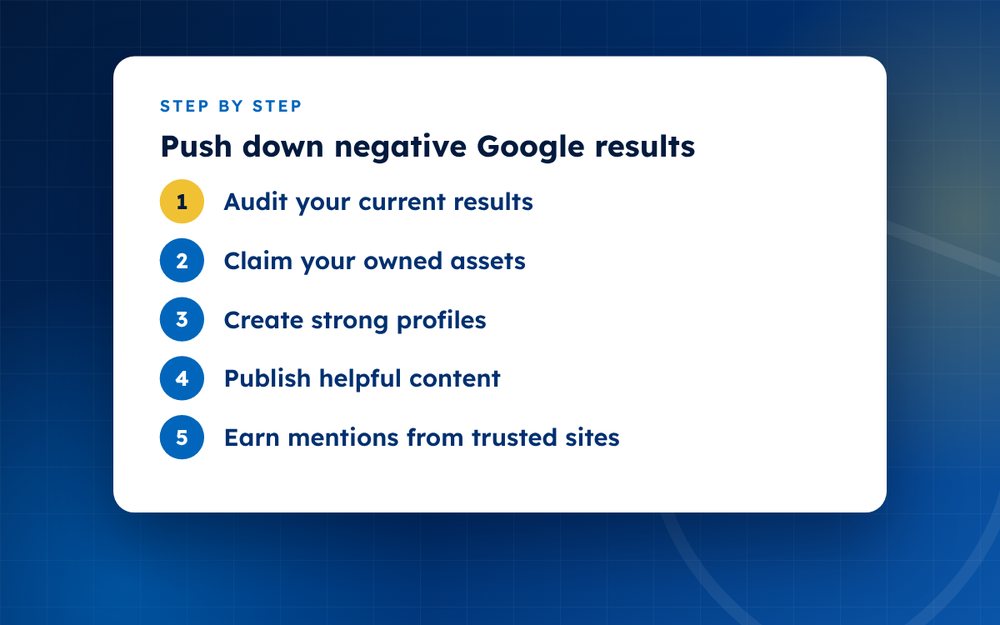
- Audit your current resultsList what appears on the first two pages for your name and business, and note which are positive, neutral or negative.
- Claim your owned assetsCreate a personal or company website with your name in the title. Build a clear About page and a Contact page.
- Create strong profilesLinkedIn, industry directories, professional associations, speaker pages and other reputable profiles tend to rank well for names.
- Publish helpful contentWrite articles, interviews, case studies or guest posts that show your expertise. Use your full name consistently.
- Earn mentions from trusted sitesPress, podcasts, awards, community involvement and partnerships create links and credibility.
- Optimise the basicsUse clear titles, descriptions and headings, make the site fast and mobile friendly, and add structured data where relevant.
- Measure and adjustCheck rankings monthly and keep improving the pages that are climbing.
What makes a page rank for a name
Pages that rank well for personal names tend to be clear about who the person is, hosted on trusted domains and linked to by other sites. Profiles on established platforms such as LinkedIn, professional associations and industry publications often rank well because search engines already trust them. A personal website with your name in the domain and title also performs strongly.
Building a content plan
- A personal or company website with a clear About page
- A complete LinkedIn profile with your name and role
- Interviews, podcasts or guest articles on reputable sites
- Local or industry directories with consistent details
- Social profiles that you actively maintain
- Press releases when you have real news
Linking and consistency
Link your profiles to each other and to your website. Use the same name, photo and description. This tells search engines that these pages belong to the same person and strengthens each of them.
Being honest about limits
Suppression works best for results on pages two or three of search, and for names with limited competition. A negative article on a major news site is much harder to move. In that case, combine suppression with a request to the publisher or a delisting request where legal grounds exist.
Measuring progress
Track where each page appears for your name every month, using a private browser window and, if possible, the same location. Note which positive pages are climbing and which have stalled. If a page is not moving after a few months, improve it by adding more detail, earning links or updating the content. A simple spreadsheet is enough.
Be careful not to chase short-term jumps. Search results fluctuate, and a healthy strategy focuses on steady improvement across several pages.
What to avoid
- Spam, fake profiles or mass-produced pages
- Buying links in bulk
- Attacking or impersonating others
- Promising yourself a fixed timeline. Results vary
Realistic expectations
Strong pages for a low-competition name can rank in weeks. A highly visible negative article on a major news site is harder and can take months. Combining suppression with removal requests gives the best result.
We can review your search results by email and tell you honestly what is achievable.
Frequently asked questions
Does suppression remove the negative result?
No. It reduces visibility by pushing the result down. The page remains online and can still be found by people who search for it directly or who scroll to later results. Suppression works because most people only look at the first page.
How long does it take?
Typically two to six months for meaningful change, depending on competition and the strength of the negative page. Some changes appear within weeks, particularly for low-competition names. Be wary of promises of fast results.
Can negative results return?
Yes, if your new content weakens or new negative content appears. Ongoing monitoring and regular updates keep your results stable. Treat suppression as a continuing process, not a one-off project.
Is it ethical?
Yes, when the new content is accurate and you are not deceiving anyone. It is a legitimate way to present your own story. It becomes unethical if you create fake profiles, spam or false claims, which also tend to be penalised by search engines.
Do I need to hire someone?
Many steps can be done yourself, such as building a website and completing profiles. Specialists can speed up the process and handle technical issues, particularly when results are numerous or the negative page is strong. Choose someone who explains what they will do.
Will paid advertising help?
Ads appear separately from organic results and do not change them. They do not suppress negative results, though they can help you appear when people search for your brand. Use organic content for suppression.
Need help with this?
Every situation is different. Email us the details in confidence and we will reply with an honest assessment of what can be done.
Contact us by email Search SuppressionThis guide is general information, not legal advice. DMCA Reputation is not a law firm.
Related guides
Search Suppression vs Removal: Which Do You Need?
Search suppression vs removal: how they differ, when each works best and how to decide which one you need.
Read the guide · 3 min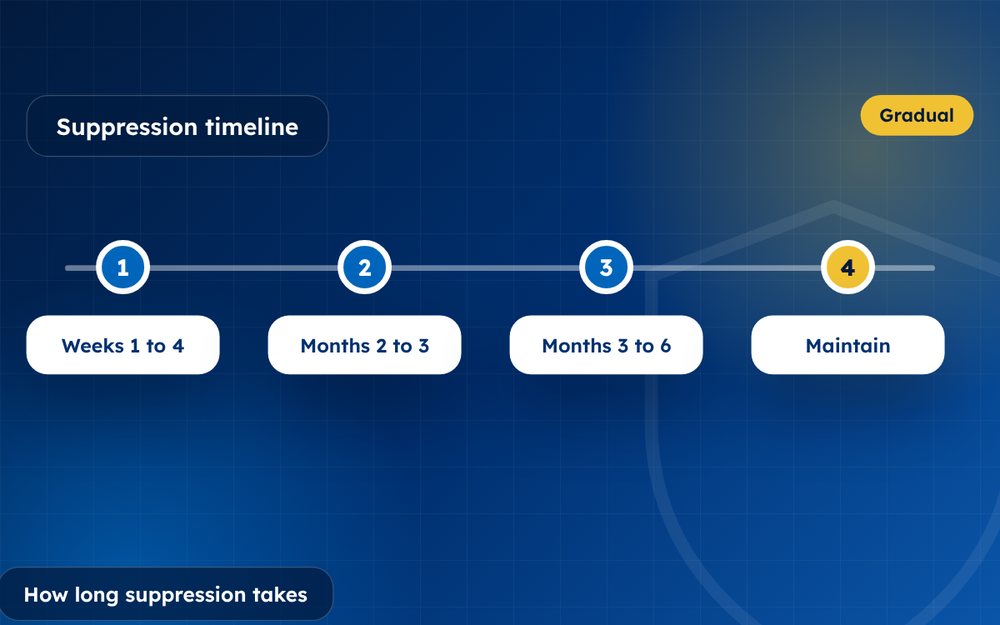
How Long Does Search Suppression Take?
How long does search suppression take? Typical timelines and the factors that make it faster or slower.
Read the guide · 3 min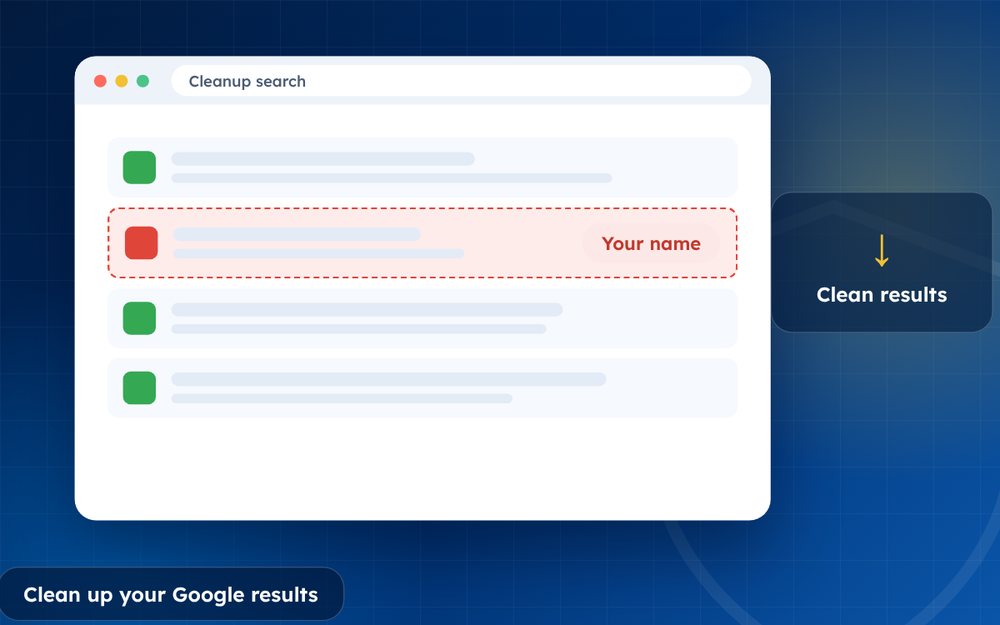
How to Clean Up Your Google Search Results
How to clean up your Google search results: audit, removal, privacy, profile building and monitoring in a clear step-by-step plan.
Read the guide · 3 min