
A copyright strike is a formal penalty on a YouTube channel after a valid takedown request. It is different from a Content ID claim and has more serious consequences.
Many creators are surprised when they receive their first copyright strike, particularly when they believed they were following the rules. Strikes are serious, but they are also manageable if you understand them.
This guide explains how strikes work, how they differ from other types of claims and what your options are.
- A strike follows a copyright removal request, not an automatic claim.
- Three active strikes can lead to channel termination.
- Strikes can be disputed with a counter-notification.
Strike versus claim
- A Content ID claim is automatic and affects monetisation or visibility without a strike
- A copyright strike results from a formal takedown and removes the video
- Strikes expire after a period if the creator completes the required steps, but repeated strikes are serious
What happens
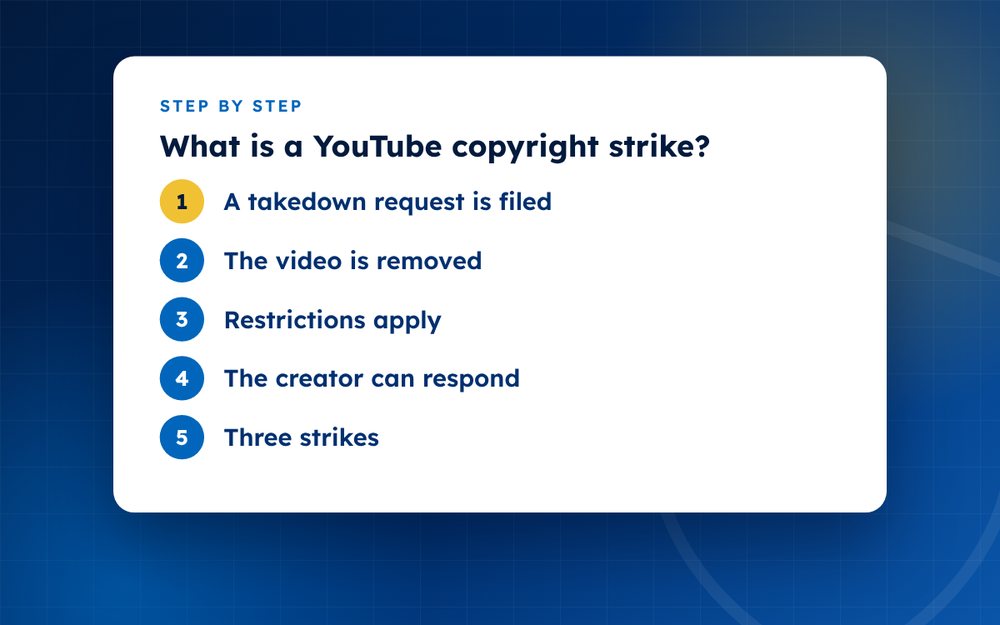
- A takedown request is filedThe rights holder submits a valid copyright removal request.
- The video is removedYouTube removes it and applies a strike to the channel.
- Restrictions applyThe channel may lose some features while the strike is active.
- The creator can respondOptions include waiting for the strike to expire, asking the claimant to retract, or filing a counter-notification.
- Three strikesChannels with three active strikes risk termination.
What a strike does
A copyright strike is applied when a rights holder submits a valid takedown request and YouTube removes the video. The strike is recorded against the channel, and the channel owner receives a warning. While a strike is active, some features may be restricted, and further strikes increase the risk.
Three strikes
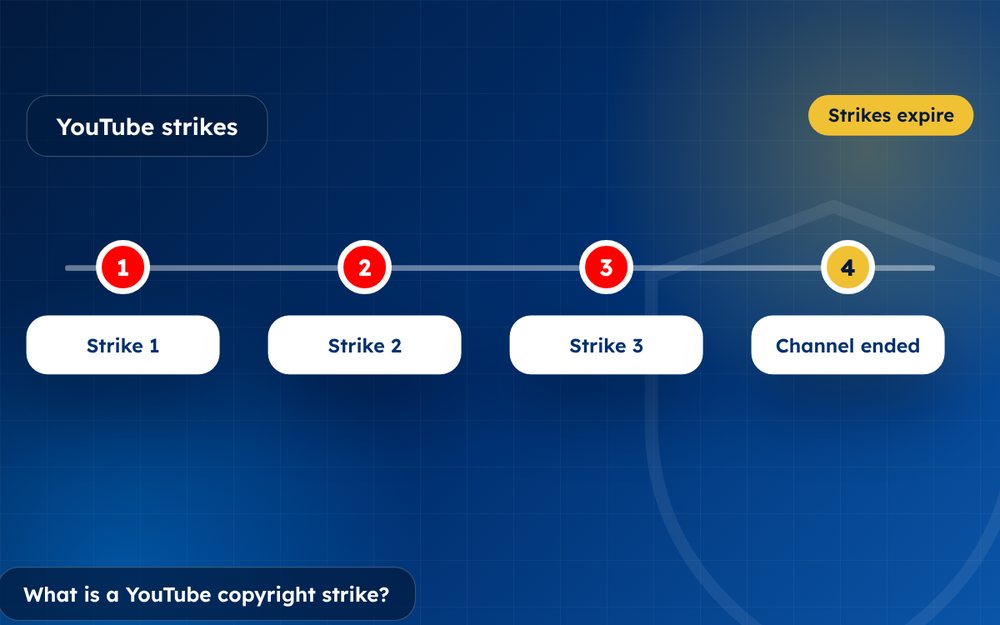
- One strike: a warning and a requirement to complete copyright education
- Two strikes: further restrictions and a higher risk
- Three active strikes: the channel and associated channels can be terminated
Your options if you receive one
You can wait for the strike to expire, usually after a set period and after completing the required education. You can ask the claimant to retract their request if you believe it was a mistake. You can submit a counter-notification if you believe the video was removed in error or that your use was lawful. A counter-notification can lead to legal proceedings if the claimant files a lawsuit, so take advice before you submit one.
How to avoid strikes
Use your own content, licensed material or content you have permission to use. Understand that giving credit does not replace permission. If you use short clips, think about fair use or fair dealing, and consider seeking advice. Keep records of licences and permissions.
Fair use, licences and permissions
Many strikes result from misunderstandings about what is allowed. Using a short clip does not automatically make it fair use, and crediting the owner does not replace permission. Look for content with clear licences, such as certain Creative Commons licences, and follow their conditions. Keep a record of licences, invoices and emails granting permission.
When in doubt, ask the rights holder or choose different material. A little care at the start can save your channel.
Counter-notifications can lead to legal proceedings if the claimant files a lawsuit. Take advice before filing one.
If your own channel has a strike you believe is wrong, or you want to protect your content, email us.
Frequently asked questions
How long does a strike last?
A set period, after which it can expire if conditions are met. YouTube's rules and timelines may change, so check the current policy. Completing the required copyright education is usually part of the process.
Can I appeal?
You can send a counter-notification or ask the claimant to retract the request. Make sure you understand the legal implications before submitting a counter-notification, and consider speaking to a lawyer.
Does deleting the video remove the strike?
Not usually. Deleting the video does not remove the strike. Removing the video may prevent further problems, but you should still follow the steps for resolving the strike.
Is a Content ID claim a strike?
No. Content ID claims are automatic and affect monetisation or availability but do not count as strikes. They are handled through a different dispute process.
What happens to my earnings?
While a strike is active, monetisation may be affected, and your channel may be restricted. Read YouTube's current guidance for details. Keep your content compliant to protect your income.
Can I get a strike removed early?
Some strikes can be removed if the claimant retracts or if you succeed with a counter-notification. Otherwise, they expire after the set period.
Need help with this?
Every situation is different. Email us the details in confidence and we will reply with an honest assessment of what can be done.
Contact us by email YouTube Copyright TakedownThis guide is general information, not legal advice. DMCA Reputation is not a law firm.
Related guides
How to Get a Stolen YouTube Video Taken Down
How to get a stolen YouTube video taken down: find re-uploads, use Copyright Match, file a copyright complaint and handle counter-notices.
Read the guide · 4 min
How to File a YouTube Copyright Takedown, Step by Step
How to file a YouTube copyright takedown step by step: the webform, required details, strikes and what happens after you submit.
Read the guide · 5 min
How to Use YouTube's Copyright Match Tool
How to use YouTube's Copyright Match tool to find re-uploads of your videos and decide whether to archive, track or request removal.
Read the guide · 4 min