
Seeing your video re-uploaded on someone else’s channel is frustrating, especially when it earns them views and income. YouTube has clear processes for stolen content. The key is to use the right one and to document your ownership.
Few things are as frustrating as finding your own video on another channel, collecting views and sometimes earning money for someone else. YouTube gives rights holders effective tools, but they only work well if you use them in the right order and keep your evidence tidy.
This guide covers the standard process, and how to handle common complications such as partial copies, edited versions and counter-notices.
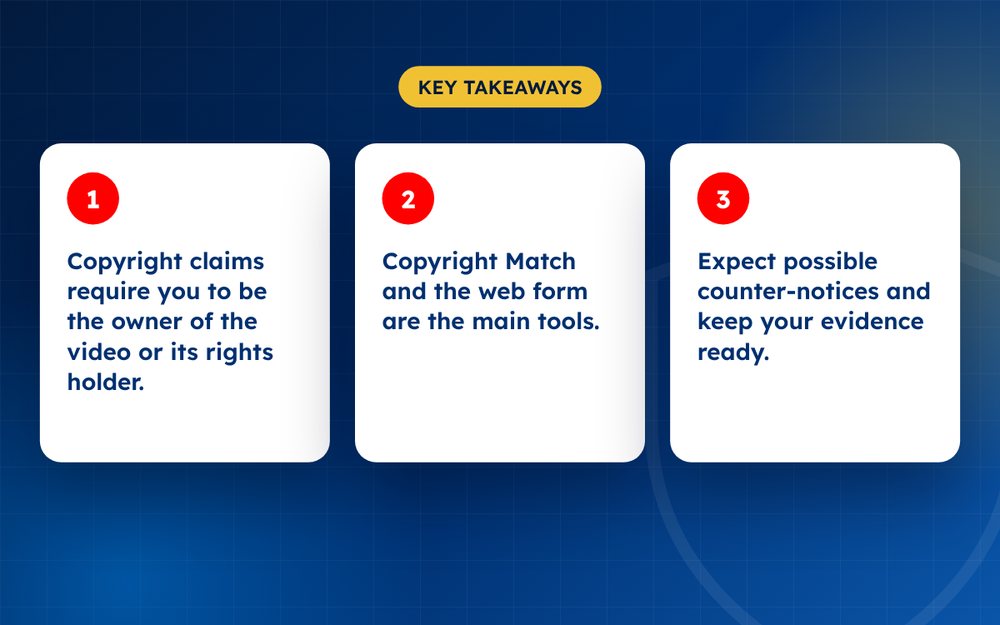
- Copyright claims require you to be the owner of the video or its rights holder.
- Copyright Match and the web form are the main tools.
- Expect possible counter-notices and keep your evidence ready.
Find the copies
- Search the exact title and key phrases in YouTube and Google
- Check your YouTube Studio for Copyright Match results if you are eligible
- Use reverse image search on your thumbnail
- Ask your audience to report any copies they see
Your options
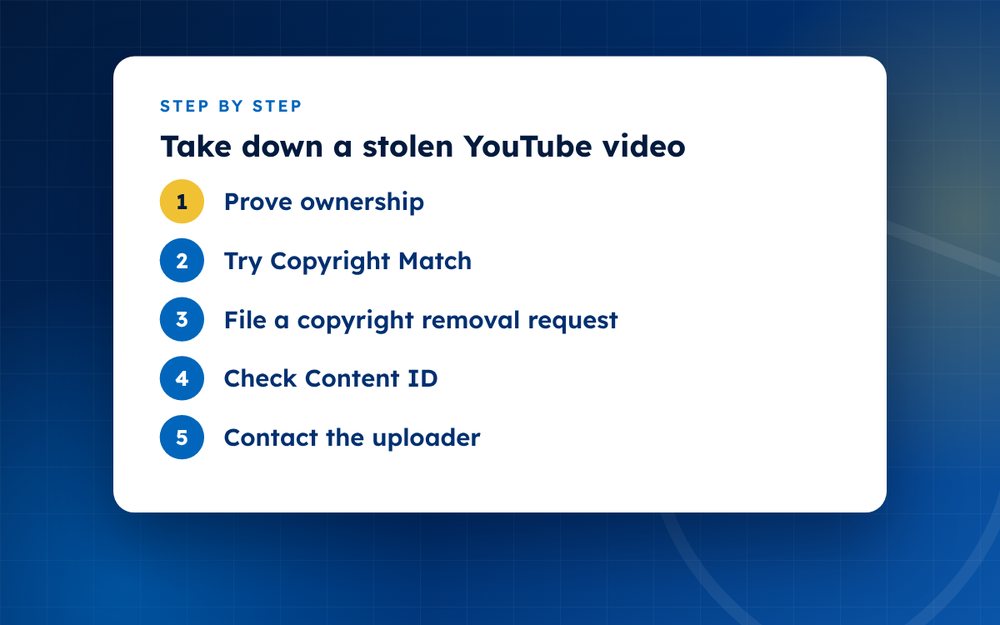
- Prove ownershipGather your original project files, upload dates and any raw footage. Having this ready speeds up every other step.
- Try Copyright MatchIf your channel is eligible, YouTube Studio finds matching re-uploads and lets you request removal, track them or archive.
- File a copyright removal requestUse YouTube’s webform for copyright takedowns, with the exact video URLs, the timestamps of your original content and the required legal statements.
- Check Content IDIf you are eligible, Content ID can automatically claim and control re-uploads.
- Contact the uploaderFor smaller cases, a polite message can resolve it. Do not do this if the uploader seems hostile.
- Report scrapers elsewhereIf the video is also on other sites, send DMCA notices to the site and its host and a request to Google Search.
- Handle counter-noticesThe uploader can dispute your claim. If that happens, YouTube generally restores the video unless you start a court action within a set period. Take legal advice before deciding.
Prepare your proof of ownership
Before filing anything, gather your original project files, raw footage, upload dates and links to your original video. If you commissioned the video, keep contracts that show you hold the rights. When a dispute arises, evidence that you made the content first is your strongest asset.
Choosing between tools
- Copyright Match: automatic detection for eligible channels, useful for finding re-uploads
- Copyright removal webform: formal takedown for specific URLs, available to any rights holder
- Content ID: automated claiming for eligible partners, giving you control over monetisation and blocking
- Privacy complaint: when the video shows you without permission, rather than copying your work
Handling edited or partial copies
If someone has used only part of your video, or added commentary, they may argue that their use is permitted under fair use or similar exceptions. Look at how much they took, how they changed it and whether they added value. A full re-upload is a clear case. A short clip with criticism is harder, and you may want legal advice.
Counter-notices
If the uploader files a counter-notice, YouTube may restore the video after a waiting period unless you start legal action. Do not ignore the counter-notice. Review it carefully, check whether the uploader makes a valid point, and speak to a lawyer if the case matters.
Keeping your own channel safe
Rights holders sometimes face retaliation, such as false counter-notices or attempts to report their own videos. Keep your documentation in order, avoid sharing your personal address in notices and enable two-factor authentication on your account. If you are targeted repeatedly, contact YouTube support through the official channels and consider legal advice.
Finally, think about prevention. Adding a consistent watermark, a link to your channel in the video and a clear description makes it easier to prove ownership and harder for others to pass your work off as theirs.
Misusing copyright claims can lead to penalties against your own channel, so only file when you own the content.
If your content is being copied at scale, we can help manage the reports, evidence and monitoring. Email us to talk it through.
Frequently asked questions
Does YouTube remove stolen videos quickly?
Valid complaints are often processed within days, but timing varies. Clear, complete requests with accurate URLs and timestamps are handled fastest. If your request is incomplete, it may be delayed or rejected. Check your email for requests for more information.
What if they only used a short clip?
Fair use or fair dealing may apply depending on your country. Consider the purpose, how much was used and whether it replaces your video. Seek advice if it is unclear.
Can I get the money they earned?
Not through a standard takedown. Questions about earnings from infringing content are a legal matter, and a lawyer can advise on whether it is worth pursuing. In many cases the cost outweighs the benefit, so focus on removal and prevention.
Will it affect my channel?
A valid complaint should not. False or careless complaints can lead to penalties against your channel, so only file when you own the content. Keep your evidence organised so that you can respond if the uploader disputes your claim.
Can I stop someone re-uploading the same video again?
You can use Copyright Match or Content ID if you are eligible, and you can report repeat offenders. Persistent copying may eventually lead to the uploader's channel being penalised.
What if the copy is on another site?
Send DMCA notices to the site and its host, and file a copyright removal request with Google Search so that the page stops appearing in results. If the site ignores you, escalate to the registrar and, where relevant, the content delivery network.
Need help with this?
Every situation is different. Email us the details in confidence and we will reply with an honest assessment of what can be done.
Contact us by email YouTube Copyright TakedownThis guide is general information, not legal advice. DMCA Reputation is not a law firm.
Related guides
How to File a YouTube Copyright Takedown, Step by Step
How to file a YouTube copyright takedown step by step: the webform, required details, strikes and what happens after you submit.
Read the guide · 5 min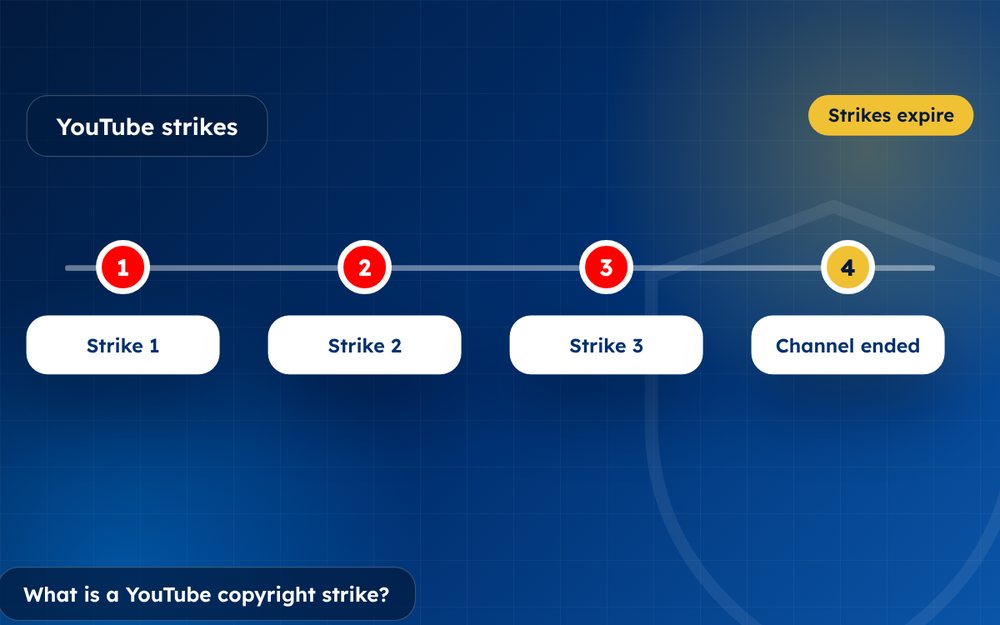
What Is a YouTube Copyright Strike and How Does It Work?
What is a YouTube copyright strike and how does it work? How strikes differ from Content ID claims, how long they last and how to respond.
Read the guide · 3 min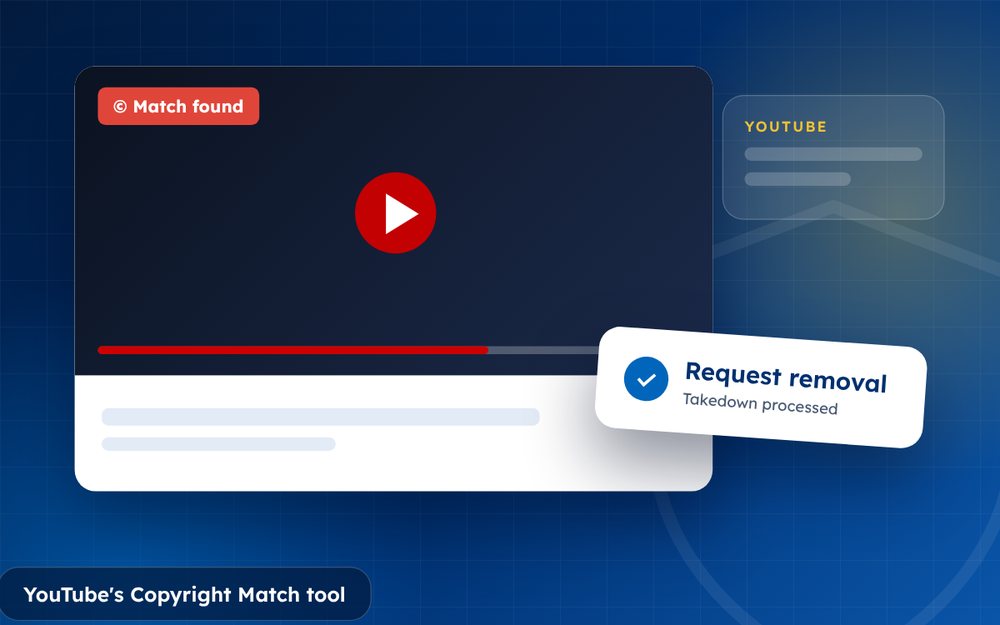
How to Use YouTube's Copyright Match Tool
How to use YouTube's Copyright Match tool to find re-uploads of your videos and decide whether to archive, track or request removal.
Read the guide · 4 min