
Your reply to a negative review is read by far more people than the reviewer. A calm, helpful response signals that you take customers seriously, and can win back trust that the review took away.
Negative reviews are a normal part of running a business. What marks out a trustworthy business is not the absence of criticism but the way it handles it. Prospective customers often read the reply as carefully as the review.
A good reply is short, calm and specific. It acknowledges the complaint, avoids blame and points to a solution. This guide gives you a structure, examples and mistakes to avoid.
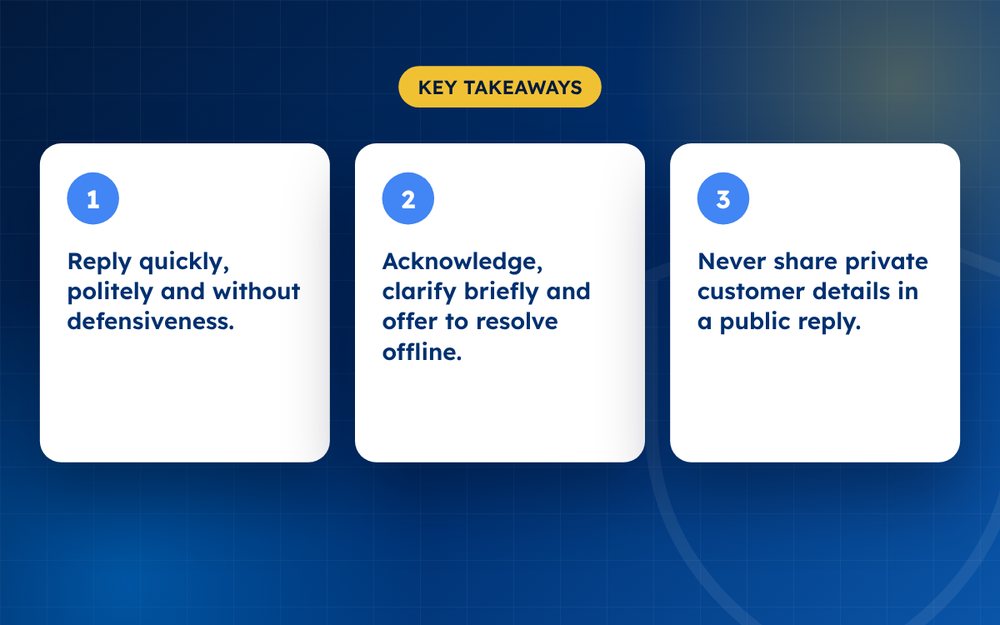
- Reply quickly, politely and without defensiveness.
- Acknowledge, clarify briefly and offer to resolve offline.
- Never share private customer details in a public reply.
A simple structure
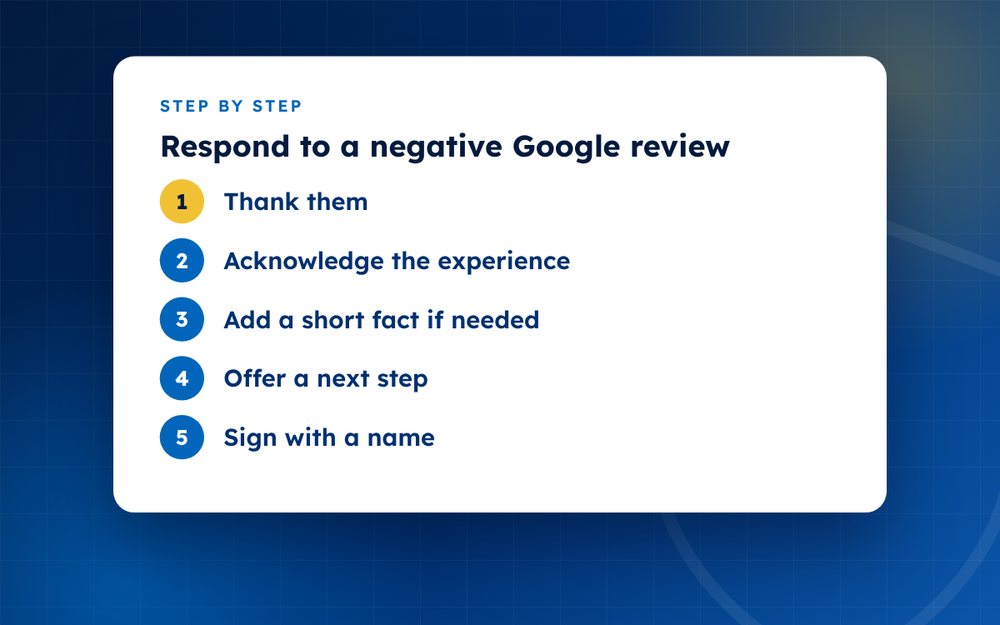
- Thank themStart by thanking the reviewer for the feedback.
- Acknowledge the experienceShow you understand how they felt, without admitting fault you are unsure of.
- Add a short fact if neededCorrect a clear error politely in one or two sentences.
- Offer a next stepInvite them to contact you by email or phone to put it right.
- Sign with a nameA real name makes the response feel human.
Adapting your reply to the situation
A complaint about a real problem needs an apology and a plan. A complaint that is mistaken needs a polite clarification. A complaint that looks fake needs a neutral statement that you cannot find a record. In all cases, keep the tone professional and avoid sarcasm.
More examples
Example for a delivery problem: Thank you for letting us know. We are sorry that your order arrived late, which is not the standard we aim for. Please email our support team with your order number and we will look into it straight away.
Example for a misunderstanding: Thank you for your feedback. We understand why the policy felt frustrating. Our refund policy is set out on our website, and we are happy to talk through it with you by email so we can find the best solution.
Public reply or private message
Keep the public reply brief and move detailed conversations to private channels. Never include personal information, such as order details or health information, in a public reply. If the reviewer responds, thank them again and resolve the issue promptly.
Turning replies into a routine
Set aside time each week to read and reply to new reviews. Share patterns with your team, such as repeated complaints about waiting times. Responding to reviews is both a reputation tool and a source of customer insight.
Replying across languages and cultures
If your customers write in several languages, reply in the language of the review where you can. A reply in the reviewer's language shows respect and is easier to understand. If you cannot, keep the reply simple in a shared language and offer to continue by email. Be aware that tone differs between cultures. Directness that feels honest in one place can feel rude in another.
Whatever the language, keep your replies free of jargon, avoid legal threats and never copy and paste your policy wording without explanation.
Examples
Example for a genuine complaint: Thank you for telling us about this. We are sorry your visit did not meet expectations, and we would like to put it right. Please email us at the address on our profile so we can look into it. Example for a review you cannot match: Thank you for your feedback. We are not able to find a record of this visit under your name. Please contact us with your booking details so we can investigate.
What to avoid
- Arguing or blaming the customer
- Copying the same reply into every response
- Sharing personal or order details publicly
- Replying in anger. Wait an hour if you need to
Good replies, plus a steady stream of genuine new reviews, usually protect your rating better than chasing removals.
Frequently asked questions
Should I reply to every review?
Ideally yes, and at the very least to every negative one. Replies show that you pay attention and give you a chance to state facts calmly. For positive reviews, a short, personal thank you is enough. Consistency matters, because readers notice when a business only replies when it is criticised.
How fast should I reply?
Within one or two days is a good target. A quick reply is helpful, but do not reply while you are angry. Take time to write something calm.
Can a reply make the reviewer change their rating?
Sometimes. When a problem is resolved well, many reviewers choose to update their review, but you should never ask for a changed rating as a condition of a solution. Fix the issue first, then let the reviewer decide. Even if they do not change it, other readers see that you responded well.
Should I reply to fake reviews?
Yes, briefly and factually, while also reporting them to the platform. A calm reply such as stating that you cannot find a record of the visit and inviting the person to contact you shows other readers that you are credible. Avoid calling the reviewer a liar, because that can make you look defensive.
What if the review is abusive?
Report it using the platform's tools, because abusive language, threats and discriminatory content break the rules and may be removed. Do not reply in kind. If you do reply, keep it short and professional, or wait until the review has been assessed. Save a screenshot in case you need it later.
Is it okay to use a template?
A template can save time and help your team stay consistent, but personalise each reply with a detail from the review. Identical replies look insincere, and readers who see the same wording on several reviews will notice. Use the template as a structure, not a script, and adapt the tone to the situation.
Need help with this?
Every situation is different. Email us the details in confidence and we will reply with an honest assessment of what can be done.
Contact us by email Review ManagementThis guide is general information, not legal advice. DMCA Reputation is not a law firm.
Related guides
How to Remove a Google Review: A Complete Guide for Business Owners
How to remove a Google review: what Google will remove, how to report it, how to appeal and what to do if it stays. A guide for business owners.
Read the guide · 6 min
Can You Delete a Google Review? What Google Will and Won't Remove
Can you delete a Google review? Learn who can delete one, what Google removes on request, and what your options are when a review will not come down.
Read the guide · 5 min
How to Report a Fake Google Review, Step by Step
How to report a fake Google review step by step: spotting fakes, flagging from your Business Profile, evidence to gather and what to do if it stays.
Read the guide · 5 min