
A cease and desist letter demands that someone stop a behaviour such as defamation, harassment or copyright infringement. They can be effective, but they can also escalate matters. This is general information, not legal advice.
A cease and desist letter is a formal demand to stop a particular behaviour. It can be sent by a lawyer or by an individual, and it sets out what is being complained about, what you want the recipient to do and what may happen if they do not. This is general information, not legal advice.
Whether it helps depends on the strength of your position, the nature of the recipient and how the letter is written.
- They work best when the claim is clear and the recipient is reachable.
- They can backfire by drawing attention.
- Take legal advice before sending.
When they can work
- Clear copyright infringement
- Clearly false statements by an identifiable person
- Harassment that breaks the law
- Contract breaches
When they backfire
- The statement is opinion or true
- The recipient is anonymous or hostile
- It is posted publicly and spreads
Steps
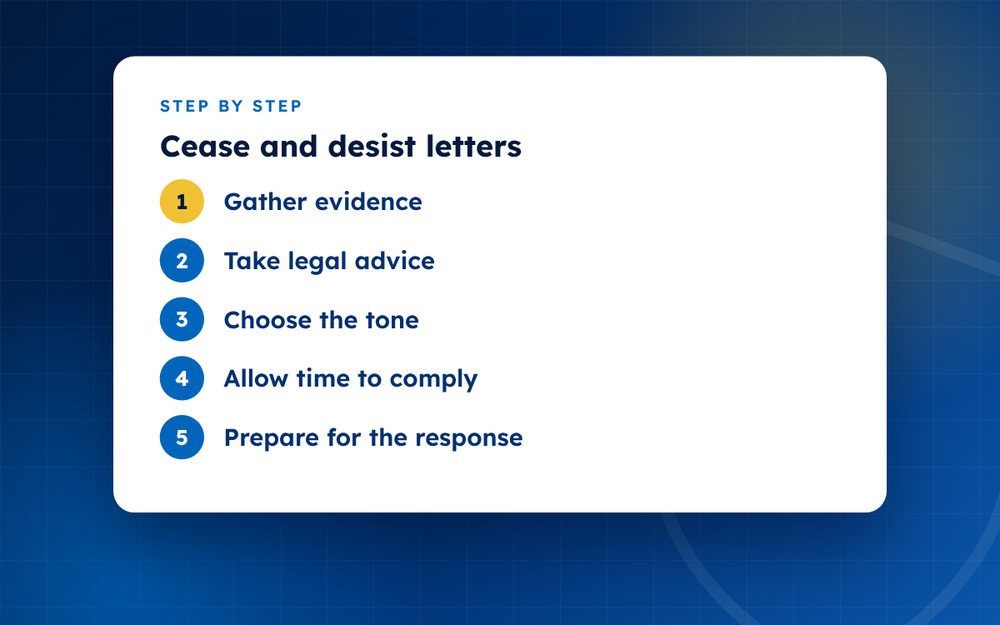
- Gather evidenceCollect the content and its impact.
- Take legal adviceA lawyer can draft or review the letter.
- Choose the toneFirm and factual works best.
- Allow time to complySet a reasonable deadline.
- Prepare for the responseThink about what you will do next.
What a good letter contains
- A clear statement of who you are and who you are writing to
- A description of the conduct, with links or dates
- The legal or contractual basis for your demand
- What you want them to do, such as remove content and not repeat it
- A reasonable deadline
- A statement of what you may do if they do not comply
When it can work
Letters are most effective when the recipient is an identifiable person or business who has something to lose, when your claim is clear and when the demand is reasonable. For example, a business that has copied your photos or a person who has posted false statements about you may comply to avoid legal costs.
When it can backfire
An aggressive letter can anger the recipient, who may publish it online, claiming that you are trying to silence them. If the recipient is anonymous or outside your reach, the letter may achieve nothing. If your claim is weak, the letter can expose you to criticism or counterclaims. That is why advice from a lawyer is valuable before sending.
Alternatives and complements
Consider platform reports, requests to hosts, search removal requests and public statements. These can run alongside or instead of a letter. If the recipient replies or disputes your claim, you will need to decide whether to escalate. Be clear in advance about what you are prepared to do.
A cautionary example
A shop owner sends a threatening letter to a customer who left a harsh but honest review. The customer posts the letter online, and the story is picked up by local news. The review gains far more attention than before. A calm reply, an offer to resolve the problem and a request for review removal through the platform would have been safer.
The lesson is to consider the likely reaction, not just your legal position.
We can handle the practical removal work alongside your lawyer.
Frequently asked questions
Is a cease and desist legally binding?
No. It is a demand, not a court order. Ignoring it does not in itself break the law, but it can be used as evidence of notice if you later take legal action. A court order, by contrast, is binding.
Can I send one myself?
Yes, but legal advice is wise, particularly if the issue is significant. A poorly drafted letter can weaken your position or create risk. Many lawyers offer fixed-fee letters.
Will it work on anonymous people?
Rarely, because you do not know where to send it. In some cases, you can send it through the platform or the host, but the effect is limited.
What if they publish my letter?
It can happen. Write the letter on the assumption that it may be read by the public. Keep it factual, professional and free of threats you do not intend to follow through.
How long should I give them to comply?
A reasonable period is often seven to fourteen days, depending on the case. Urgent matters, such as threats, may need shorter deadlines.
What should I do if they ignore it?
Consider other routes, such as reports to platforms, host complaints and legal advice about next steps. Keep records of your letter and any replies.
Need help with this?
Every situation is different. Email us the details in confidence and we will reply with an honest assessment of what can be done.
Contact us by email Defamation RemovalThis guide is general information, not legal advice. DMCA Reputation is not a law firm.
Related guides
What to Do When You Are Doxxed: A Step-by-Step Guide
What to do when you are doxxed: safety steps, removing personal information, reporting, securing accounts and getting support.
Read the guide · 4 min
How to Handle a Viral Negative Post About You or Your Business
How to handle a viral negative post about you or your business: first response, facts, communication and recovery.
Read the guide · 3 min
How to Respond to a Smear Campaign
How to respond to a smear campaign: document, report, communicate, build positive content and consider legal advice.
Read the guide · 3 min