
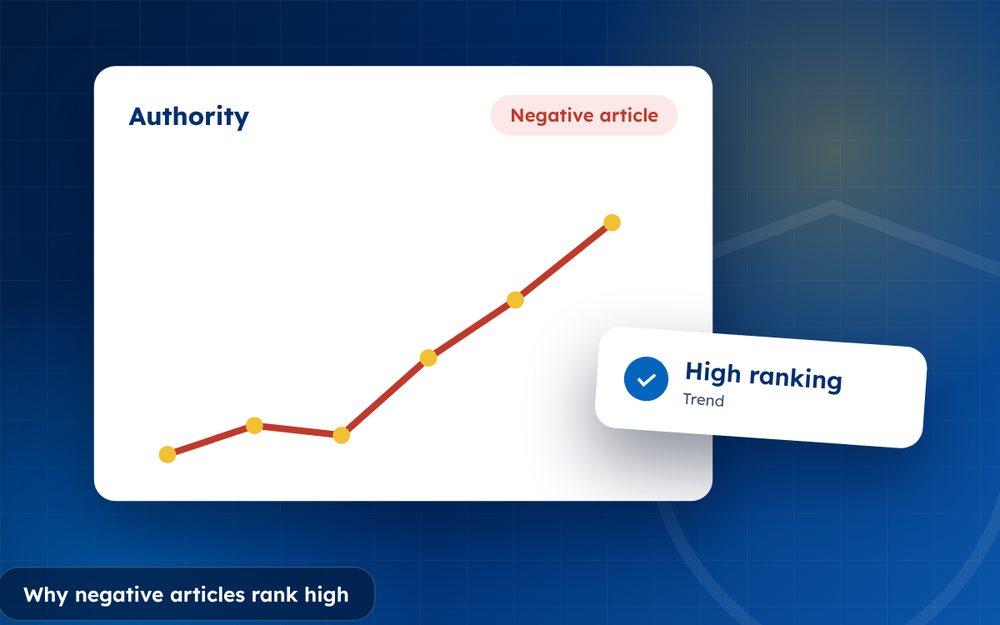
It can feel unfair that one old negative article outranks everything else about you. There are clear reasons, and several of them can be changed.
It can feel deeply unfair when a single article about you outranks your own website, your LinkedIn profile and everything positive you have done. The explanation is rarely personal. Search engines rank pages according to signals that news sites tend to have in large amounts.
Once you understand those signals, you can see how to compete.
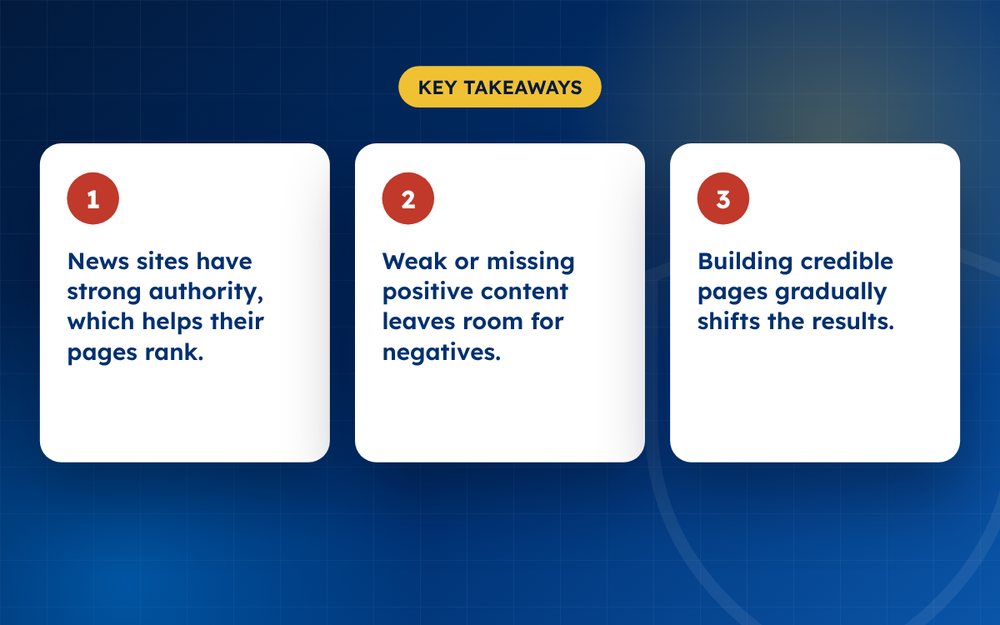
- News sites have strong authority, which helps their pages rank.
- Weak or missing positive content leaves room for negatives.
- Building credible pages gradually shifts the results.
Why it happens
- Major news domains have a lot of authority and trust
- The article matches your name exactly
- It has links and shares from other sites
- Search engines favour recent, popular content on news topics
- You have little positive content for the same search
What to do about it
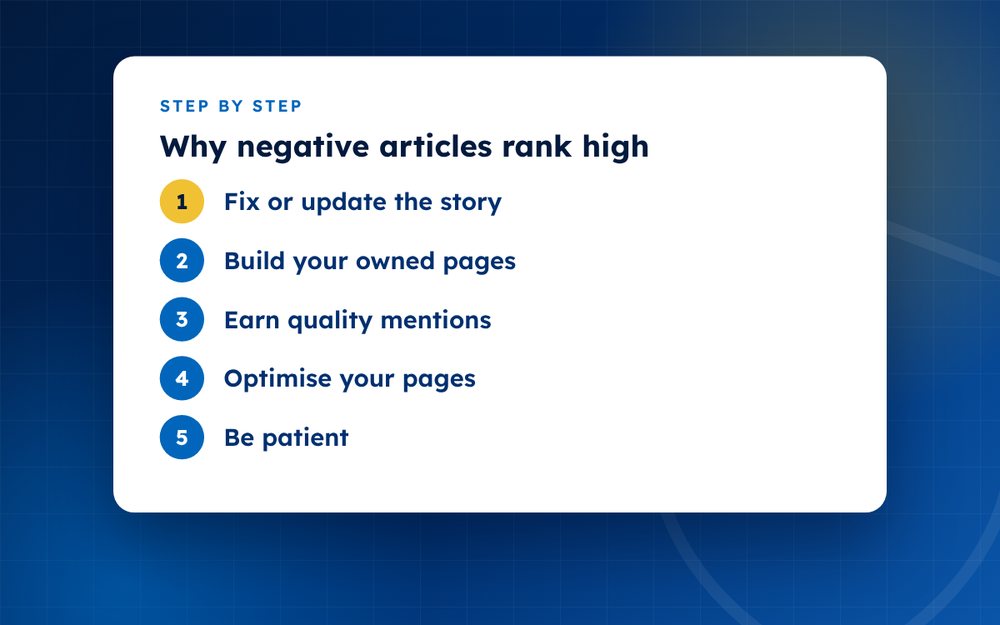
- Fix or update the storyAsk the publisher about corrections or updates.
- Build your owned pagesA website and profile pages that use your full name.
- Earn quality mentionsInterviews, awards, partnerships and guest articles.
- Optimise your pagesClear titles, descriptions and internal links.
- Be patientRankings change over months, not days.
The signals behind the ranking
- Authority: large news organisations have been linked to by thousands of other sites for years
- Freshness: search engines give extra weight to news about people and events, especially soon after publication
- Relevance: the article contains your full name in the headline and body
- Engagement: people click on and share stories about controversy
- Competition: your own pages may be thin, new or poorly optimised
What you can influence
You cannot change a news site's authority, but you can strengthen your own. Build pages that clearly state your name, role and achievements. Link your profiles together, publish useful content and earn mentions from reputable sites. Each of these signals tells search engines that your pages are relevant and trustworthy.
What time does
Many negative articles lose prominence on their own as newer content appears. That is not guaranteed, but it is common. Time works in your favour if you keep publishing and building, so consistency pays off more than short bursts of activity.
Combining approaches
If the article is inaccurate, ask the publisher for a correction. If it contains personal information, ask the search engine to review it. If neither is possible, focus on suppression. A mix of all three often produces the best outcome.
What to avoid
Do not create large numbers of low-quality pages or profiles to try to outrank a negative article. Search engines can spot this and may penalise you. Do not attack the publisher or the journalist, which can create more coverage. Do not buy links in bulk. These shortcuts rarely work and can make matters worse.
Instead, focus on a small number of strong, genuine pages and build gradually. Patience and quality beat volume.
Email us if you want an honest view of how competitive your name is.
Frequently asked questions
Can I pay Google to push it down?
No. Paid advertising appears separately from organic results and has no effect on rankings. Anyone claiming they can pay for a lower position of a particular result is misleading you. The legitimate way to change organic results is to publish stronger, relevant pages.
Does deleting social media help?
It can reduce positive results as well as negative ones. Social profiles often rank for names, so deleting them may leave more room for a negative article. Instead, clean up old posts, tighten privacy settings and keep accurate profiles.
Will it drop on its own?
Sometimes, especially for stories that are no longer in the news, but it is not guaranteed. Pages from authoritative sites can stay high for years. Do not rely on time alone. Build positive content so that you have options.
Is suppression ethical?
Yes, when your own content is accurate and honest. You are not hiding the truth, you are presenting your own information alongside it. It becomes unethical when it involves fake profiles, spam or false claims.
How long does it take to see changes?
Often two to six months, depending on how competitive the name is and how strong the negative page is. Smaller changes can appear sooner, for example when a new profile moves into the top ten.
Should I contact the journalist?
If there is an error, a polite correction request is worth trying. If the article is accurate, contacting the journalist rarely helps and can lead to follow-up coverage. Think carefully before reaching out.
Need help with this?
Every situation is different. Email us the details in confidence and we will reply with an honest assessment of what can be done.
Contact us by email Search SuppressionThis guide is general information, not legal advice. DMCA Reputation is not a law firm.
Related guides
How to Remove a Negative Article From Google Search
How to remove a negative article from Google search: contact the publisher, use Google's tools and legal routes, or suppress it when removal fails.
Read the guide · 4 min
How to Remove a News Article From the Internet
How to remove a news article from the internet: approaching publishers, correction and anonymisation requests, legal grounds and search options.
Read the guide · 4 min
How to Remove Your Name From Google Search Results
How to remove your name from Google search results: what you can remove, Google's results about you tool, data brokers and what to do about the rest.
Read the guide · 4 min