
When intimate images appear next to your real name, they can show up whenever someone searches for you. Fixing this means removing the pages and also repairing what search shows.
Posting a name with a private image turns a single post into a lasting reputation problem. Employers, partners and neighbours can find it with a simple search. The aim is to remove the source pages, remove the search links and then rebuild what people see when they look you up.
This is harassment, and many platforms and search engines treat it seriously. Name and image together can also count as doxxing, which gives you extra routes to report.
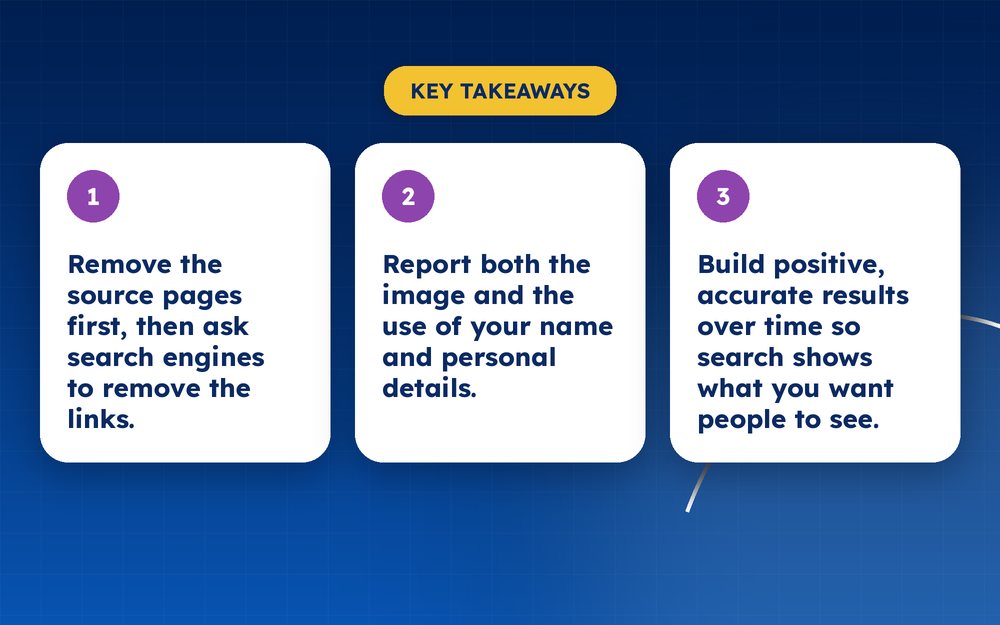
- Remove the source pages first, then ask search engines to remove the links.
- Report both the image and the use of your name and personal details.
- Build positive, accurate results over time so search shows what you want people to see.
What to do, step by step
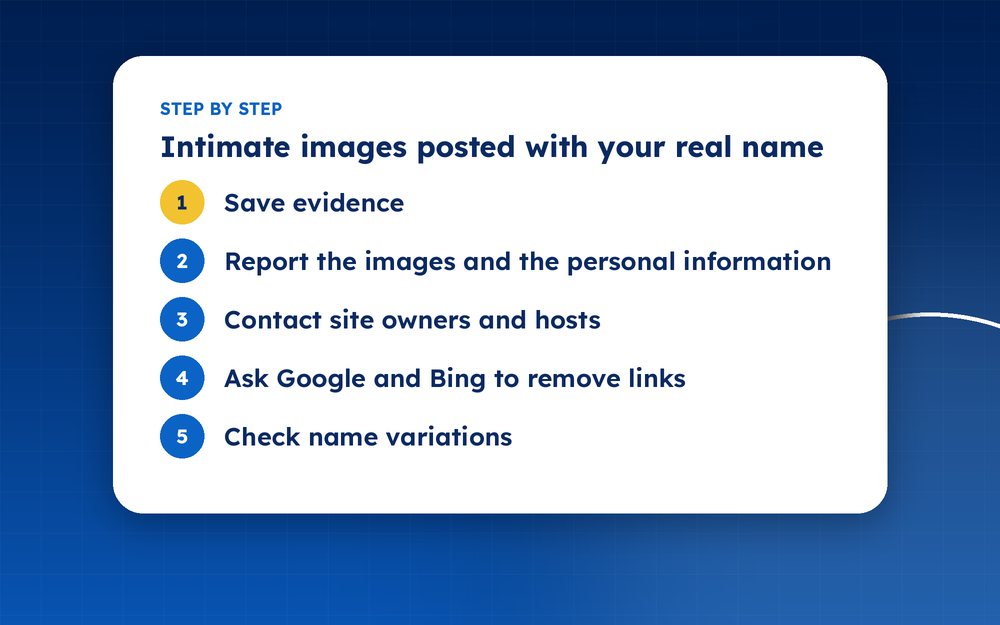
- Save evidenceCapture the pages with the web address, date and your name as it appears. Save these privately. Capture the page showing the image, your name and any other details. Record the web address.
- Report the images and the personal informationUse report options for non-consensual intimate images and for sharing personal information. Mention both. Report both the image and the personal information, since many sites treat doxxing as a separate violation.
- Contact site owners and hostsIf the site is small, write to the owner and to the host with a clear removal request. Contact the site owner and the host with the evidence and a clear request. Hosts often act when sites do not.
- Ask Google and Bing to remove linksUse the forms for non-consensual explicit imagery. Also ask for removal of results that show your personal contact details where relevant. Ask search engines to remove results that show the images with your name, using their forms for explicit imagery and personal information.
- Check name variationsSearch your name with nicknames, usernames, your city and common misspellings, and report anything linked. Search your name with common variations and nicknames, since copies may use different spellings.
- Secure your accounts and privacyMake social media profiles private, remove public contact details and change passwords. Review your social accounts, tighten privacy and consider opting out of data broker sites that list your details.
- Build positive resultsCreate or update professional profiles, a personal site or articles that reflect you accurately, so search shows more than the harmful pages. Over time, publish positive, accurate content under your name so better results appear first.
Why the name makes it worse
A private image without a name is hard to connect to anyone. A name turns it into a search result for that person. That is why the work has two parts: removing the content and making it harder to find while it is still being removed.
Search results also pull in snippets and titles, so even a removed page can appear briefly in results. Asking search engines to refresh or remove the cached page shortens that period.
If your employer or contacts have seen it
You may feel pressure to explain. You can say simply that private images were shared without your consent, that you are taking steps to remove them and that you would appreciate privacy. You are not obliged to share details. If your workplace has an HR or support route for harassment, you can use it.
Your options beyond removal
Depending on where you live, the person who posted the content may face criminal or civil consequences. We are not a law firm and cannot give legal advice, but removal can proceed without legal action. If you want to explore a claim, speak to a lawyer, and you can contact us if you would like a recommendation.
What a typical case looks like
A woman discovers that an intimate image is posted on a forum with her full name and workplace. She saves the page and reports it to the forum, the host and the search engine. The forum removes the post in three days, and the search results disappear a week later. She then opts out of two data broker sites, tightens privacy and publishes a professional profile.
Removing the link between her name and the image was the main goal.
Common mistakes to avoid
Do not reply to the poster, which can encourage more. Do not delete your own profiles in panic, since a blank search result can look suspicious and also removes your control over what people see. Do not ignore smaller sites, because they often feed larger ones.
How a specialist can help
Removing pages and repairing search results at the same time is a specialist job, and doing it yourself means seeing the content again and again. A discreet team can handle both parts and track progress. We cannot promise every result will vanish, but we can tell you what is realistic. Email us in confidence.
Frequently asked questions
Can search engines remove results that show my name with intimate images?
Yes, if the content falls under their policies. Google and Bing both have forms for non-consensual intimate imagery.
Should I change my name?
Usually not as a first step. Removal and monitoring are more effective and less disruptive.
How long until search results improve?
It depends on how many pages exist and how quickly sites respond. Many people see improvement within weeks, but complex cases take longer.
What if the poster keeps creating new pages?
Keep a log, report each page and consider police involvement, since repeated posting can make the offence more serious.
Can I stop people searching my name?
No, but you can reduce harmful results and add positive ones.
Is this the same as doxxing?
It overlaps. Posting a name and personal details with intimate images is a form of harassment, and platforms often have specific rules against it.
Need help with this?
Every situation is different. Email us the details in confidence and we will reply with an honest assessment of what can be done.
Contact us by email NCII removalThis guide is general information, not legal advice. DMCA Reputation is not a law firm.
Related guides
How to Report Sextortion and Get the Images Removed
How to report sextortion and get the images removed: stop contact, keep evidence, report to the platform and police, and what to do if images are already online.
Read the guide · 4 min
Should You Pay Someone Who Threatens to Leak Your Photos?
Should you pay someone who threatens to leak your photos? Why paying rarely works, what to do instead and how to protect yourself from blackmail and fake removal offers.
Read the guide · 4 min
How to Remove Non-Consensual Intimate Images (NCII), Step by Step
How to remove non-consensual intimate images (NCII): reporting, StopNCII.org, Google removal, legal options and support. A step-by-step guide.
Read the guide · 4 min