
Sextortion is blackmail using intimate images or the threat of sharing them. If it is happening to you, you are not alone, it is not your fault, and there are clear steps to take.
Sextortion often starts with a friendly stranger or a fake profile and moves to pressure for images, then for money. Criminals rely on shame and panic to keep people paying. Knowing the steps takes away some of that power.
Official guidance is consistent: do not pay, stop contact, keep evidence, and report. Payments usually lead to more demands, not to the images being deleted.
- Do not pay and do not send more images. Stop contact and block after saving evidence.
- Report to the platform and to the authorities. In the US, that includes the FBI and, for under-18s, the NCMEC CyberTipline.
- Be wary of paid removal services that promise instant results. Honest providers explain what they can and cannot do.
If you or someone you know is under 18
Contact the police or the relevant child protection service straight away. In the United States, the NCMEC CyberTipline takes reports, and its Take It Down tool can help remove images made when someone was under 18. If you feel at risk of hurting yourself, contact your local emergency number or a crisis line now. Support is available and this can be fixed.
What to do, step by step
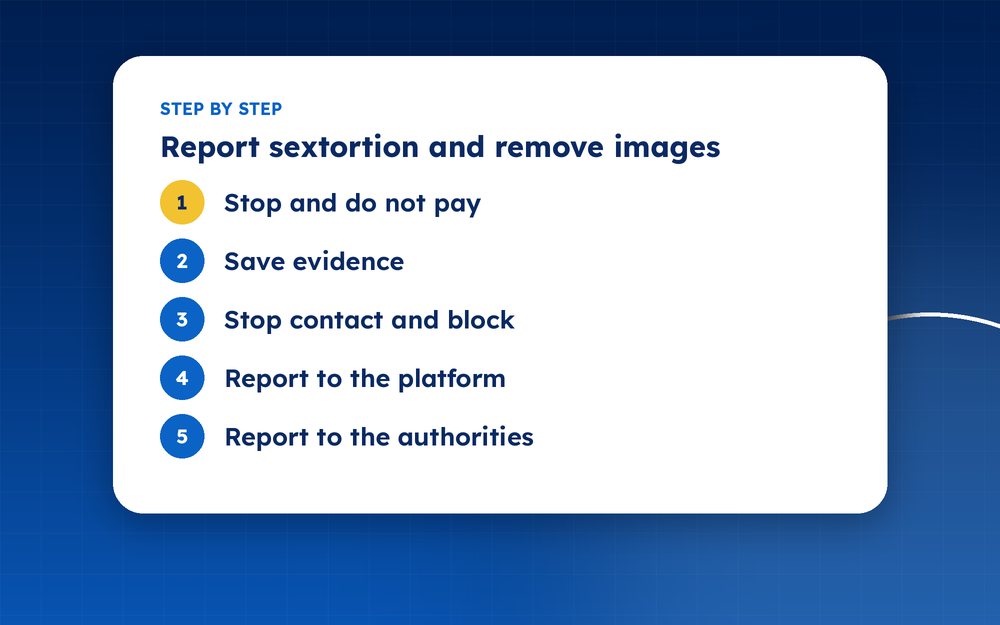
- Stop and do not payDo not send money, gift cards or more images. Paying rarely ends the threats and often increases them. Do not send money or more images. Pause before replying, and tell someone you trust.
- Save evidenceScreenshot the messages, usernames, profile links, payment requests and any images. Do this before you block. Save messages, usernames, payment details and links, and keep them in a private folder.
- Stop contact and blockAfter saving evidence, stop replying and block the account. Do not delete your own account yet. Stop contact and block the account after you have saved evidence. Do not argue or negotiate.
- Report to the platformUse the report option on the account and the messages. Say that you are being blackmailed. Report the account on the platform for blackmail or non-consensual content. Say what the person is threatening.
- Report to the authoritiesContact your local police. In the US you can use ic3.gov or tips.fbi.gov, or call 1-800-CALL-FBI. For under-18s, report to NCMEC. Report to the police or the relevant national agency, and give them your evidence. If you are under 18, use the dedicated child protection services.
- Secure your accountsChange passwords, turn on two-step login and tighten privacy settings so the person cannot reach your contacts. Change passwords, turn on two-step sign-in and review privacy settings.
- Start removal if images are postedReport copies to platforms, ask search engines to remove links and use StopNCII.org if you are an adult. If images have been posted, report them, ask search engines to remove links and use hash matching if you are an adult.
Why paying does not work
People running these schemes often work in groups and target many victims. Once someone pays, they are marked as willing to pay again. The threat can continue even after payment. Not paying, saving evidence and reporting are the actions that actually reduce risk.
If the person has your contacts
Threats often involve sending images to your friends, family or colleagues. You can reduce the impact by making your social accounts private, removing public friend lists and, if you feel able, telling a trusted person what is happening so the threat loses its power.
Watch out for fake rescue offers
People who have been targeted often receive messages from supposed recovery or removal services that demand upfront payment. Be careful. A genuine provider will not guarantee results, will explain what they do and will not ask you to stop contacting the police.
What a typical case looks like
A man receives a message from someone he met online, threatening to send an intimate image to his contacts unless he pays. He does not pay, saves the messages and blocks the account. He reports to the platform and to the police and tells a friend. The account is removed, and when a copy of the image appears on a site, he reports it and asks search engines to remove it.
Not paying and reporting quickly limited the damage.
Common mistakes to avoid
Do not delete the chat before saving it. Do not continue negotiating. Do not send identity documents. Do not share the images with anyone as evidence beyond the authorities.
How a specialist can help
If images have already been posted, removing them while dealing with the stress of blackmail is a lot to carry. A discreet specialist team can handle removal and monitoring while you talk to the authorities. We cannot promise every copy will go, but we can be honest about what is realistic. Email us in confidence.
Frequently asked questions
Is sextortion a crime?
Yes. Blackmail and threatening to share intimate images are offences in many countries.
Will they really share the images if I do not pay?
Sometimes they do, but many never follow through. Paying does not remove the risk, so the best step is to report and prepare removal steps.
Should I block the account?
Yes, after saving evidence. Blocking stops contact, and your evidence supports a report.
Can I get the images removed if they are posted?
Often a large share can be removed from major platforms and search results, though no honest provider can promise every copy.
Where do I report in the United States?
The FBI accepts reports at ic3.gov and tips.fbi.gov, and NCMEC handles cases involving under-18s.
Who can I talk to?
A trusted friend, a victim support service or a counsellor. You do not have to deal with this alone.
Need help with this?
Every situation is different. Email us the details in confidence and we will reply with an honest assessment of what can be done.
Contact us by email NCII removalThis guide is general information, not legal advice. DMCA Reputation is not a law firm.
Related guides
Should You Pay Someone Who Threatens to Leak Your Photos?
Should you pay someone who threatens to leak your photos? Why paying rarely works, what to do instead and how to protect yourself from blackmail and fake removal offers.
Read the guide · 4 min
How to Find Out If Your Intimate Images Are Online
How to find out if your intimate images are online: safe search methods, reverse image tools, monitoring options and how to avoid seeing more than you need to.
Read the guide · 4 min
How to Remove Non-Consensual Intimate Images (NCII), Step by Step
How to remove non-consensual intimate images (NCII): reporting, StopNCII.org, Google removal, legal options and support. A step-by-step guide.
Read the guide · 4 min