
Old stories can stay in search for years after circumstances change. You may not be able to delete them, but you can ask for updates and give readers more context.
News outlets generally protect archives, but many accept requests to update stories when facts change, such as a case being resolved, a business being sold or a person being cleared.
In some regions, data protection rules also let people ask search engines to delist old, irrelevant information.
Old stories feel unfair because the person described has changed, but search engines keep them alive. The best results come from asking for specific, reasonable changes instead of demanding deletion.
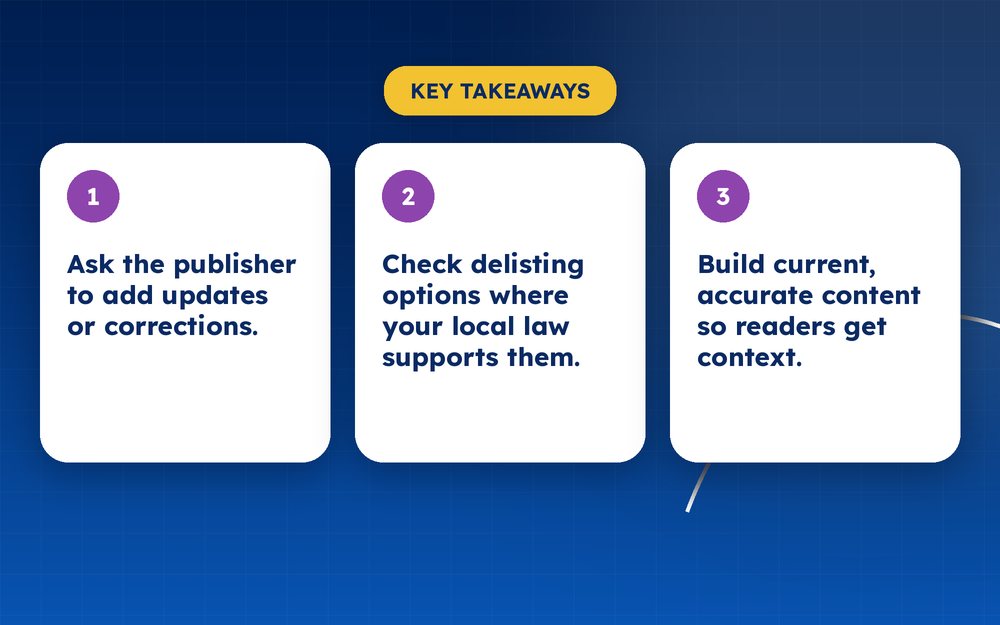
- Ask the publisher to add updates or corrections.
- Check delisting options where your local law supports them.
- Build current, accurate content so readers get context.
What to do, step by step
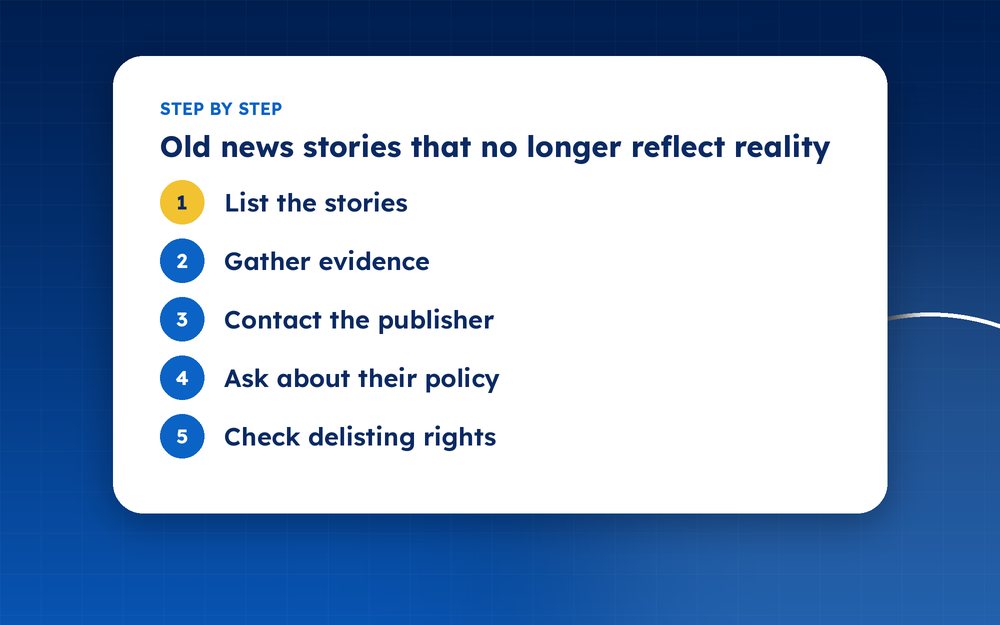
- List the storiesRecord links and what is outdated. Write down each story, its address, date and what is out of date. Prioritise by how visible it is.
- Gather evidenceCollect documents showing the current facts. Gather documents that show the current position, such as court outcomes, certificates or statements.
- Contact the publisherAsk politely for an update, correction or follow-up. Write a short, polite email to the editor or contact, explaining what has changed and attaching proof.
- Ask about their policySome outlets have policies for anonymising or unpublishing. Many outlets have a policy on updates, anonymisation or unpublishing. Ask what it is and how to apply.
- Check delisting rightsUse search engine forms where data protection law applies. In some regions, you can ask search engines to delist results about you. The decision weighs your privacy against public interest.
- Publish updated contentShare accurate information on your own channels. Publish accurate and current content, such as profiles and interviews, so readers see the present picture.
- MonitorCheck search results periodically. Check search results every month and respond to new copies or republishing.
Why outlets resist removal
Journalism relies on accurate archives, so outlets are cautious about deleting stories. They are more open to updates, especially when new facts are clear and documented.
Delisting in some regions
In the EU and UK, people can ask search engines to remove results about them in certain cases, balancing privacy and public interest. Results depend on the facts and the person's public role.
Adding context
A short, factual statement on your website, a profile article or a follow-up piece can help readers understand what changed.
Expectations
Not all requests succeed, particularly for public figures or serious matters. Be honest about what is realistic.
What a typical case looks like
A woman finds a news story from ten years ago about a business dispute that was resolved. She emails the editor with documents and asks for an update note. The outlet adds a line stating that the dispute was settled. She also asks the search engine to delist the story in her region, which is refused because the matter was considered of public interest. She publishes a professional profile, and over time the update note and her profile give a fuller picture.
Not every request succeeded, but together they gave readers context.
Common mistakes to avoid
Do not demand removal aggressively. Do not exaggerate. Do not ignore search results. And do not give up after one refusal.
How a specialist can help
A specialist team can contact publishers, prepare delisting requests and work on search visibility. We cannot promise results, but we will be honest about what is realistic. Email us in confidence.
Frequently asked questions
Can old news stories be deleted?
Rarely. Many outlets keep archives, but some will update or anonymise stories in suitable cases.
What is delisting?
It means asking a search engine not to show certain results for your name. It is available in some regions and decided case by case.
Will a polite request work?
Sometimes. Clear evidence and reasonable requests succeed more often than demands.
What if the story is accurate?
Removal is unlikely, but updates and context may be possible.
How can I reduce its visibility?
Publish accurate content that ranks and earn coverage from reliable sources.
Is this legal advice?
No. It is general information. For data rights, speak to a qualified lawyer.
Need help with this?
Every situation is different. Email us the details in confidence and we will reply with an honest assessment of what can be done.
Contact us by email Reputation recoveryThis guide is general information, not legal advice. DMCA Reputation is not a law firm.
Related guides
Reputation Due Diligence: What Investors and Journalists Find
Reputation due diligence: what investors and journalists find when they search, how to run the same checks on yourself and how to prepare honest answers.
Read the guide · 4 min
Crisis Response Plan Template for Online Reputation Attacks
Crisis response plan template for online reputation attacks: roles, first-hour actions, evidence capture, communication templates and removal workflow.
Read the guide · 3 min
How to Handle a Viral Negative Post About You or Your Business
How to handle a viral negative post about you or your business: first response, facts, communication and recovery.
Read the guide · 3 min