
Before a deal, a hire or an article, people search for you. Running the same checks yourself shows what they see and gives you time to prepare.
Due diligence goes beyond a quick search. Investors and journalists look at news, court records, social media, reviews, registries, past companies and associations.
The aim is not to hide facts, but to know them, fix errors and be ready to explain.
Reviewers combine many sources, and mistakes spread between them. Running the same searches helps you find errors early, such as mix-ups with people of the same name or outdated records.
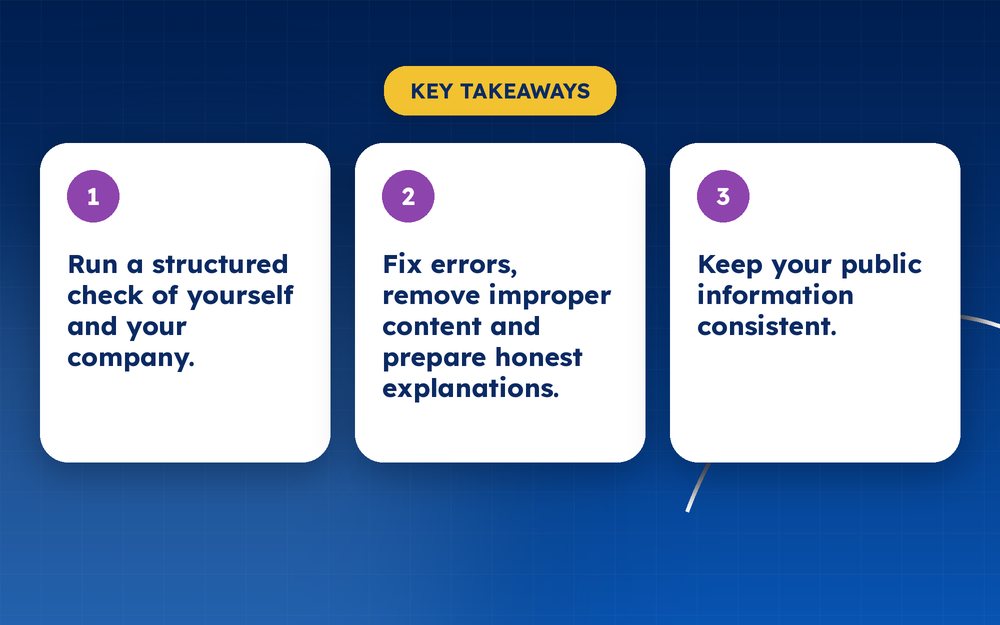
- Run a structured check of yourself and your company.
- Fix errors, remove improper content and prepare honest explanations.
- Keep your public information consistent.
How to check, step by step
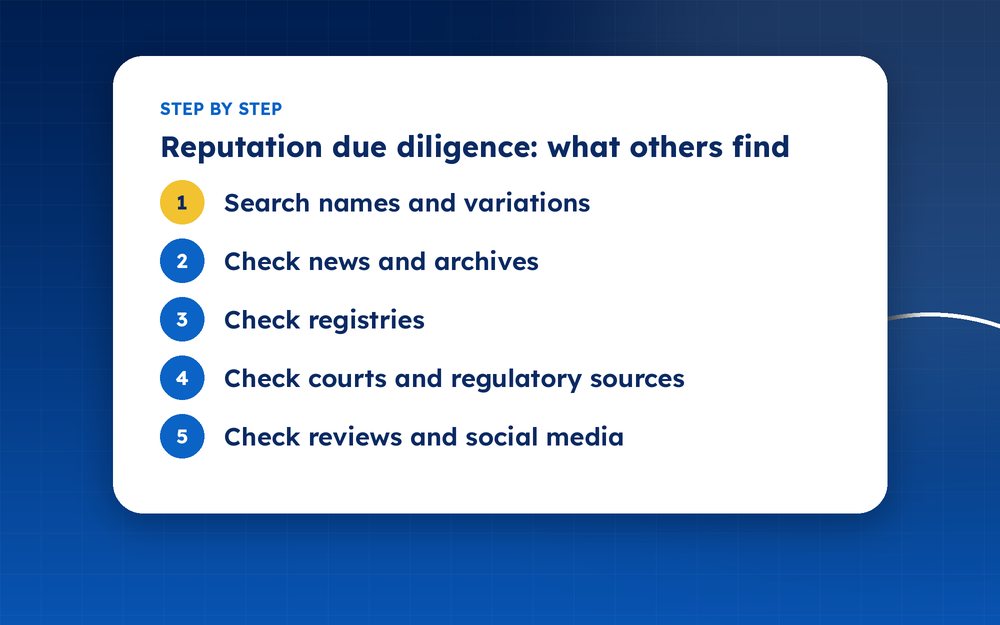
- Search names and variationsInclude nicknames, past names and company names. Search full names, nicknames, former names and company names, with country and industry terms. Use private browsing.
- Check news and archivesSearch news databases and archives. Search news archives and old stories, including local outlets and trade press. Note anything that appears repeatedly.
- Check registriesReview company records, directorships and filings. Check company registries, directors lists, property and licensing records for accuracy and consistency.
- Check courts and regulatory sourcesSearch public records where relevant. Look at court listings, regulatory notices and sanctions lists where relevant, and check for mistaken identity.
- Check reviews and social mediaReview what customers, employees and others say. Review review sites, forums and social media. Note posts that could be misread.
- Check images and videosSearch images and video platforms. Search images and video platforms. Old photos and clips can appear without context.
- Record and prioritiseList findings and plan responses. Put findings in a table with link, accuracy, risk and action. Decide what to fix, explain or monitor.
What stands out to reviewers
Patterns matter more than single items: repeated complaints, unresolved disputes or inconsistent bios. A clear, consistent account of your history builds credibility.
Errors and misidentification
Sometimes a search returns a different person with the same name. Add identifying details to your profiles to reduce confusion.
Preparing your answers
For accurate negative items, prepare a short, honest, factual explanation. Avoid excuses and show what changed.
Ongoing monitoring
Keep checks regular, especially before major events. New content can appear quickly.
What a typical case looks like
A founder preparing for an acquisition runs the checks and finds a regulatory notice that belongs to someone with a similar name, and a company registry entry with an old address. He asks the registry to correct the address, prepares a short note clarifying the mistaken identity and sends it to the buyer's team in advance. During review, the buyer finds the notice, reads the note and moves on within a day.
Finding the issue first changed it from a worry to a quick check.
What each type of reviewer tends to check
Investors usually focus on litigation, regulatory notices, past ventures and the consistency of your story. Journalists look for public statements, complaints and anything that gives a story a human angle. Employers and partners often start with social media and reviews. Knowing who is likely to look tells you which sources to check first and how much detail you may need to explain.
How to present what you find
Once you have your findings table, sort items into three groups: errors to correct, outdated items to update or remove, and accurate items to explain. For the last group, keep a short factual paragraph ready, with dates and what changed since. Share it early when a deal or interview is coming, because disclosure on your terms reads as confidence, while a surprise discovery reads as concealment.
Common mistakes to avoid
Do not assume nobody will look. Do not hide facts. Do not ignore small errors. And do not rely on a single search engine.
How a specialist can help
A specialist team can run a thorough check and plan fixes discreetly. We cannot promise to remove accurate negative content, but we will be honest about what is realistic. Email us in confidence.
Frequently asked questions
What do investors and journalists look for?
Past disputes, regulatory issues, negative coverage, inconsistent claims and anything that does not match what you say. They also look at social media.
What if someone with my name appears?
Prepare a short clarification with identifying details, and ask sites to correct mistaken listings.
Should I tell reviewers about issues first?
Often yes. Sharing context early builds trust.
How often should I check?
Before any major event, and then monthly or with alerts.
Can I remove what they find?
Sometimes. Wrong or private data can often be removed. Accurate public records are harder.
Is this legal advice?
No. It is general information. For disclosure duties, speak to a qualified lawyer.
Need help with this?
Every situation is different. Email us the details in confidence and we will reply with an honest assessment of what can be done.
Contact us by email Reputation recoveryThis guide is general information, not legal advice. DMCA Reputation is not a law firm.
Related guides
Crisis Response Plan Template for Online Reputation Attacks
Crisis response plan template for online reputation attacks: roles, first-hour actions, evidence capture, communication templates and removal workflow.
Read the guide · 3 min
How to Protect an Executive's Reputation Before a Funding Round or IPO
How to protect an executive's reputation before a funding round or IPO: audit search results, fix issues, build accurate profiles and prepare responses.
Read the guide · 4 min
How to Handle a Viral Negative Post About You or Your Business
How to handle a viral negative post about you or your business: first response, facts, communication and recovery.
Read the guide · 3 min