
Investors, journalists and partners search for founders and executives before they commit. A tidy, accurate search profile reduces surprises and strengthens trust.
Due diligence includes online research. Old articles, forum posts, reviews, court records and social media can surface and raise questions, fairly or not.
The best time to act is months before the round, so you have time to fix, remove and explain, rather than react.
Investors do not expect a spotless record. They expect to find nothing that surprises them. Your goal is to know what is out there before they do, and to be ready with a calm, accurate explanation.
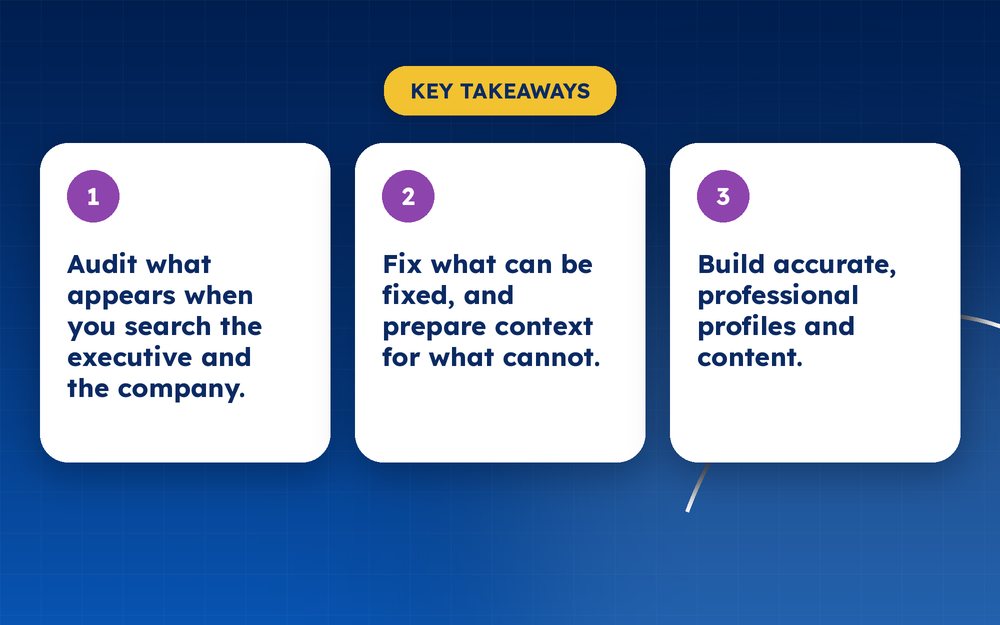
- Audit what appears when you search the executive and the company.
- Fix what can be fixed, and prepare context for what cannot.
- Build accurate, professional profiles and content.
What to do, step by step
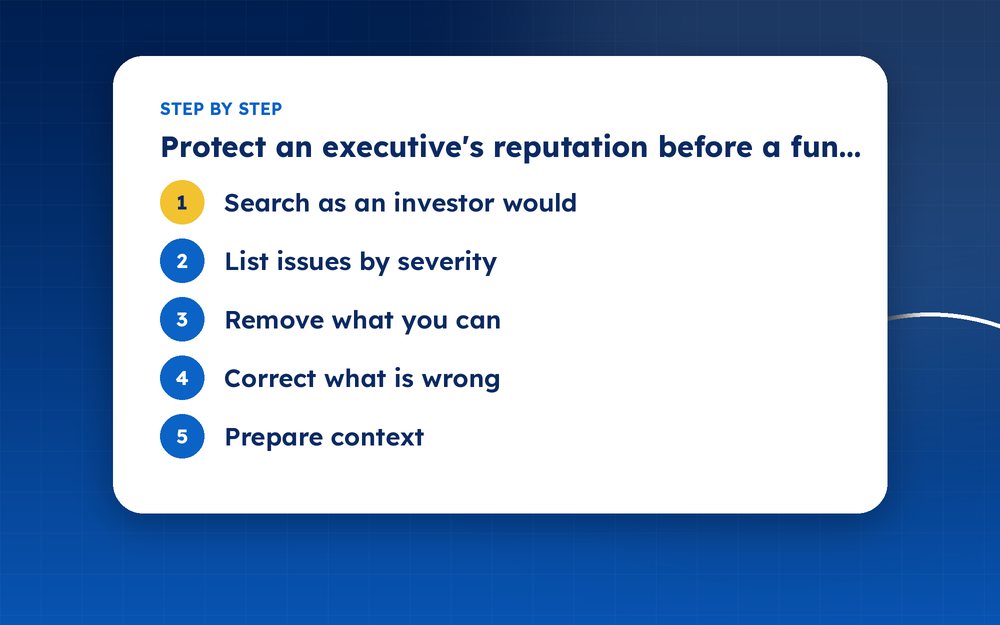
- Search as an investor wouldSearch names, company, past roles and related terms in several search engines. Search the executive's full name, name variations, company and common keywords, in private mode and in several countries. Look past the first page.
- List issues by severityCategorise items as false, outdated, personal or accurate but negative. Rank each finding by how serious it is, how visible and whether it is accurate. This keeps your time on what matters.
- Remove what you canUse notices, platform reports and search forms for eligible content. Remove what can be removed, such as private data, impersonation, false listings and policy-breaking posts. Do not chase what has no basis for removal.
- Correct what is wrongAsk publishers for corrections where facts are wrong. Ask publishers for corrections where facts are wrong, and send evidence. A short factual request works better than a complaint.
- Prepare contextWrite short, honest explanations for accurate negative items. For content you cannot remove, prepare a short explanation with facts and context, ready for investor questions.
- Build positive profilesUpdate professional profiles, bios and press pages. Create or update professional profiles, speaker pages, interviews and company pages so accurate content appears first.
- Monitor continuouslySet alerts for names and key terms. Set up alerts for the name and company, and review them weekly during the raise or listing.
What investors notice
Investors often look at litigation, regulatory issues, past ventures, social posts and reviews. Unexplained gaps or negative items without context can raise doubts. Clear, honest context reduces concerns.
Content you can and cannot remove
False, infringing, private or abusive content may be removable. Accurate news and court records usually are not, and attempts to hide them can backfire. Plan to address those openly.
Building a credible digital footprint
Consistent bios, a professional site, speaking engagements and bylined articles give search engines more positive, accurate material to show.
Social media hygiene
Review old posts and privacy settings. Remove content that no longer reflects you, but do not delete evidence needed for any ongoing matter.
What a typical case looks like
A founder preparing a funding round searches her name and finds an old article about a dispute settled years ago, a wrong listing in a business directory and a forum thread. She asks the directory to correct the listing, reports private details in the forum thread and prepares a two-sentence explanation of the dispute. She also updates her profiles and publishes an interview about her company. During diligence, an investor raises the old article, and she answers in a minute with documents ready.
Preparation turned a possible concern into a non-event.
Common mistakes to avoid
Do not start too late. Do not pay for fake reviews or articles. Do not hide facts investors will find anyway. And do not ignore small issues.
How a specialist can help
A specialist team can audit search results, remove eligible content and build a plan, discreetly. We cannot promise to remove accurate negative content, but we will be honest about what is realistic. Email us in confidence.
Frequently asked questions
Do investors really search founders?
Yes. Due diligence usually includes searching names, news, court records and social media, so it is wise to see what they will see.
Can I remove negative news before a raise?
Sometimes, if it is false, private or breaks a platform rule. Accurate news is hard to remove, so prepare context instead.
How long does this take?
Allow several weeks, because removals and corrections take time. Start early.
Should I tell investors about problems?
Being open about known issues, with clear context, usually builds trust more than waiting for them to find it. Take advice for serious matters.
What about social media?
Review old posts, tighten privacy and consider whether anything could be misread. Do not delete in a way that looks like hiding things during a process.
Is this legal advice?
No. It is general information. For disclosure obligations, speak to a qualified lawyer.
Need help with this?
Every situation is different. Email us the details in confidence and we will reply with an honest assessment of what can be done.
Contact us by email Reputation recoveryThis guide is general information, not legal advice. DMCA Reputation is not a law firm.
Related guides
What to Do About a Hit Piece Written About You or Your Company
What to do about a hit piece written about you or your company: assess accuracy, respond, request corrections, manage search results and consider legal advice.
Read the guide · 3 min
What to Do When Internal Documents or Emails Leak
What to do when internal documents or emails leak: contain access, assess the damage, notify the right people, request removal and manage communications.
Read the guide · 3 min
How to Handle a Viral Negative Post About You or Your Business
How to handle a viral negative post about you or your business: first response, facts, communication and recovery.
Read the guide · 3 min