
A hit piece is an article designed to damage your reputation. A calm, evidence-led response usually serves you better than an angry one.
Hit pieces vary: some are opinionated but based on facts, some contain errors and some are fabricated. How you respond depends on which one you face.
This is general information, not legal advice. For serious false claims, speak to a lawyer early, since time limits can be short.
Your first reaction may be anger, but the first twenty-four hours should be about facts. Read the piece twice, separate what is true from what is not, and avoid anything you would not want quoted in a follow-up article.
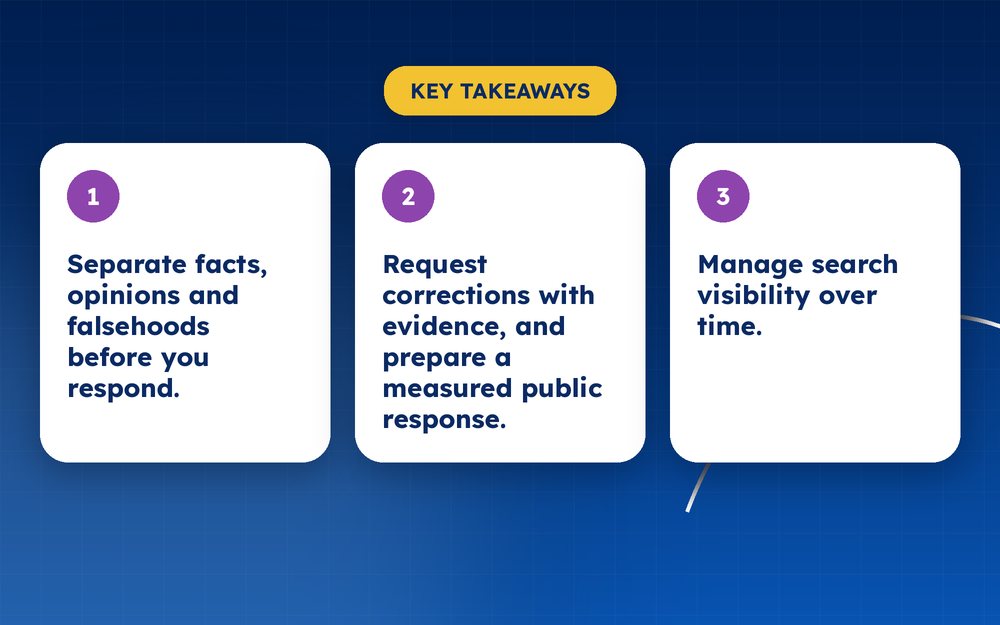
- Separate facts, opinions and falsehoods before you respond.
- Request corrections with evidence, and prepare a measured public response.
- Manage search visibility over time.
What to do, step by step
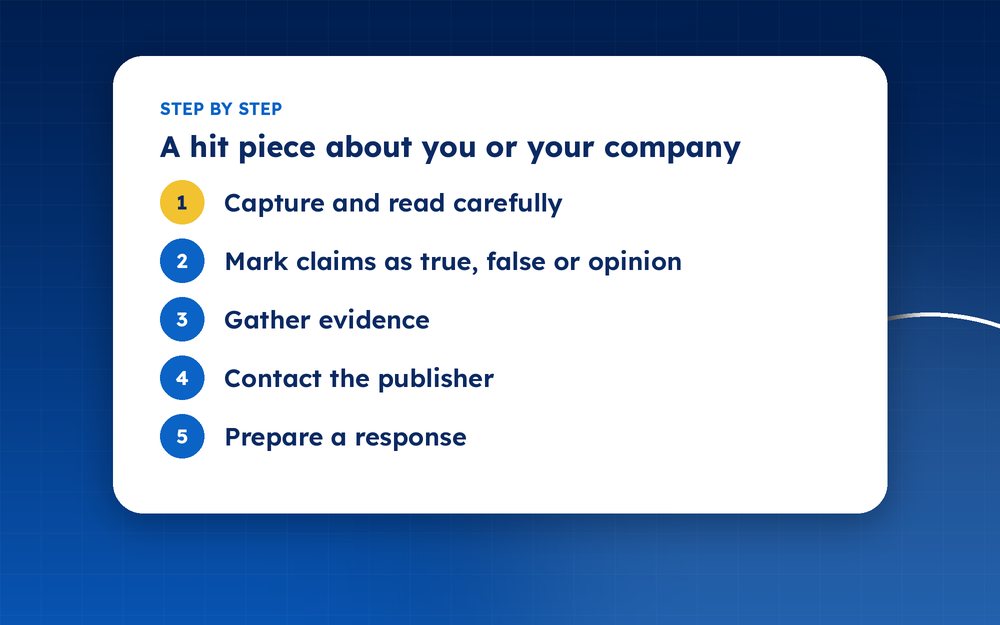
- Capture and read carefullySave the article and list each claim. Save the page and archive copies. Read it carefully, noting the claims, sources and any named people.
- Mark claims as true, false or opinionBe honest in your assessment. Create a table with each claim marked as true, false, opinion or unclear. This stops you reacting to the whole piece instead of its specific parts.
- Gather evidenceCollect documents for false claims. Collect documents, records and statements that support your side. Only include what you can prove.
- Contact the publisherRequest correction with evidence, in a calm tone. A short, polite note listing factual errors and attaching proof gives the publisher a chance to correct. Keep the tone professional.
- Prepare a responseWrite a short factual statement for your channels. Decide whether to respond publicly, and if so, prepare a short factual statement. Have someone else review it for tone.
- Consider legal adviceFor defamatory statements, ask a lawyer. For serious false claims, a lawyer can explain defamation options and risks. Do not send threats yourself.
- Work on visibilityPublish accurate content and monitor rankings. Publish accurate content, such as interviews and profiles, so readers see more than one source.
Deciding whether to respond publicly
A response can set the record straight but can also amplify the story. Consider reach, the audience and whether the story is likely to spread without your input.
Working with the publisher
Editors usually respond to specific, documented factual errors. Avoid personal attacks, and give them a short list of corrections with proof.
Search and social platforms
If the article violates platform policies, report it. Otherwise focus on adding accurate, high-quality content so that the piece is one voice among many.
Looking after people involved
A hit piece affects staff and families. Brief them honestly and offer support.
What a typical case looks like
A company is the subject of a long article quoting unnamed former staff. Leaders mark each claim, find three factual errors and two matters of opinion, and send the publisher a note with documents for the errors. The publisher corrects two and refuses the third. The company publishes a short statement about the corrected points and shares positive customer stories. The article stays, but the corrections appear and the story fades.
Keeping to the provable points protected the company's credibility.
Common mistakes to avoid
Do not threaten without advice. Do not reply in anger. Do not spread unverified claims. And do not ignore time limits.
How a specialist can help
A specialist team can help assess options, contact publishers, report policy breaches and work on search visibility. We are not a law firm and cannot give legal advice. Email us in confidence.
Frequently asked questions
Can a hit piece be removed?
Reputable publishers rarely delete articles, but they may correct errors. Fabricated pieces on low quality sites can sometimes be removed through hosts and search engines.
Should I respond publicly?
Sometimes, with a short factual statement. A long, angry reply can spread the story further.
Should I involve a lawyer?
For serious false claims, yes. A lawyer can advise on options and risks before you act.
How do I push the article down in search?
Publish accurate, useful content and encourage coverage from reliable sources. It takes time and cannot be guaranteed.
What if the article is true?
Then removal is unlikely. Focus on context, what you have done since and fair coverage.
Is this legal advice?
No. It is general information. For defamation, speak to a qualified lawyer.
Need help with this?
Every situation is different. Email us the details in confidence and we will reply with an honest assessment of what can be done.
Contact us by email Reputation recoveryThis guide is general information, not legal advice. DMCA Reputation is not a law firm.
Related guides
What to Do When Internal Documents or Emails Leak
What to do when internal documents or emails leak: contain access, assess the damage, notify the right people, request removal and manage communications.
Read the guide · 3 min
How to Handle a Former Employee Posting Damaging Claims
How to handle a former employee posting damaging claims: stay calm, review facts and contracts, report policy breaches, respond carefully and take advice. General information.
Read the guide · 3 min
How to Handle a Viral Negative Post About You or Your Business
How to handle a viral negative post about you or your business: first response, facts, communication and recovery.
Read the guide · 3 min