
Former employees sometimes post harsh claims on review sites, social media or forums. Some are fair criticism, some are false and some breach confidentiality. Your response should depend on which.
Aggressive responses can turn a small problem into a bigger one. A calm review of the facts, the person's contract and the platform rules helps you choose the right steps.
This is general information, not legal advice. Employment and defamation law vary widely, so take advice before sending threats.
Reactions in the first days tend to shape how the story ends. A measured response that treats the person fairly while correcting facts usually earns more trust than a forceful rebuttal.
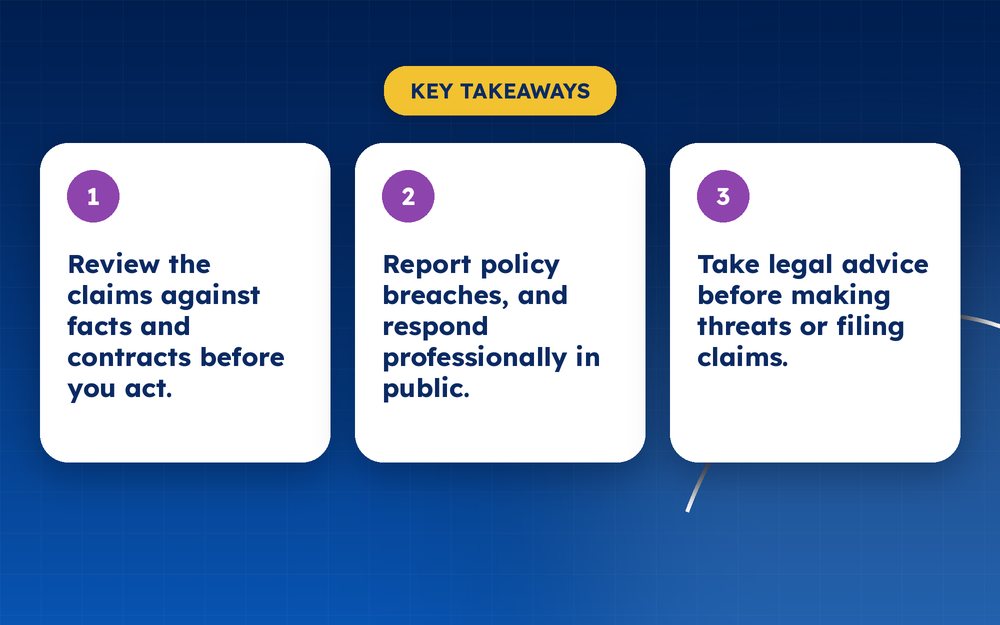
- Review the claims against facts and contracts before you act.
- Report policy breaches, and respond professionally in public.
- Take legal advice before making threats or filing claims.
What to do, step by step
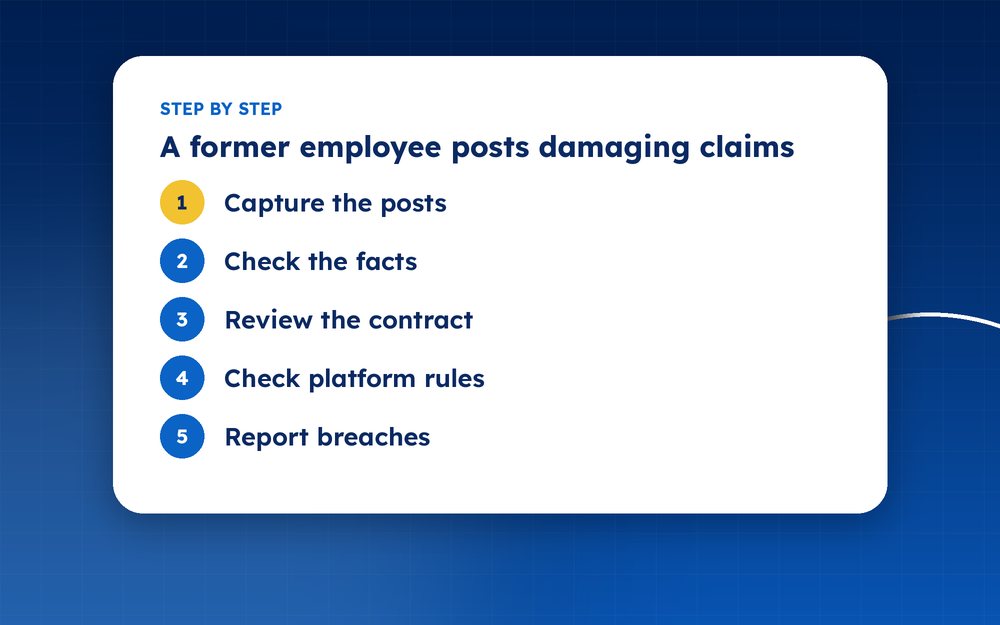
- Capture the postsSave the content, dates and platforms. Save each post, review and comment with links and dates. Note where claims appear and how widely they have spread.
- Check the factsCompare each claim with records. Check each claim against your records and talk to people who know the facts. Be honest about what is true.
- Review the contractLook for confidentiality, non-disparagement and other terms. Review the employment contract and any settlement for confidentiality or non-disparagement terms. Get legal advice before relying on them.
- Check platform rulesSee whether posts break rules, such as private data or harassment. Check whether the posts break platform rules, such as personal information, threats or false statements about specific people.
- Report breachesUse platform report tools with evidence. Report posts that break rules, and keep your report factual. Do not report fair criticism as abuse.
- Respond professionallyWrite a short public reply that is factual and respectful. Where a public reply is useful, keep it short, polite and specific. Thank the person for feedback and invite them to talk privately.
- Take legal adviceAsk about claims, risks and approach. If claims are false and seriously damaging, or confidentiality was breached, a lawyer can advise on options.
Fair criticism versus false claims
Honest opinion about a workplace is usually allowed. False statements of fact, private data or confidential information may break rules or law. Treating them differently is key.
Communicating internally
Brief your team briefly and factually. Avoid blaming or discussing the individual publicly, which can create legal and morale problems.
Reply guidelines
A good reply acknowledges feelings, states facts calmly and says that you take feedback seriously. Do not reveal personnel details.
Preventing future issues
Handle exits respectfully, keep clear policies and encourage internal channels for concerns.
What a typical case looks like
A manager reads a review from a former employee accusing the company of unpaid wages and bullying. HR checks the records and finds the wage claim is wrong, but acknowledges some complaints about management. The company reports no posts as abuse, but replies politely that wages were paid, offers to discuss concerns and quietly reviews its management practices. Other readers see a calm reply and the story does not escalate.
Responding to the real issues while correcting the facts protected the company's reputation.
Common mistakes to avoid
Do not retaliate. Do not share personnel details. Do not threaten without advice. And do not ignore genuine issues.
How a specialist can help
A specialist team can help report policy breaches and manage visibility. We are not a law firm and cannot give legal advice. Email us in confidence.
Frequently asked questions
Can I get a former employee's review removed?
Only if it breaks the platform's rules, such as false statements of fact, personal information or threats. Fair criticism usually stays.
Can I enforce a confidentiality agreement?
It depends on the terms and local law. Ask a lawyer before taking action.
Should I reply publicly?
A short, polite reply that corrects facts can help. Avoid arguing or sharing private details.
What if the claims are true?
Treat them seriously. Fixing the problem is the best reputation repair.
How do I prevent this?
Fair exit processes, listening to concerns and prompt responses reduce angry posts.
Is this legal advice?
No. It is general information. For contract or defamation questions, speak to a qualified lawyer.
Need help with this?
Every situation is different. Email us the details in confidence and we will reply with an honest assessment of what can be done.
Contact us by email Reputation recoveryThis guide is general information, not legal advice. DMCA Reputation is not a law firm.
Related guides
How to Clean Up Your Search Results Before a Job Search
How to clean up your search results before a job search: audit what appears, remove or fix content, build professional profiles and manage social media.
Read the guide · 3 min
How to Remove Court Records and News About a Dismissed Charge
How to remove court records and news about a dismissed charge: sealing basics, asking publishers for updates, search options and what is realistic. General information.
Read the guide · 4 min
How to Handle a Viral Negative Post About You or Your Business
How to handle a viral negative post about you or your business: first response, facts, communication and recovery.
Read the guide · 3 min