
When an attack hits, there is no time to design a process. A simple plan agreed in advance keeps you calm and effective.
Online attacks can include fake reviews, leaks, deepfakes, harassment campaigns or false news. The response steps are similar: assess, contain, remove, communicate and review.
This template is general. Adapt it to your organisation, and get legal advice for serious incidents.
The plan does not need to be long. One page that names who does what, where evidence is stored and who approves messages will serve you better than a long document nobody reads.
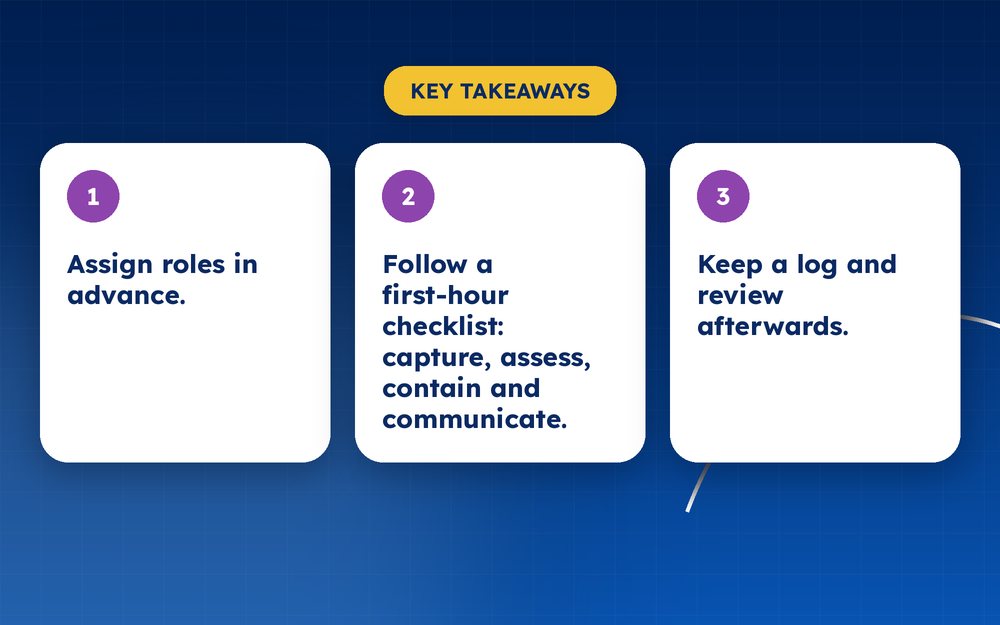
- Assign roles in advance.
- Follow a first-hour checklist: capture, assess, contain and communicate.
- Keep a log and review afterwards.
The plan, step by step
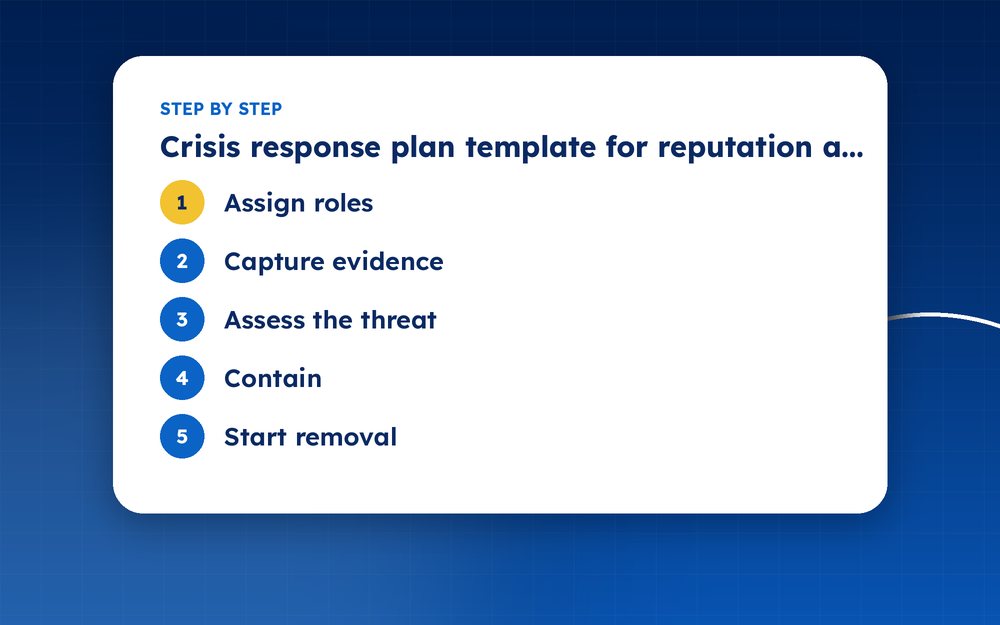
- Assign rolesName an incident lead, a communications lead, a legal contact and a technical contact. Name a lead, an evidence keeper, a communicator and a legal contact, each with a deputy. Write down phone numbers.
- Capture evidenceSave links, screenshots, dates and accounts. Use a shared, secure folder with a simple log of links, screenshots, dates and decisions. Save before you report.
- Assess the threatDecide severity: false, harmful, spreading, legal or safety risk. Decide quickly whether the issue is a policy breach, a legal problem, a safety risk or a fair criticism. This sets the route.
- ContainSecure accounts, limit access and pause scheduled posts if needed. Limit spread by tightening privacy, pausing posts, securing accounts and alerting key people.
- Start removalSend reports and notices through the right routes. Send reports to platforms, hosts and search engines according to the issue. Track each one.
- CommunicateUse pre-agreed templates for staff, customers and media. Prepare a short factual statement and a list of who gets it. Approve through one person.
- ReviewHold a short review and update the plan. After the immediate crisis, hold a short review. Record what worked and update the plan.
First-hour checklist
Within the first hour: confirm who leads, capture evidence, check for security issues, decide whether to respond publicly and start reports for the highest-reach items.
Communication templates
Prepare short statements: acknowledging awareness, stating facts, giving a contact and saying updates will follow. Keep tone calm and avoid blame.
Removal workflow
Keep a table of each item: link, route, date reported, outcome and next step. Review daily during an incident.
After the incident
Review what worked, what was slow and what to change. Update contacts and templates, and train staff.
What a typical case looks like
A small company is hit by a wave of fake reviews and a viral post accusing it of fraud. The lead opens the plan, the evidence keeper saves posts and the communicator drafts a short statement while the owner checks the facts. Within the first hour they report the fake reviews, secure social accounts and alert customer support. By evening, the statement is posted, and over the next days most fake reviews are removed.
Because roles were agreed in advance, nobody lost time deciding who should act.
Common mistakes to avoid
Do not wait to assign roles. Do not skip evidence. Do not respond emotionally. And do not forget to review.
How a specialist can help
A specialist team can plug into your plan, handle removal and monitoring and keep records. We are not a law firm and cannot give legal advice. Email us in confidence.
Frequently asked questions
How long should a crisis plan be?
One to two pages is enough. It should name people, steps and contacts, and be easy to use under stress.
Who should be on the team?
A decision maker, someone to collect evidence, someone to communicate and a legal contact. In a small business, one person may take several roles.
Should we publish a statement?
Only if it helps, and keep it short and factual. Silence is sometimes better for minor issues.
How often should we update the plan?
After every incident and at least once a year.
Can we practise?
Yes. A short drill helps people know their roles.
Is this legal advice?
No. It is general information. For legal risks, speak to a qualified lawyer.
Need help with this?
Every situation is different. Email us the details in confidence and we will reply with an honest assessment of what can be done.
Contact us by email Reputation recoveryThis guide is general information, not legal advice. DMCA Reputation is not a law firm.
Related guides
How to Protect an Executive's Reputation Before a Funding Round or IPO
How to protect an executive's reputation before a funding round or IPO: audit search results, fix issues, build accurate profiles and prepare responses.
Read the guide · 4 min
What to Do About a Hit Piece Written About You or Your Company
What to do about a hit piece written about you or your company: assess accuracy, respond, request corrections, manage search results and consider legal advice.
Read the guide · 3 min
How to Handle a Viral Negative Post About You or Your Business
How to handle a viral negative post about you or your business: first response, facts, communication and recovery.
Read the guide · 3 min