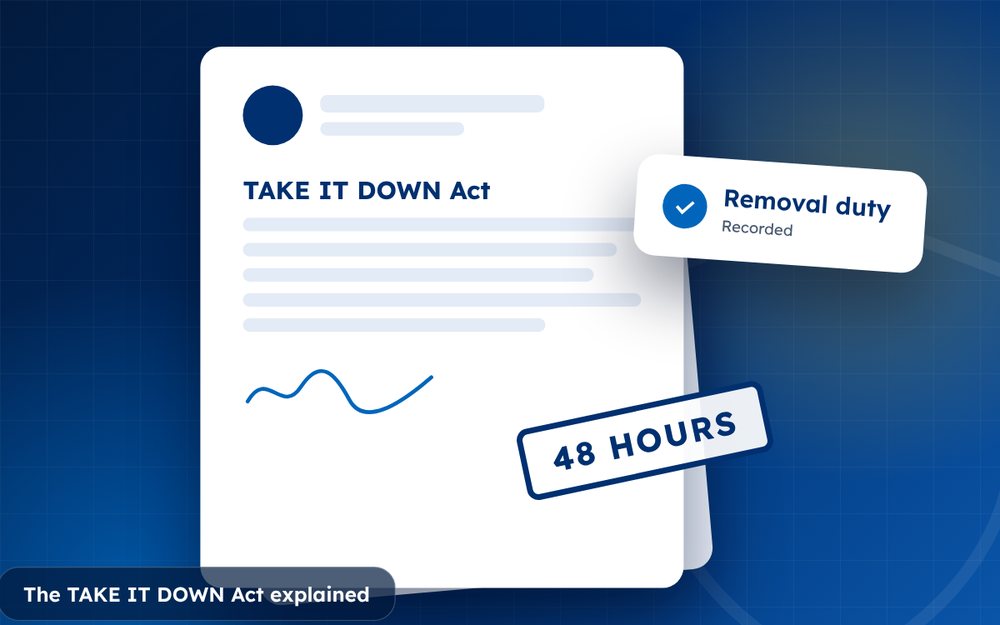
The TAKE IT DOWN Act is a US federal law signed in 2025. It targets non-consensual intimate imagery, including AI-generated fakes, and requires covered online platforms to provide a removal process. This is a general explanation, not legal advice.
For years, victims of intimate image abuse had to rely on each platform's goodwill. The TAKE IT DOWN Act changes that in the United States by giving victims a legal right to demand removal and by placing duties on platforms. It was signed into law in 2025.
This is a general explanation and not legal advice. Laws differ elsewhere, and you should speak to a lawyer about your own situation.
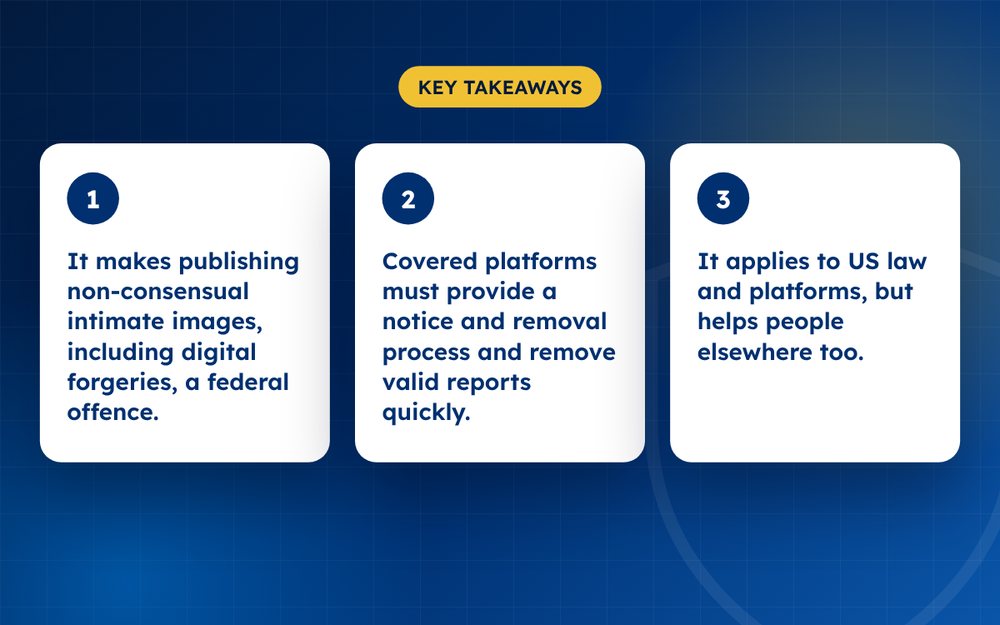
- It makes publishing non-consensual intimate images, including digital forgeries, a federal offence.
- Covered platforms must provide a notice and removal process and remove valid reports quickly.
- It applies to US law and platforms, but helps people elsewhere too.
What it does
- Criminalises sharing intimate images without consent, including AI-generated ones
- Requires covered platforms to set up a process for victims to request removal
- Requires removal within 48 hours of a valid request
- Gives the Federal Trade Commission power to enforce the platform obligations
How to use it
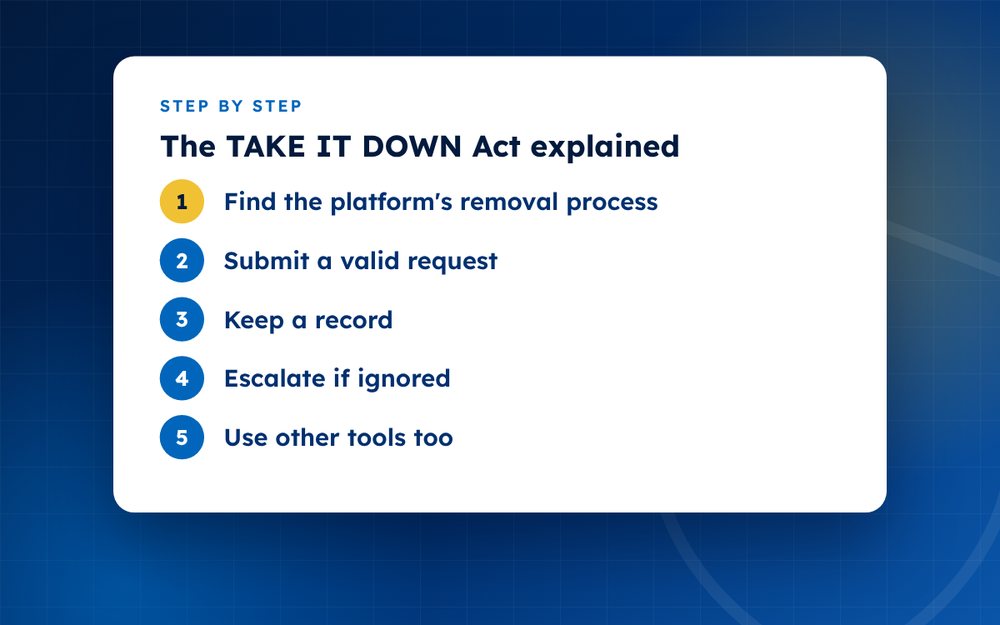
- Find the platform's removal processLook for its dedicated form or reporting route for intimate imagery.
- Submit a valid requestInclude the content location, a statement that it was shared without consent and your contact details.
- Keep a recordNote the date and time of your request.
- Escalate if ignoredIf the platform fails to act, consider reporting and legal advice.
- Use other tools tooStopNCII.org and search engine forms still help.
Two parts: crime and removal
The Act has a criminal side and a platform side. It makes it a federal offence to knowingly publish non-consensual intimate images, including digital forgeries created with artificial intelligence. It also requires covered platforms to set up a process where victims can ask for removal and to remove reported content within a short period after a valid request.
What a valid request includes
- A physical or electronic signature of the person making the request
- Identification of the content and information so the platform can find it
- A statement of a good faith belief that the content is non-consensual
- Contact information for the person making the request
What the Act does not do
It does not make content vanish from every corner of the internet. It applies to covered platforms, and its enforcement depends on regulators. Offenders may be outside the country, and sites that ignore the law may remain online. You should still use search engine requests, host complaints and hash tools to cover other gaps.
Using it alongside other rights
The Act sits alongside state laws, platform rules and the protection offered by other countries. If you are outside the United States, platforms that operate globally often apply their processes widely. Ask a local lawyer or support organisation how the law in your country applies.
Practical tips for your request
When you submit a request, keep your message clear and factual. Include the exact location of the content, such as the link to the post, and state that the content was shared without your consent. Keep a copy of your submission, including the date and time, because the platform's obligations start from the receipt of a valid request.
If a platform does not provide a clear form, look for its trust and safety or legal pages, and ask whether it has a process for intimate image removal under the law.
Laws differ by country. Check the rules where you live.
We can help you prepare and send requests. Email us in confidence.
Official sources
Frequently asked questions
Does it apply to people outside the US?
The Act is US federal law and applies to platforms that operate in the US and to conduct within its reach. Many global platforms apply their removal processes to users worldwide, so victims outside the US can still benefit. Local laws in your country may also apply.
Does it cover deepfakes?
Yes. The Act covers digital forgeries, which includes AI-generated intimate images that look like real people. If you are the subject of such an image, you can use the removal process in the same way.
Is there a deadline for platforms?
Covered platforms had to implement the notice-and-removal process by May 19, 2026. The FTC enforces those obligations. Valid requests trigger the Act's 48-hour removal requirement, including reasonable efforts concerning known identical copies. Check each platform's help pages for its reporting form.
Do I need a lawyer?
Not to submit a removal request. The process is designed for individuals. If you want to pursue legal action against the person who shared the content, or if the platform does not comply, a lawyer can advise.
What if the platform ignores my request?
Keep a record of your request and the date. The Federal Trade Commission is responsible for enforcing the platform obligations, and you can report non-compliance. Consider also contacting a lawyer or a support organisation.
Does it protect people under 18?
Yes, and there are additional protections and services for minors. If the person shown is under 18, use Take It Down and contact the police.
Need help with this?
Every situation is different. Email us the details in confidence and we will reply with an honest assessment of what can be done.
Contact us by email NCII RemovalThis guide is general information, not legal advice. DMCA Reputation is not a law firm.
Related guides
How to Remove Leaked Photos or Videos From the Internet
How to remove leaked photos or videos from the internet: evidence, platform reports, DMCA, search removal and prevention. A calm step-by-step guide.
Read the guide · 4 min
How to Remove Non-Consensual Intimate Images (NCII), Step by Step
How to remove non-consensual intimate images (NCII): reporting, StopNCII.org, Google removal, legal options and support. A step-by-step guide.
Read the guide · 4 min
StopNCII Explained: How to Stop Your Images From Spreading
StopNCII explained: how the free hash-matching tool works, who can use it, which platforms take part and what it cannot do.
Read the guide · 4 min