
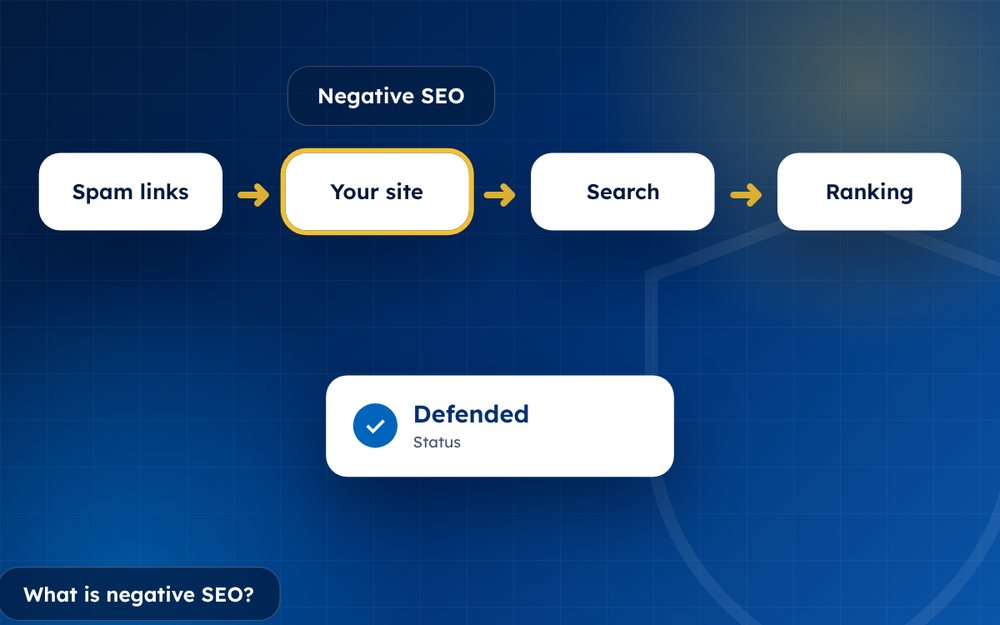
Negative SEO is a malicious attempt to harm a site's search rankings. It is less common than people fear, but real attacks do happen.
Negative SEO is an attempt to harm another site's search performance by unfair means. Examples include building thousands of spammy links, copying a site's content across the web, hacking a site or flooding it with fake reviews.
In practice, search engines are good at ignoring most spammy links, but real attacks do happen, and they can be costly to ignore.
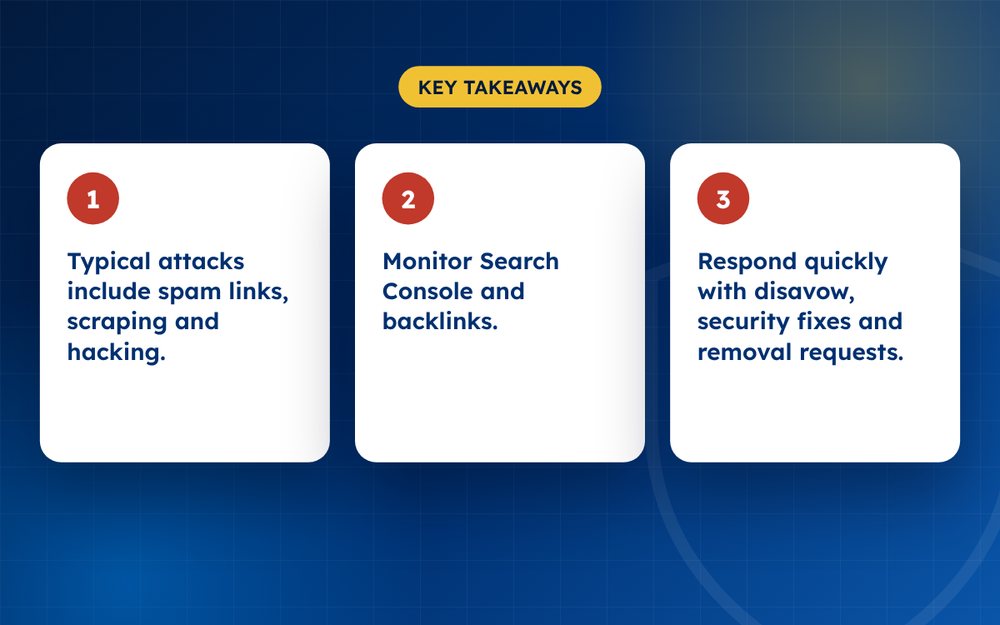
- Typical attacks include spam links, scraping and hacking.
- Monitor Search Console and backlinks.
- Investigate ranking changes before acting. Fix verified security and content problems; most sites do not need to disavow backlinks.
Common tactics
- Mass low quality backlinks
- Copying your content to other sites
- Hacking and injecting spam
- Fake reviews and negative content
- Fake removal requests
Protect yourself
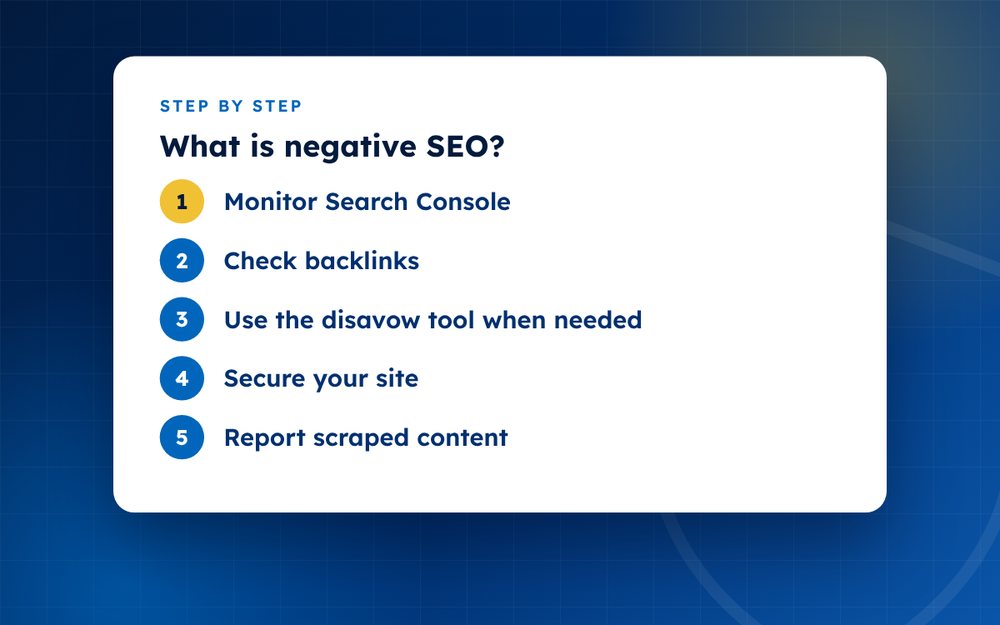
- Monitor Search ConsoleLook for manual actions, security issues and sudden changes.
- Check backlinksReview new links regularly.
- Consider disavowal only if criteria are metConsider disavowal only when Google’s stated criteria are met: a considerable number of spammy, artificial or low-quality links, and a manual action or a likely manual action caused by those links. Do not disavow solely because backlinks look poor quality.
- Secure your siteUpdate software, use strong passwords and a firewall.
- Report scraped contentSend DMCA notices to scrapers.
- Keep recordsDocument any attacks for support.
Signs of an attack
- A sudden drop in rankings or traffic with no obvious cause
- A large number of new, low-quality links from unrelated sites
- Copies of your content appearing on other domains
- Unexpected changes to your pages, such as injected links or spam
- A flood of fake negative reviews
- Warnings in webmaster tools about security issues or manual actions
How to investigate
Use your webmaster tools to look at traffic, indexing, links and security reports. Check your backlink profile for unusual spikes. Compare your pages with the indexed versions. Search for exact phrases from your content to find copies. Keep a record of what you find and when.
How to respond
Fix any security problems and clean up hacked pages. Consider disavowal only when Google’s stated criteria are met: a considerable number of spammy, artificial or low-quality links, and a manual action or a likely manual action caused by those links. Do not disavow solely because backlinks look poor quality. Send takedown notices to sites that copy your content. Report fake reviews to platforms. Make a note of the dates and impact.
Prevention
Keep software updated, use strong passwords and two-factor authentication, restrict admin access and monitor your site regularly. Set up alerts for large changes in links and traffic. Back up your site so that you can restore it if it is hacked.
Keeping evidence and getting support
If you suspect a sustained attack, keep dated screenshots, exports of link reports and server logs. A clear timeline helps if you ask search engines, hosts or lawyers for help. Speak to your web host about security measures, and consider hiring a technical specialist who can audit your site.
Do not retaliate. Responding in kind can harm your own site and create legal risks.
Email us if you suspect an attack.
Official sources
Frequently asked questions
Does Google ignore most spam links?
Google says that its systems are good at ignoring spammy links, so most low-quality links do not harm a site. That is why many cases of suspected negative SEO turn out to be other issues. Still, if you see a large, unusual pattern, it is worth investigating.
Should I disavow everything?
No. Most sites do not need to disavow backlinks. Consider disavowal only when Google’s stated criteria are met: a considerable number of spammy, artificial or low-quality links, and a manual action or a likely manual action caused by those links. Do not disavow solely because backlinks look poor quality. If you are unsure, get expert advice.
Can negative SEO be proven?
Patterns and timing can suggest an attack, but proof is hard. Evidence includes a sudden spike of spam links, matching dates and the nature of the links. It is rarely possible to identify who did it.
How long does recovery take?
It depends on the problem. Cleaning up a hack can take days to weeks. Removing spam links and recovering rankings can take months. Be patient and keep monitoring.
What about fake reviews as part of an attack?
Report them to the platform with evidence, and reply to reviews calmly. Encourage genuine customers to leave reviews, so that the fake ones carry less weight.
Should I involve a lawyer?
If an attack is clearly malicious and causes damage, a lawyer can advise on options. Collect evidence, because it will be useful.
Need help with this?
Every situation is different. Email us the details in confidence and we will reply with an honest assessment of what can be done.
Contact us by email Negative SEO DefenceThis guide is general information, not legal advice. DMCA Reputation is not a law firm.
Related guides
How to Push Down Negative Google Results
How to push down negative Google results: a step-by-step suppression strategy with owned profiles, quality content and realistic timelines.
Read the guide · 4 min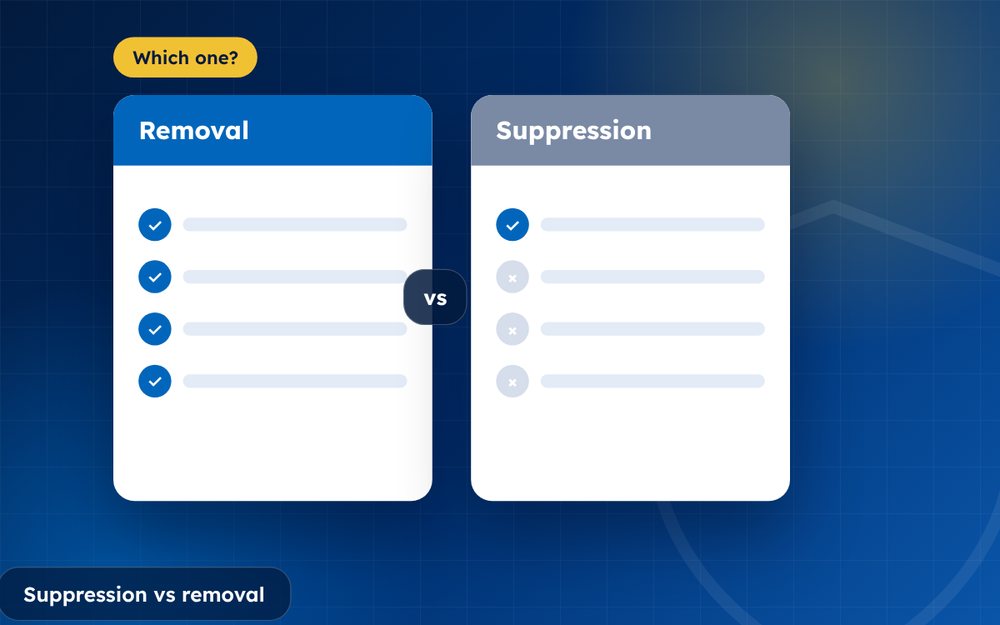
Search Suppression vs Removal: Which Do You Need?
Search suppression vs removal: how they differ, when each works best and how to decide which one you need.
Read the guide · 3 min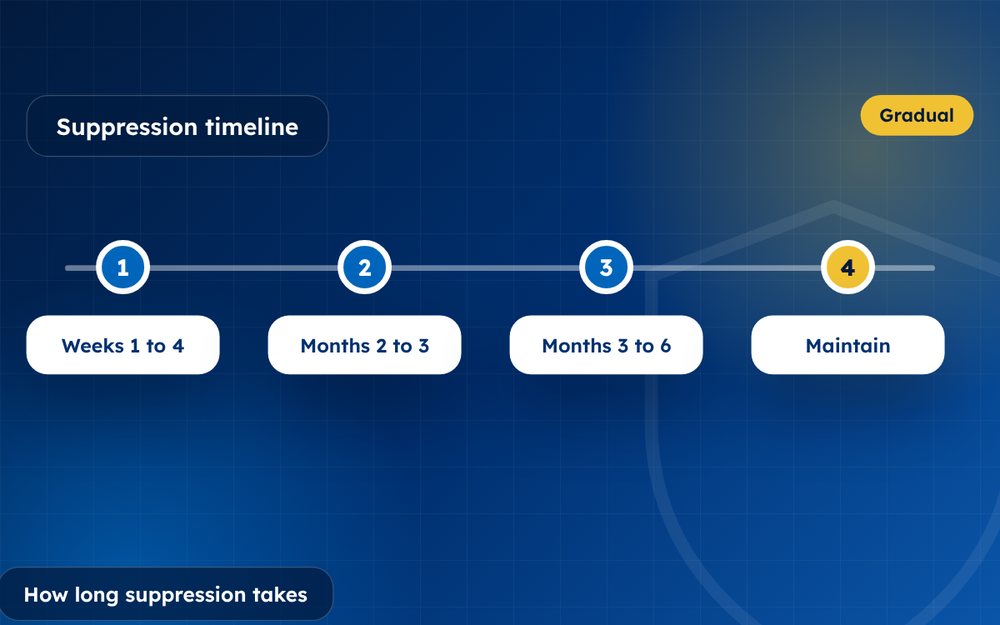
How Long Does Search Suppression Take?
How long does search suppression take? Typical timelines and the factors that make it faster or slower.
Read the guide · 3 min