
The UK Online Safety Act puts duties on online services to protect users from illegal and harmful content. It does not give individuals a direct way to demand removal, but it strengthens the reporting routes.
This page is general information, not legal advice. The Act gives the regulator, Ofcom, powers over certain online services, requiring them to assess risks, take steps against illegal content and provide reporting and complaints routes. It also created or updated offences relating to sharing intimate images.
In practice, you use the service's own reporting tools first, then complaints routes, and consider the police for offences.
The Act places duties on certain online services to manage illegal and harmful content. It does not give you a button to remove everything, but it strengthens the routes you can use and the standards platforms are held to.
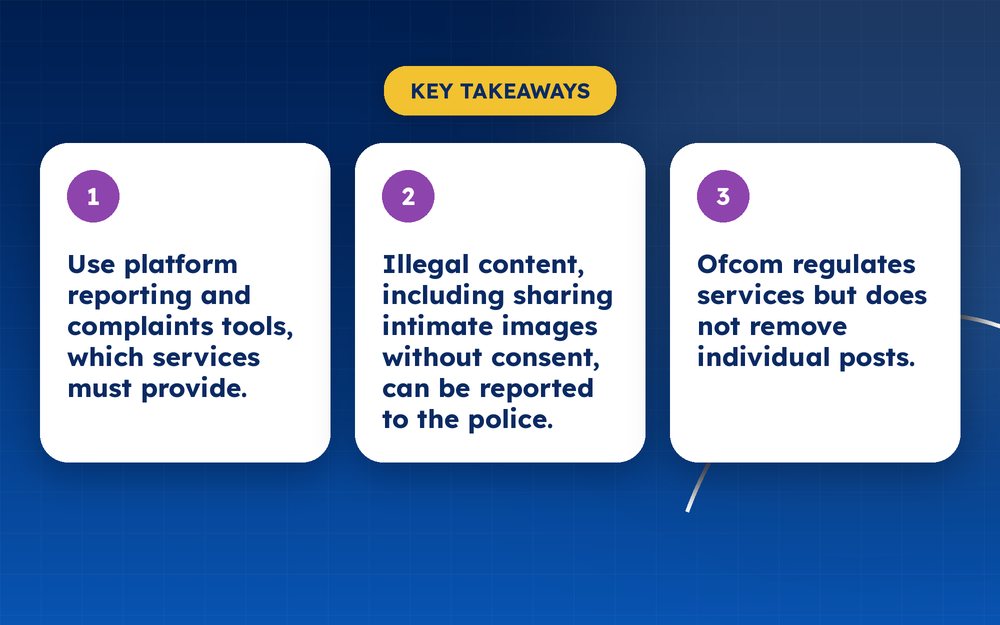
- Use platform reporting and complaints tools, which services must provide.
- Illegal content, including sharing intimate images without consent, can be reported to the police.
- Ofcom regulates services but does not remove individual posts.
How to use it, step by step
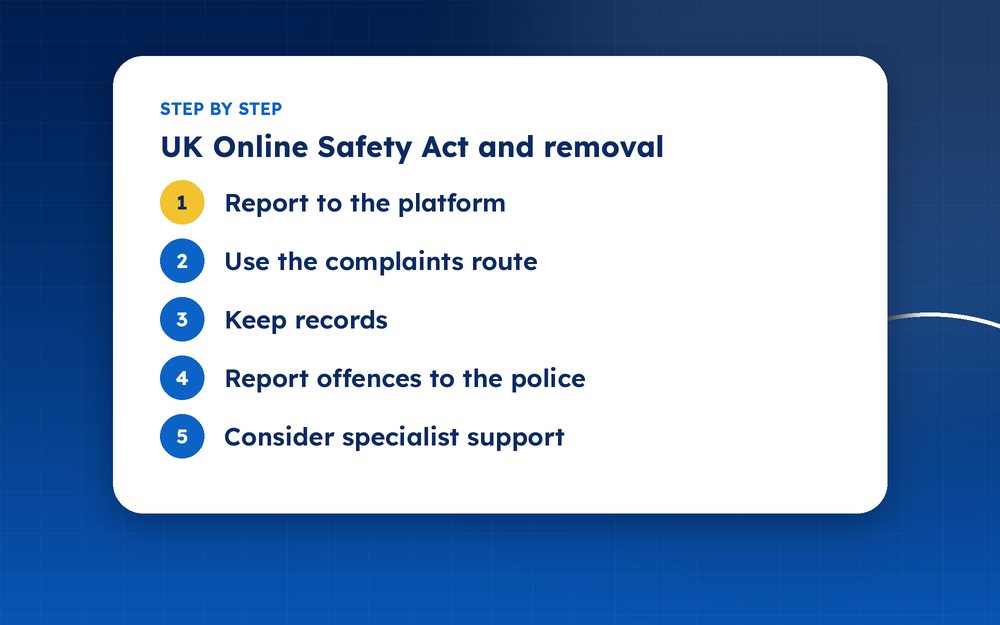
- Report to the platformUse the report option and describe the issue. Use the platform's report tools first. Say clearly what the content is and why it is harmful or illegal.
- Use the complaints routeIf the response is inadequate, use the service's complaints process. Services covered by the Act are expected to have complaints procedures. Use them if your report is rejected.
- Keep recordsSave links, dates and replies. Keep copies of reports, replies and dates. They are useful for any further step.
- Report offences to the policeFor intimate image abuse, threats or harassment, contact the police. If the content involves threats, stalking, intimate images or other offences, report to the police.
- Consider specialist supportHelplines can support victims of image abuse. A specialist service can help with notices and monitoring while you deal with the police and support.
- Tell the regulator about systemic issuesOfcom accepts information about services' compliance, though it does not resolve individual cases. Where a platform is failing in general, the regulator accepts information about systemic issues, though it does not resolve individual cases.
- Continue with other removal routesSearch engines and hosts still matter. Do not rely on one route. Copyright, privacy and platform rules may also apply.
What platforms must do
In broad terms, regulated services must assess risks, remove illegal content when they become aware of it and offer reporting and complaints processes that are easy to use. The duties depend on the type and size of the service.
What the regulator does
Ofcom supervises services and can fine those that fail their duties. It does not decide individual removal cases, so you should still report directly to the service.
Intimate image offences
The Act reformed offences around sharing intimate images, including some that are altered. Reporting to the police can lead to action against the person responsible.
Cross-border limits
Many services are based abroad, and the Act's reach and enforcement depend on how they operate. Combine routes for best results.
What a typical case looks like
A person is targeted with abusive messages on a social platform. She reports them, saves screenshots and uses the platform's complaints route when the first report is rejected. The platform removes the messages and suspends the account. She also reports threats to the police.
The Act's framework supported her complaint, but the practical steps were the same as before: evidence, reports and persistence.
Common mistakes to avoid
Do not expect the regulator to remove posts. Do not skip platform reports. Do not delete evidence. And do not delay police reports for serious offences.
How a specialist can help
A specialist team can handle reports, complaints and follow-up across services. We are not a law firm and cannot give legal advice. Email us in confidence.
Frequently asked questions
Does the Online Safety Act let me force removal?
It places duties on services, but you still report and complain through platforms. The regulator does not handle individual cases.
Who does it apply to?
Certain online services accessible in the UK, including social media and search.
Should I still report to the police?
For offences such as threats, stalking or intimate image abuse, yes.
Can a service help me?
A specialist can help with reports and monitoring, but cannot guarantee outcomes.
What if the platform ignores me?
Use the complaints route, keep records and consider other routes.
Is this legal advice?
No. It is general information, and laws differ by country. For advice on your situation, speak to a qualified lawyer.
Need help with this?
Every situation is different. Email us the details in confidence and we will reply with an honest assessment of what can be done.
Contact us by email DMCA takedown serviceThis guide is general information, not legal advice. DMCA Reputation is not a law firm.
Related guides
EU Digital Services Act Notices: How to Use Them for Removal
EU Digital Services Act notices: how to use notice and action tools for removal, what a notice must contain, appeals and what to expect from platforms. General information.
Read the guide · 4 min
Singapore Harassment and Online Safety Laws: What Victims Can Use
Singapore harassment and online safety laws: what victims can use, protection orders, platform reporting and recent online safety developments. General information.
Read the guide · 3 min
How to Send a DMCA Takedown Notice (With Template)
How to send a DMCA takedown notice: what to include, who to send it to, a free template, counter-notices and common mistakes.
Read the guide · 5 min