
Singapore has laws on harassment, intimate image abuse and online safety, and has been adding new tools. This overview points to what victims may use, but check current rules and take advice.
This page is general information, not legal advice. Singapore's Protection from Harassment Act provides civil and criminal routes for harassment, including online conduct, with protection orders and takedown-type orders available in some cases. Criminal law covers offences such as sharing intimate images.
Recent reforms have focused on online harms, including the creation of an online safety body and faster routes for victims. Because the details are changing, verify the current position with official sources or a lawyer.
Singapore law offers several routes against harassment and online abuse, and new online safety measures have been introduced in recent years. The details change, so check current official guidance before relying on any of this.
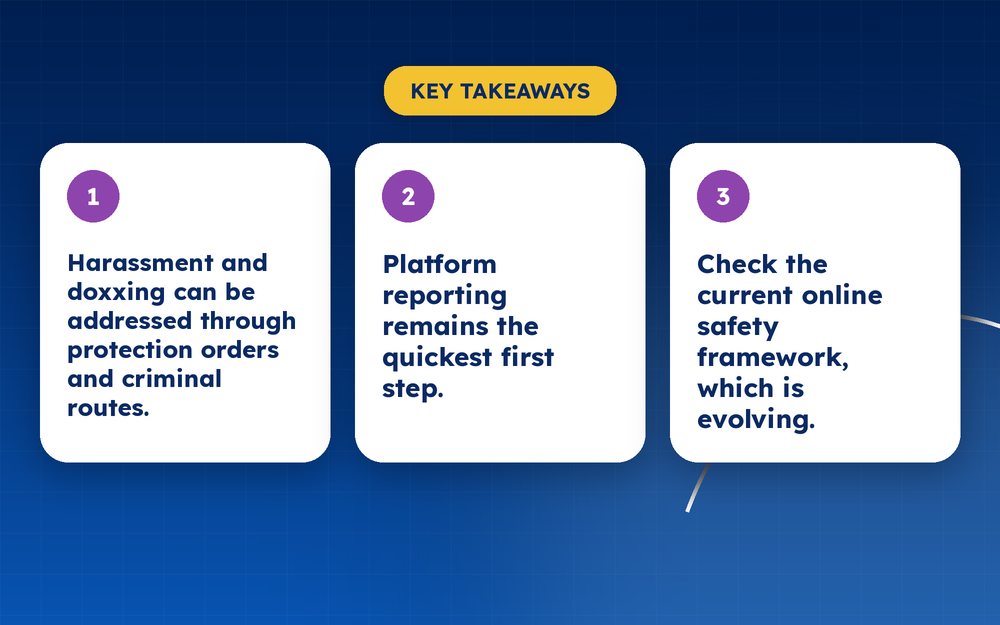
- Harassment and doxxing can be addressed through protection orders and criminal routes.
- Platform reporting remains the quickest first step.
- Check the current online safety framework, which is evolving.
What to do, step by step
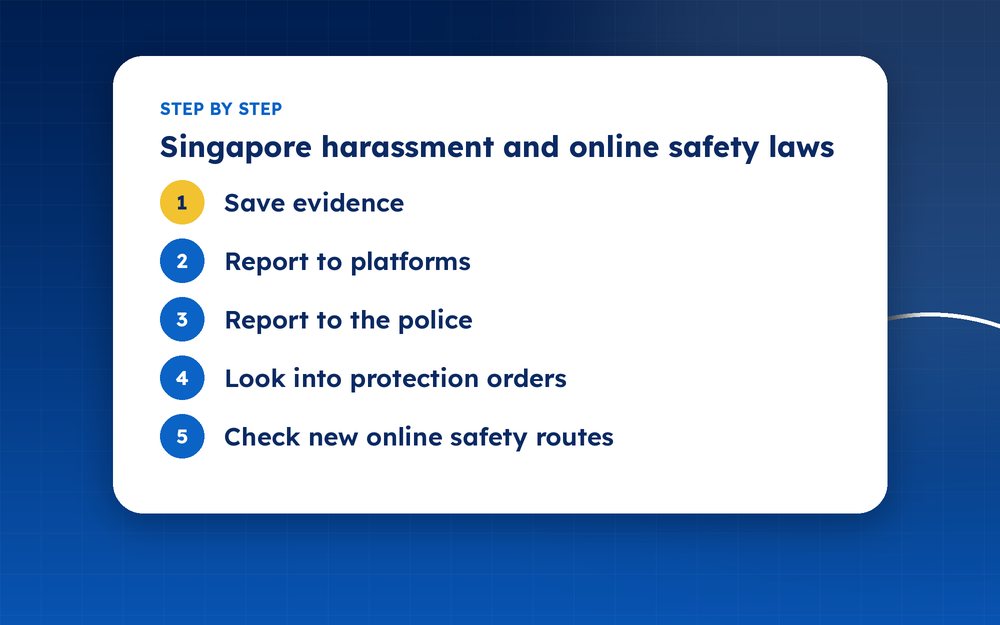
- Save evidenceCapture content, accounts, dates and links. Capture messages, posts, usernames, links and dates. Keep original files as well as screenshots.
- Report to platformsUse report tools for harassment, doxxing and intimate content. Use the platform's report tools for harassment, impersonation and private information. Keep the reports.
- Report to the policeFor criminal conduct such as threats or sharing intimate images. For threats or serious harassment, report to the police and provide your evidence. Ask for a reference number.
- Look into protection ordersAsk about civil routes under harassment law. Ask about protection or similar orders available to harassment victims, and what is required to apply.
- Check new online safety routesSee whether a regulator or dedicated body can help. Check current official sources for new online safety routes, as the framework has been evolving.
- Seek supportVictim support organisations can help with practical steps. Victim support organisations can help with practical and emotional support. Ask the police or search official sites.
- Continue removal workHosts and search engines still matter. Do not stop at one route. Platform reports and search removal can continue in parallel.
Harassment law in broad terms
The law addresses conduct intended to cause harassment, alarm or distress, including online. It provides both criminal and civil remedies, and courts can issue orders to stop the conduct and, in some cases, to remove or limit communication of false statements.
Intimate image abuse
Sharing intimate images without consent is addressed by criminal law, and victims can report to the police and to platforms.
Online safety developments
Singapore has introduced a framework to give victims faster routes to relief against online harms, including through a dedicated body. Check official sources for current details and how to apply.
Practical points
Keep evidence organised, report quickly and tell trusted people. Orders and legal routes take time, and removal can continue in parallel.
What a typical case looks like
A person is harassed by a former colleague through repeated messages and posts. She keeps a log and screenshots, reports the posts to the platform and makes a police report. She asks about protective options and, with advice, pursues the route that fits her case. The platform removes the posts and suspends the account.
Her organised evidence helped each route.
Common mistakes to avoid
Do not retaliate online. Do not delete evidence. Do not rely on outdated information. And do not delay reporting threats.
How a specialist can help
A specialist team can handle reports to platforms, hosts and search engines while you pursue official routes. We are not a law firm and cannot give legal advice. Email us in confidence.
Frequently asked questions
What laws apply to online harassment in Singapore?
There are laws against harassment, and newer measures on online safety. Check current official sources, as the framework changes.
Should I report to the police?
For threats or serious harassment, yes. Provide your evidence.
Can I get a protection order?
Options exist for victims in some cases. Ask the police or a lawyer about eligibility.
Do platform reports still matter?
Yes. They can be faster than legal routes.
Where can I get support?
Victim support services and helplines can help.
Is this legal advice?
No. It is general information, and laws differ by country. For advice on your situation, speak to a qualified lawyer.
Need help with this?
Every situation is different. Email us the details in confidence and we will reply with an honest assessment of what can be done.
Contact us by email DMCA takedown serviceThis guide is general information, not legal advice. DMCA Reputation is not a law firm.
Related guides
How to Use Australia's eSafety Commissioner for Removal
How to use Australia's eSafety Commissioner for removal: which harms it covers, how to report, what to report to the platform first and what to expect. General information.
Read the guide · 3 min
What Is a John Doe Lawsuit and When Does It Make Sense?
What is a John Doe lawsuit and when does it make sense? How US lawsuits against anonymous defendants work, subpoenas, costs, risks and alternatives. General information.
Read the guide · 4 min
How to Send a DMCA Takedown Notice (With Template)
How to send a DMCA takedown notice: what to include, who to send it to, a free template, counter-notices and common mistakes.
Read the guide · 5 min