
A John Doe lawsuit lets you sue an unnamed person and ask a court to help identify them. It can be useful in serious cases, but it is costly and not always successful.
This page is general information, not legal advice. In the United States, a claimant may file a case against "John Doe" and ask the court for permission to serve a subpoena on a platform or provider to identify the person. Courts usually require a reasonable claim and balance the person's anonymity.
Other countries have similar tools under different names. A lawyer in your jurisdiction can explain how they work.
A John Doe action is a tool for finding an unknown person, not a quick fix. It can reveal who is behind an anonymous account, but it is slow, costly and not suited to every case. It is a decision for you and a lawyer.
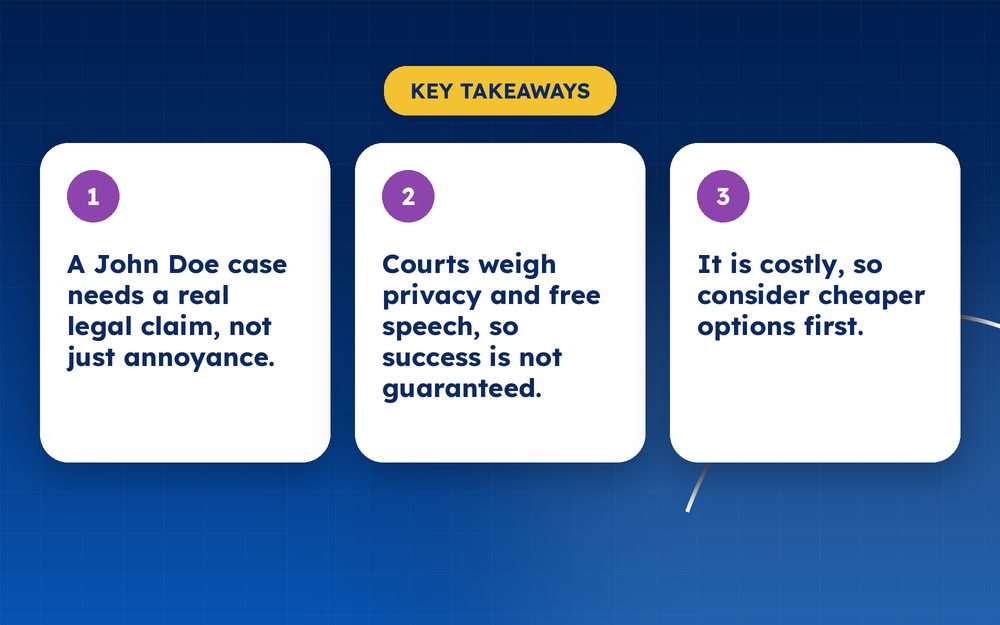
- A John Doe case needs a real legal claim, not just annoyance.
- Courts weigh privacy and free speech, so success is not guaranteed.
- It is costly, so consider cheaper options first.
How to think about it, step by step
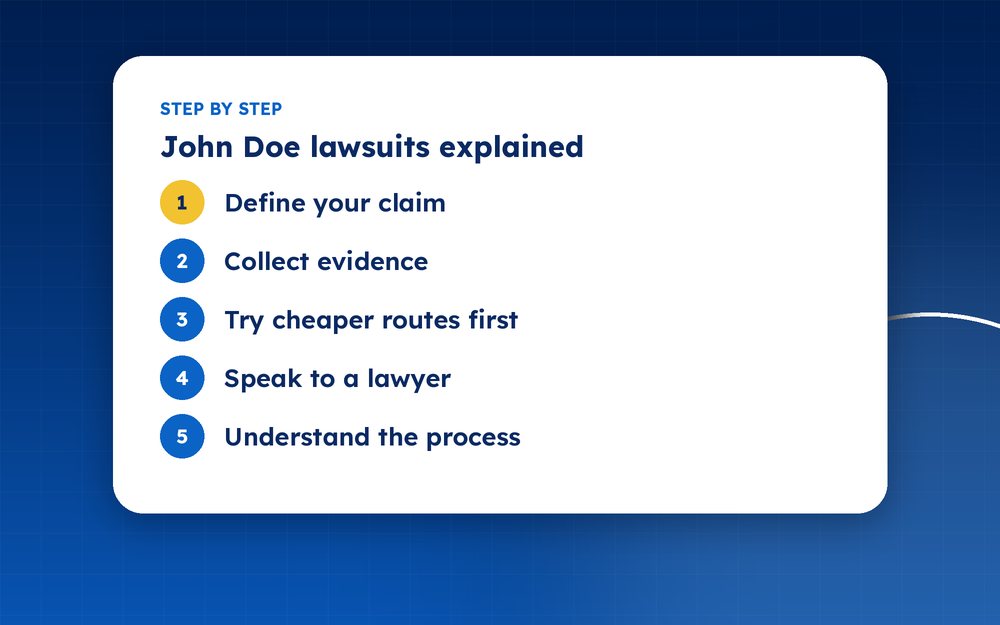
- Define your claimIdentify the harm, such as defamation, harassment or infringement. Be clear about what wrong you want to claim, such as defamation, copyright infringement or harassment. A weak claim will fail early.
- Collect evidenceSave content, dates, accounts and proof of harm. Save posts, links, dates and how they harmed you. Courts need evidence before they allow identification.
- Try cheaper routes firstPlatform reports, notices and search removal. Platform reports, copyright notices and replies are cheaper and often faster. Try them first.
- Speak to a lawyerAsk about the claim, costs and risks. A lawyer can explain whether the claim is strong, what court is suitable and what the risks and costs are.
- Understand the processThe lawyer files, seeks a subpoena and, if approved, obtains identifying information. The process may involve asking the court for permission to request records from platforms, which may notify the user. Rules differ by place.
- Decide with full informationWeigh cost, privacy risks and likely outcomes. Weigh cost, time, privacy and the chance of success against what you want. Sometimes removal alone is enough.
- Plan for next stepsIf identified, you may negotiate or proceed. Decide what you would do once the person is identified, such as a letter, settlement or further claim.
How courts approach it
Courts typically look at whether the claim is strong enough, whether the information is needed, and whether there are alternatives. They also consider whether the anonymous person was notified and had a chance to object.
What identification may involve
Platforms may hold limited data, such as email addresses or IP logs. Further requests to internet providers may be needed. The result may not identify the person definitively.
Risks and costs
Cases can be slow and expensive, and may attract more attention to the content. Some jurisdictions have anti-SLAPP laws that can penalise weak claims.
Alternatives
Many people achieve their goal through removal and visibility management. If you do want to explore legal action, speak to a lawyer, and you can contact us if you would like a recommendation. We do not promote particular law firms in our guides.
What a typical case looks like
A business owner is targeted by an anonymous account posting serious false claims. After failed reports, he consults a lawyer, who explains the cost and the chance of success. They decide that identifying the person could justify the effort because the claims are clearly false and damaging. The lawyer applies for a court order, which leads to the identification of a former contractor and a settlement.
Not every case ends this way, and many are resolved without court.
Common mistakes to avoid
Do not start without a real claim. Do not try to unmask people yourself. Do not miss time limits. And do not ignore costs.
How a specialist can help
A specialist team can prepare evidence and handle removal while you consider legal steps. We are not a law firm and cannot give legal advice. Email us in confidence.
Frequently asked questions
What is a John Doe lawsuit?
It is a legal action against an unknown person, used to ask a court for help identifying them, often to pursue a claim such as defamation.
Is it expensive?
It can be, with costs and time. A lawyer can estimate for your case.
Will it always reveal the person?
No. Platforms may not hold enough data, and courts balance privacy.
Are there cheaper options?
Yes. Platform reports, notices and replies may solve the problem faster.
Can a removal service help?
We can help with reports and monitoring, but cannot give legal advice. You can contact us for a lawyer recommendation if you want to proceed.
Is this legal advice?
No. It is general information, and laws differ by country. For advice on your situation, speak to a qualified lawyer.
Need help with this?
Every situation is different. Email us the details in confidence and we will reply with an honest assessment of what can be done.
Contact us by email DMCA takedown serviceThis guide is general information, not legal advice. DMCA Reputation is not a law firm.
Related guides
What Is the Streisand Effect and How to Avoid It
What is the Streisand effect and how to avoid it: why aggressive removal attempts can backfire, how to act quietly and when a public response is better.
Read the guide · 3 min
How Long Do You Have to Act? Time Limits for Defamation and Copyright Claims
How long do you have to act? Time limits for defamation and copyright claims, why they vary by country and why early action matters. General information, not legal advice.
Read the guide · 3 min
How to Send a DMCA Takedown Notice (With Template)
How to send a DMCA takedown notice: what to include, who to send it to, a free template, counter-notices and common mistakes.
Read the guide · 5 min