
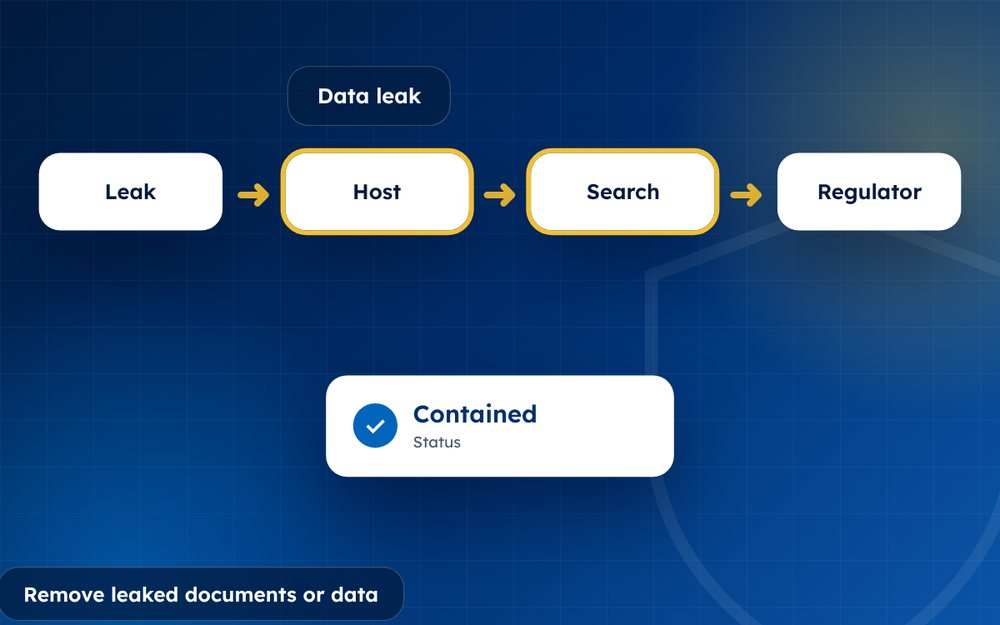
Leaked documents or data, such as contracts, ID scans or customer details, can cause financial and personal harm. Quick containment and structured removal reduce the damage.
Leaked documents and data can include contracts, financial records, customer lists, medical files and identity documents. The harm can be financial, legal or personal, and it can grow quickly if the data is found by criminals.
The priority is to stop the leak at the source, then to limit how far the data has spread.
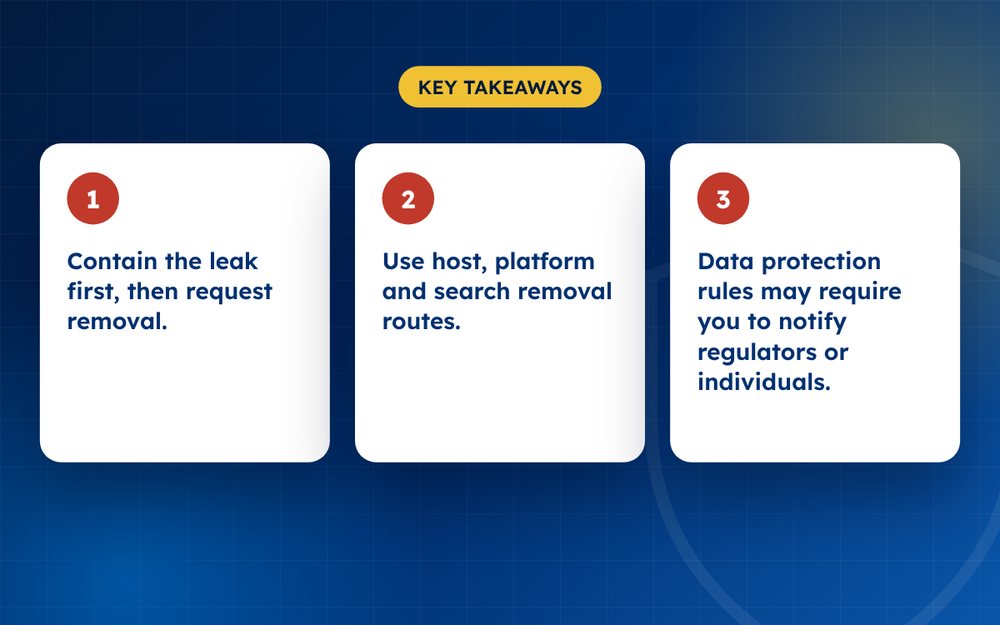
- Contain the leak first, then request removal.
- Use host, platform and search removal routes.
- Data protection rules may require you to notify regulators or individuals.
Steps
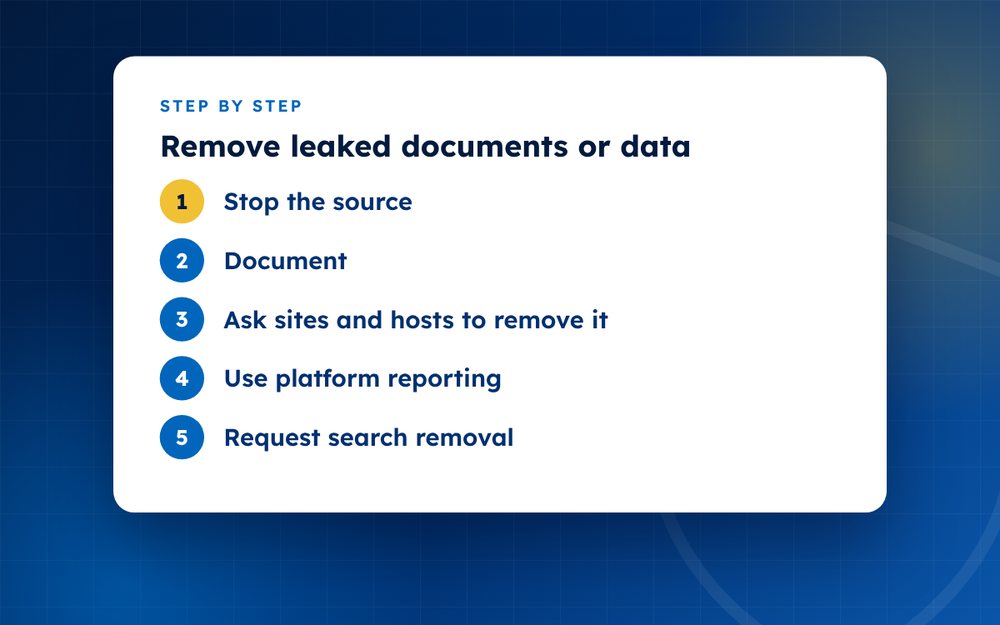
- Stop the sourceClose the access route, change credentials and secure systems.
- DocumentRecord where the data appears, with URLs and screenshots.
- Ask sites and hosts to remove itSend removal requests citing privacy, confidentiality or copyright.
- Use platform reportingPaste sites, file sharing services and social networks have report forms for private information.
- Request search removalGoogle and Bing have routes for personal information and sensitive data.
- Check legal dutiesBusinesses may have to notify regulators or affected people under data protection laws. Take legal advice.
- Protect people affectedAdvise them to change passwords and watch for fraud.
- MonitorData often reappears on new sites.
Contain first
Before asking others to remove anything, make sure the leak has stopped. If it came from a misconfigured server, a stolen password or a former employee, fix that first. Otherwise the data may be posted again. Involve your IT or security team, and keep logs of what you find.
Understand what was exposed
- List the types of data, such as names, addresses, ID numbers or financial details
- Identify whose data it is, such as customers, employees or partners
- Work out where it has been posted, including paste sites, forums and file hosts
- Check the date of the first appearance
- Assess the risk to the individuals involved
Removal and reporting
Send takedown requests to the sites and hosts that publish the data, explaining that it contains private or confidential information. Many platforms have forms for personal data. Ask Google and Bing to remove search results that expose personal information. Consider notifying authorities and affected people if the law requires.
Supporting those affected
If personal data has been exposed, tell people honestly, recommend that they change passwords, watch for phishing and consider fraud alerts. Clear communication can reduce harm and build trust.
Building resilience for the future
After a leak, review how it happened and what could be improved. Use access controls, encryption, staff training and regular audits. Limit the data you collect and store, and delete what you no longer need. Have an incident response plan with named contacts and clear steps. These measures reduce the chance of a repeat and the harm if one occurs.
Share lessons with your team so that everyone understands their role.
We help with the practical removal work. Email us with details.
Frequently asked questions
Can leaked data be fully removed?
Often not entirely, but exposure can be greatly reduced. Data posted on mainstream sites can usually be removed, while data in criminal marketplaces is much harder to deal with. Focus on containing the leak, removing visible copies and protecting the people affected.
Do I have to report a breach?
Many laws require organisations to report certain data breaches to regulators and to affected individuals within a set time. The rules depend on where you operate and what data was involved. Ask a lawyer or data protection adviser as soon as possible.
Is dark web content removable?
Rarely. Focus on the surface web, search results and the people affected. Monitoring services can tell you whether your data is being traded, which helps you advise those at risk.
Who should I tell first?
Your security team or advisers, then affected parties as required. Preserve evidence and avoid public statements until you understand what has happened. Involve legal counsel early.
Can I ask Google to remove search results that show leaked documents?
Yes, if they contain personal information such as ID numbers, bank details or sensitive records, you can use Google's removal processes. This does not remove the documents from the website, so contact the site as well.
How long does it take?
Some removals happen within days, others take weeks. Monitoring should continue for months, because data often reappears.
Need help with this?
Every situation is different. Email us the details in confidence and we will reply with an honest assessment of what can be done.
Contact us by email Leaked Documents and DataThis guide is general information, not legal advice. DMCA Reputation is not a law firm.
Related guides
How to Remove Leaked Photos or Videos From the Internet
How to remove leaked photos or videos from the internet: evidence, platform reports, DMCA, search removal and prevention. A calm step-by-step guide.
Read the guide · 4 min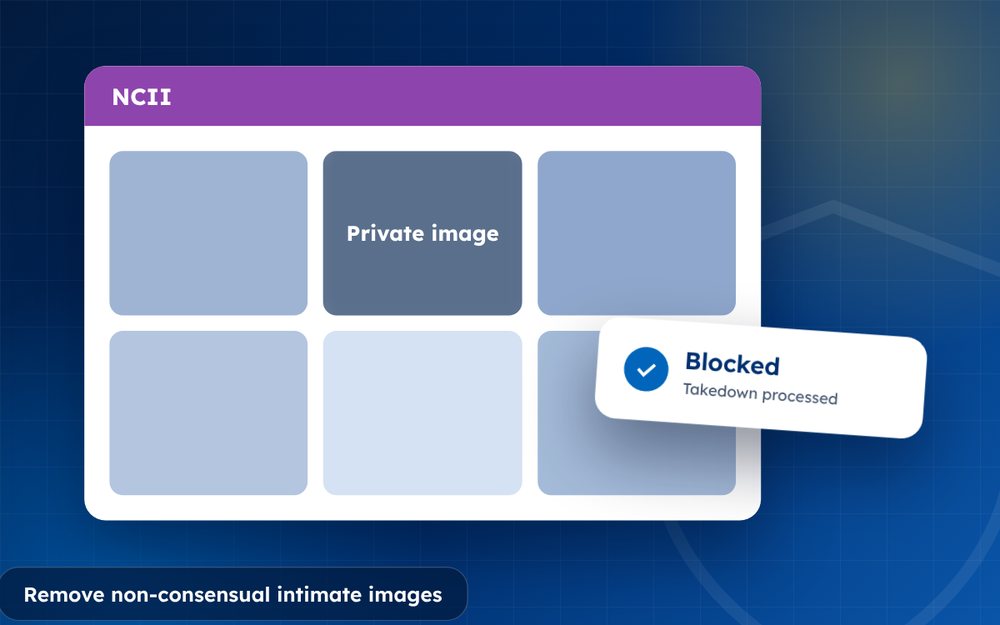
How to Remove Non-Consensual Intimate Images (NCII), Step by Step
How to remove non-consensual intimate images (NCII): reporting, StopNCII.org, Google removal, legal options and support. A step-by-step guide.
Read the guide · 4 min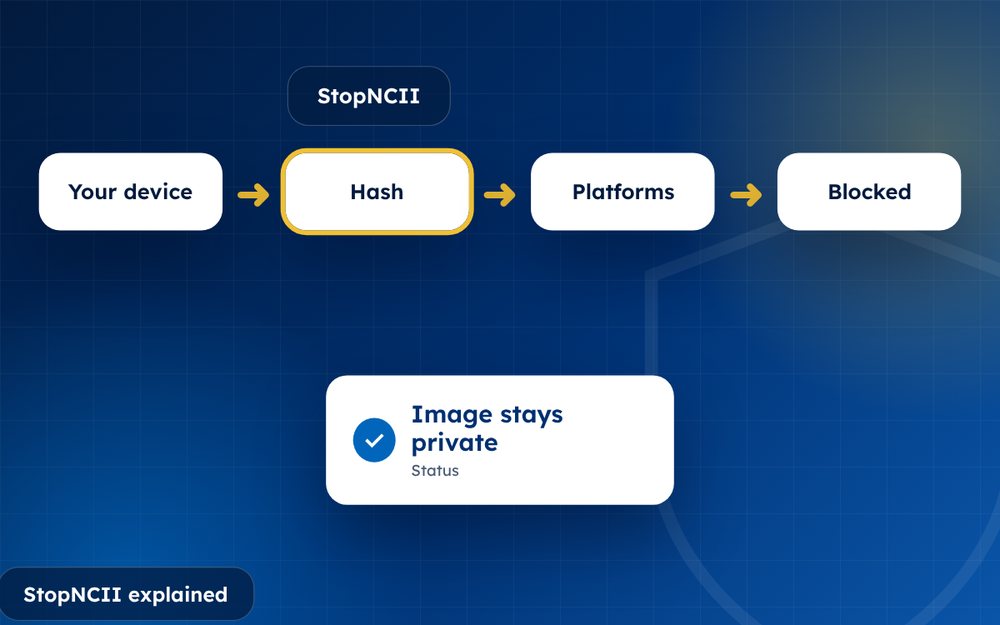
StopNCII Explained: How to Stop Your Images From Spreading
StopNCII explained: how the free hash-matching tool works, who can use it, which platforms take part and what it cannot do.
Read the guide · 4 min