
Telegram channels and groups are a common place for leaks. The platform is less open than websites, but there are reporting routes.
Telegram is a messaging platform with large public channels and private groups. Because channels can be created quickly and can hold huge amounts of content, they are a common place for leaks. They are also harder to monitor and to deal with than ordinary websites.
Persistence and clear documentation are the keys to success.
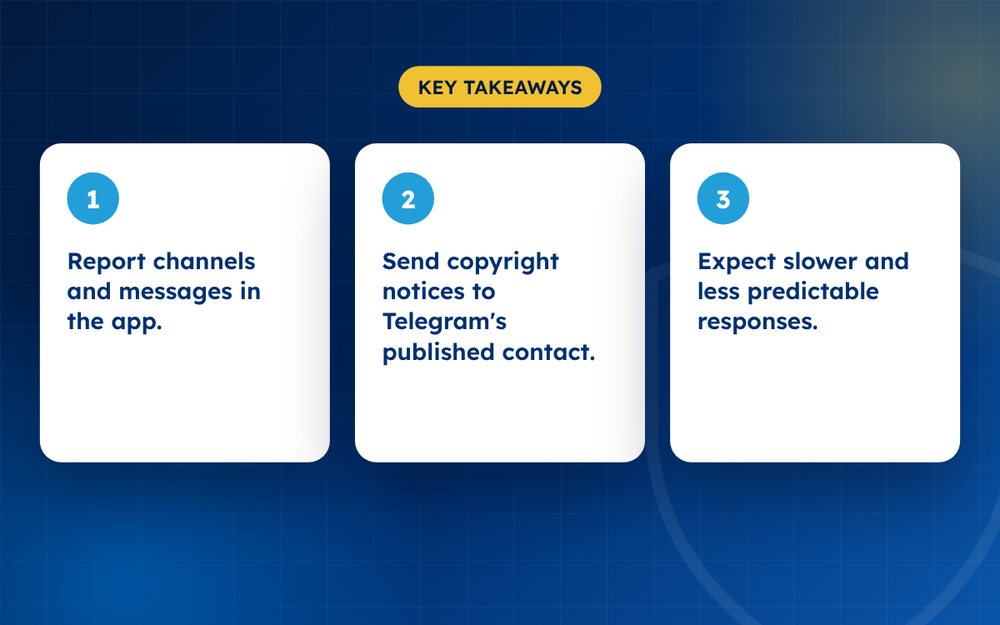
- Report channels and messages in the app.
- Send copyright notices to Telegram's published contact.
- Expect slower and less predictable responses.
Steps
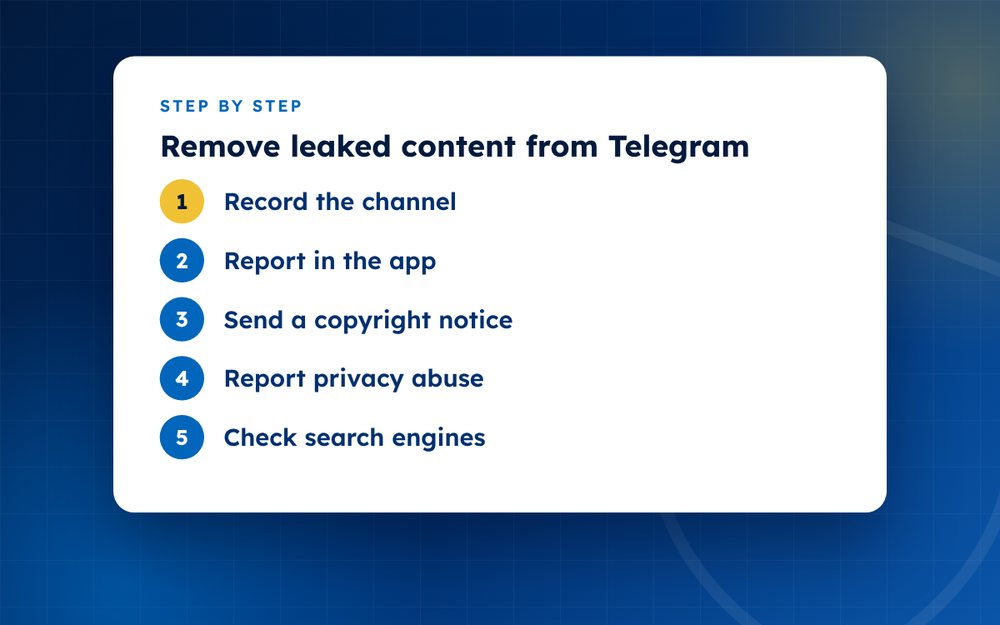
- Record the channelSave the channel name, link and screenshots of the content.
- Report in the appUse the report option on the message or channel and select the closest reason.
- Send a copyright noticeTelegram publishes a copyright contact in its help pages. Include links and proof of ownership.
- Report privacy abuseUse its abuse reporting routes for private or non-consensual content.
- Check search enginesRequest removal of any web pages that list or mirror the channel.
- RepeatChannels often reappear under new names.
How Telegram is structured
Telegram allows public channels, which anyone can join and which may appear in search, and private groups, which require an invitation. Content can be forwarded between channels. When one channel is closed, the same content may appear in another with a different name. That is why a single report rarely solves the problem.
Gathering information
- Record the channel name, handle and link
- Take screenshots of posts that contain your content, including the channel name
- Note the number of subscribers and the date
- Save links to individual posts if possible
- Keep a record of every report you file
Reporting options
Use the in-app reporting feature on each message and on the channel, choosing the reason that fits, such as copyright or illegal content. Telegram also publishes contact addresses for copyright complaints and abuse in its help pages. Send a notice that includes your details, your original work, the links and the legal statements.
What else to do
Request removal of any web pages that mirror or index the channel. Check whether the content is also on the websites that link to the channel. Consider using hash tools such as StopNCII for intimate images, though not every platform takes part.
Working with search engines
Many Telegram channels are discovered through websites that list or index them. Ask search engines to remove those pages when they link to your content. You can also ask the sites that list channels to remove entries that point to infringing content. Cutting off discovery reduces how many people find the content, even if the channel itself remains.
Keep a list of the channels and directories involved, and check them periodically.
Telegram takedowns are time consuming. Email us if you would like help.
Frequently asked questions
Is Telegram responsive?
Responses vary. Persistent, well-documented reports tend to work best, and some channels are removed within days. Others stay up for longer. Keep reporting new channels, and use search engine removal for web pages that link to them.
Can I see who runs a channel?
Often not. Channel administrators can remain anonymous. Telegram does not usually disclose identities without legal process. Focus on removal and prevention.
Can the content come back?
Yes. Channels often reappear under new names or move content to other channels. Monitor for new copies and file new reports quickly, referring to earlier ones.
Do I need the original files?
They help prove ownership and make your notice more credible. Keep originals with dates in a safe place. If you do not have them, describe the work as accurately as you can and include links to your original posts.
Should I join the channel to check?
Be careful. Joining may expose your account and could be distressing. A friend, a service or a trusted professional can do this for you. Never download files from unknown channels.
Is it worth involving the police?
If the content includes threats, blackmail or non-consensual intimate images, yes. Report to the police and keep your evidence. Law enforcement may be able to request information from platforms in serious cases.
Need help with this?
Every situation is different. Email us the details in confidence and we will reply with an honest assessment of what can be done.
Contact us by email Leak Content RemovalThis guide is general information, not legal advice. DMCA Reputation is not a law firm.
Related guides
How to Remove Leaked Photos or Videos From the Internet
How to remove leaked photos or videos from the internet: evidence, platform reports, DMCA, search removal and prevention. A calm step-by-step guide.
Read the guide · 4 min
How to Remove Non-Consensual Intimate Images (NCII), Step by Step
How to remove non-consensual intimate images (NCII): reporting, StopNCII.org, Google removal, legal options and support. A step-by-step guide.
Read the guide · 4 min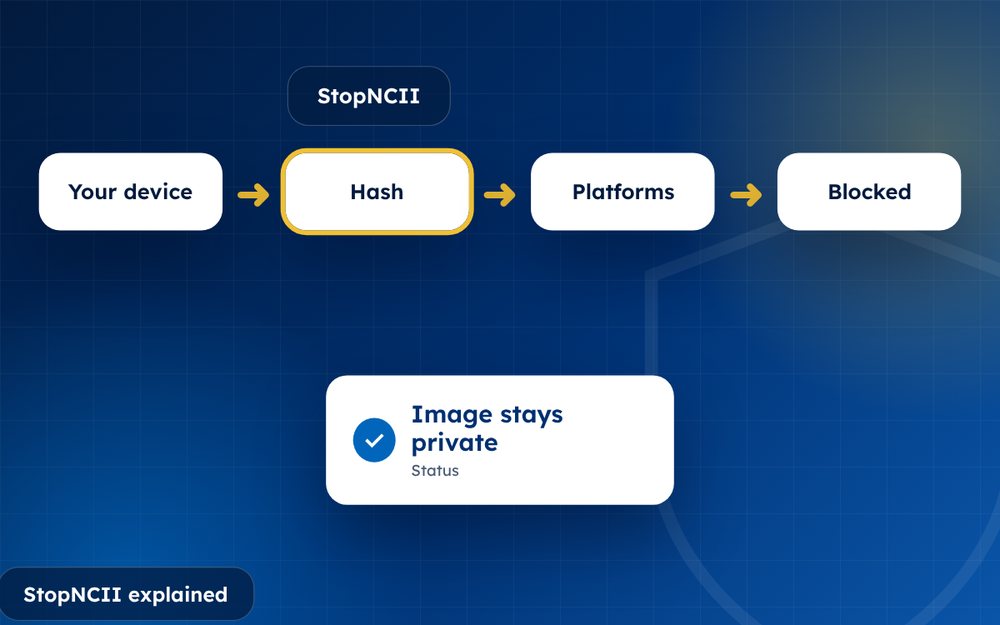
StopNCII Explained: How to Stop Your Images From Spreading
StopNCII explained: how the free hash-matching tool works, who can use it, which platforms take part and what it cannot do.
Read the guide · 4 min