
Deepfakes use AI to put your face or voice into content you never created. When they are sexual, defamatory or used to scam, the harm can be severe. Platforms, search engines and, increasingly, the law now give you tools to respond.
The word deepfake covers a range of manipulated media, from face-swapped videos to AI-generated images and cloned voices. Some are created as jokes, some for harassment and some for fraud. Whatever the reason, the person whose likeness is used rarely gave permission.
The legal landscape is changing quickly, and platforms are updating their policies to keep up. That is good news if you are dealing with a deepfake, because more options exist than a few years ago.
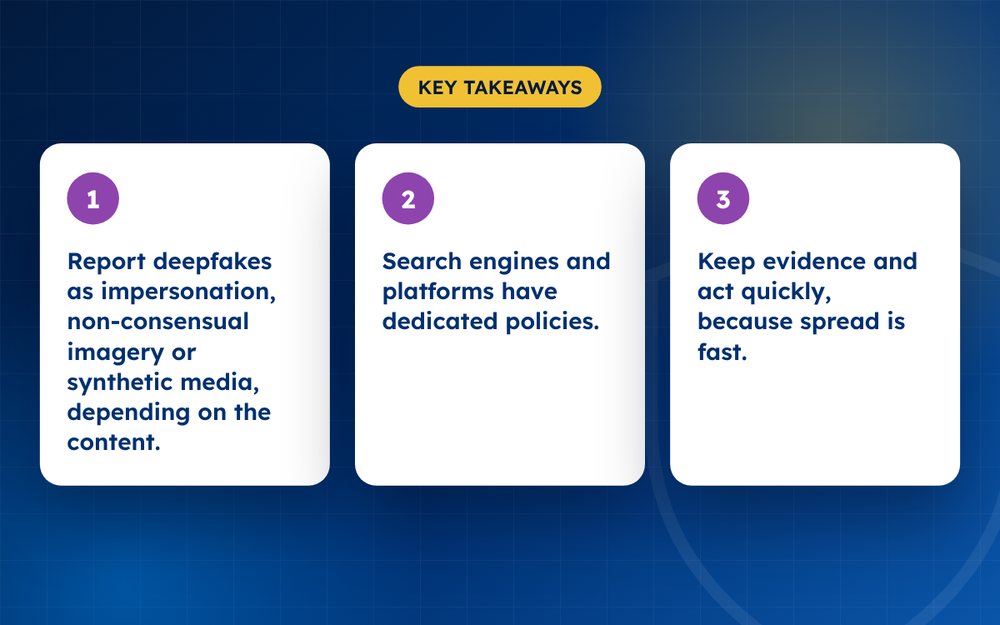
- Report deepfakes as impersonation, non-consensual imagery or synthetic media, depending on the content.
- Search engines and platforms have dedicated policies.
- Keep evidence and act quickly, because spread is fast.
Steps to take
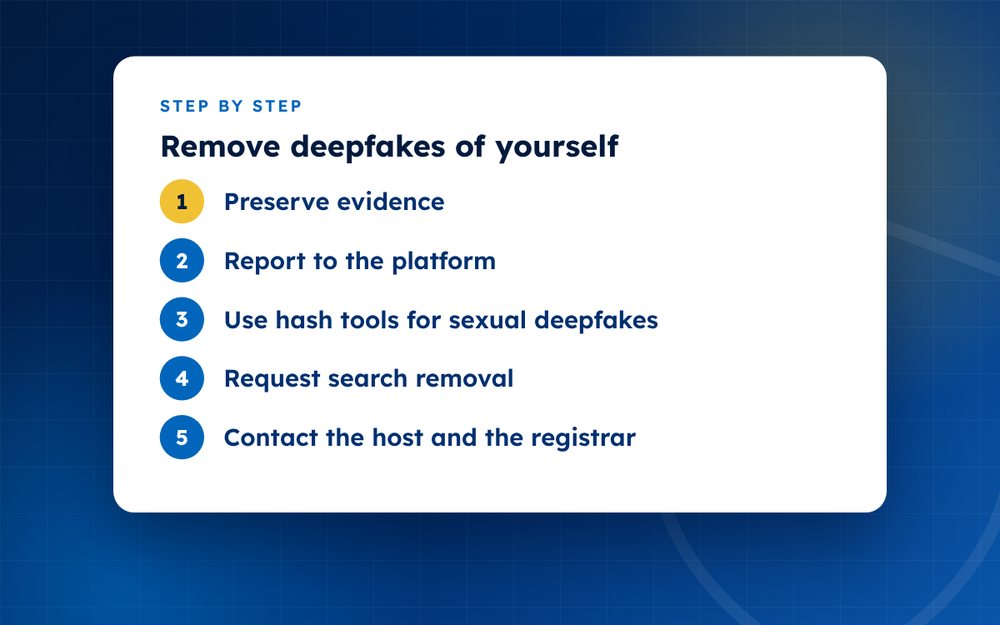
- Preserve evidenceSave links, screenshots and the account that posted it. Note when you first saw it.
- Report to the platformUse the report option for impersonation, harassment, synthetic or manipulated media or non-consensual sexual content. Many platforms have specific forms for AI-generated content.
- Use hash tools for sexual deepfakesStopNCII.org supports adults concerned about intimate images, including some synthetic ones. Take It Down helps under-18s.
- Request search removalGoogle has a process for removing non-consensual explicit synthetic imagery from search results.
- Contact the host and the registrarIf a standalone website hosts the fake, send an abuse report to the host and domain registrar.
- Tell people you trustIf the fake could mislead colleagues or clients, send a short message explaining that it is fabricated. A brief statement is enough.
- Look at legal optionsMany countries have new or existing laws on deepfakes, harassment, fraud and image-based abuse. A lawyer can explain which apply where you live.
Identifying the type of harm
Your approach depends on what the deepfake does. A sexually explicit fake is treated as non-consensual intimate imagery. A fake used to scam people is treated as fraud and impersonation. A fake used to damage a reputation may be defamation or harassment. Naming the type correctly in your report helps the platform send it to the right team.
Gathering evidence
Save the video or image, the URL, the account that posted it and any messages that accompany it. Note how many views or shares it has. If you have original footage that shows the difference, keep it. You do not have to prove that the content is fake for most reports, but any supporting detail helps.
Telling the right people
If the fake could affect your job, clients or family, a short message explaining that the content is fabricated can prevent damage. Keep it calm and factual. Avoid sharing the fake again, even to criticise it.
Staying protected
- Review who can see your photos and videos on social media
- Consider using privacy settings that limit downloads and sharing
- Set up alerts for your name and for reverse image searches
- Keep a record of your original images so that you can show what is real
Tracking the spread
Deepfakes are often reposted on several platforms. After you report the first copy, search for the same content under different titles and use reverse image or video search on key frames. Keep a list of every URL and the date you reported it. If a platform removes the content but it reappears, tell them that it is a repeat upload and refer to your earlier report. Persistence and clear records usually lead to better outcomes than starting from scratch each time.
If you are a public figure, a business owner or a creator, consider preparing a short statement in advance that explains how people can tell your real content from fakes. Having it ready saves time if you are targeted.
If a scam uses your likeness
Report the scam to the platform and your local fraud authority. Warn followers so they do not lose money. Keep a record of how the fake was used.
Prevent further harm
- Limit public high resolution photos and videos
- Use platform privacy settings
- Consider monitoring for your name and image
If you need help, email us in confidence. We can coordinate reports, evidence and follow ups while you focus on yourself.
Frequently asked questions
Are deepfakes illegal?
It depends on the content and the country. Sexual deepfakes, fraud, harassment and defamation are covered by many laws, and some places have introduced laws specifically about synthetic media. Seek local legal advice.
Can I prove it is fake?
You do not always need to prove it. Platforms usually act on a clear report that your likeness is being used without consent. Original footage, metadata and inconsistencies can help in more complex cases.
Will AI detectors remove them?
Detection tools help identify fakes, but removal comes from platform, host and legal processes. Treat detector results as supporting evidence, not as proof. Some platforms use detectors to flag synthetic media, but you still need to report the content.
Should I confront the creator?
Usually not. Document first and report through official channels. Confrontation can escalate the situation, lead to deletion of evidence or provoke further abuse. If you know the creator and there is a risk to your safety, contact the police and a lawyer.
Can deepfakes be removed from search results?
Google has a process for removing non-consensual explicit synthetic imagery from search results, and other search engines have similar options. Submit each URL, explain that the content is synthetic and was created without consent, and keep a record of your requests.
What if my voice has been cloned?
Report the content to the platform as impersonation or fraud, tell people who might be targeted and consider contacting your bank or relevant authorities if money is involved.
Need help with this?
Every situation is different. Email us the details in confidence and we will reply with an honest assessment of what can be done.
Contact us by email Deepfake RemovalThis guide is general information, not legal advice. DMCA Reputation is not a law firm.
Related guides
How to Remove Leaked Photos or Videos From the Internet
How to remove leaked photos or videos from the internet: evidence, platform reports, DMCA, search removal and prevention. A calm step-by-step guide.
Read the guide · 4 min
How to Remove Non-Consensual Intimate Images (NCII), Step by Step
How to remove non-consensual intimate images (NCII): reporting, StopNCII.org, Google removal, legal options and support. A step-by-step guide.
Read the guide · 4 min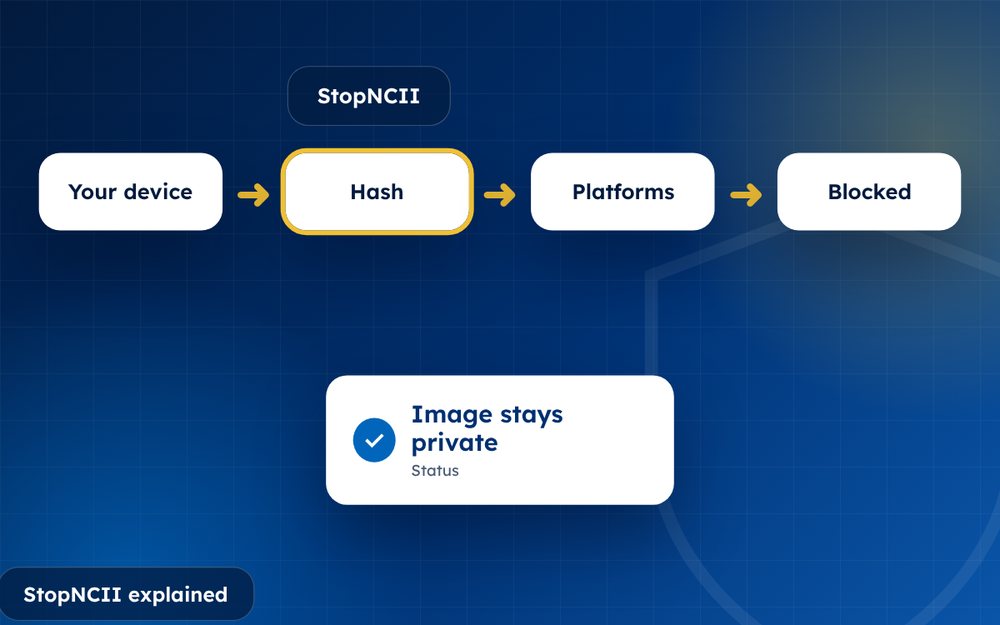
StopNCII Explained: How to Stop Your Images From Spreading
StopNCII explained: how the free hash-matching tool works, who can use it, which platforms take part and what it cannot do.
Read the guide · 4 min