
If a YouTube video shows you without consent, reveals personal information or is used to harass you, you can file a privacy complaint. YouTube may give the uploader time to edit or remove it before it reviews.
Privacy complaints on YouTube are different from copyright complaints. They are about people, not about ownership. If a video shows you, reveals your personal information or exposes you to harassment without your consent, you can ask YouTube to review it under its privacy guidelines.
The process gives the uploader a chance to fix the problem, which is why it is important to describe the issue clearly and give precise details.
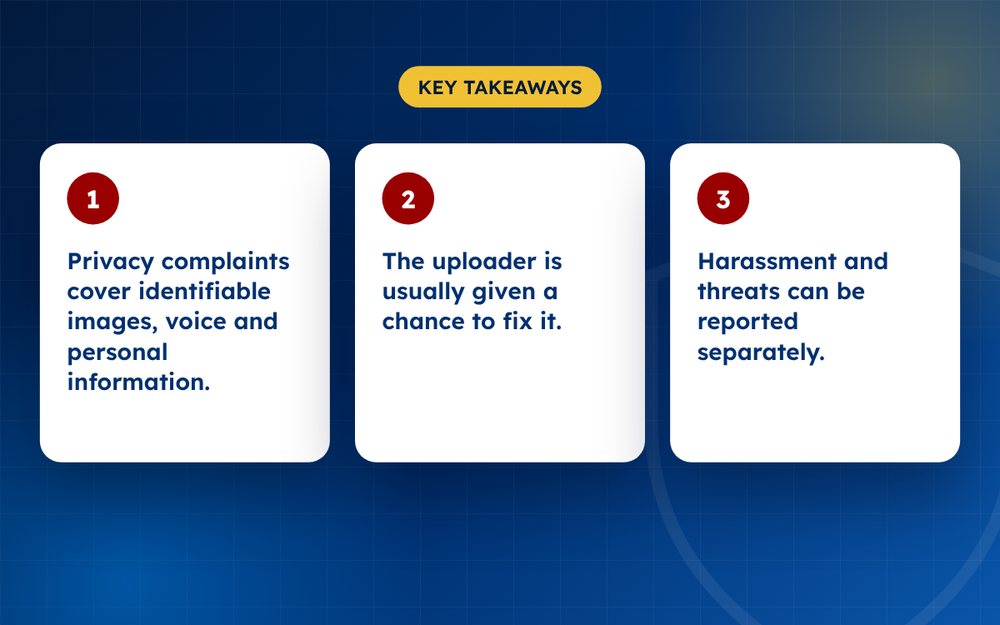
- Privacy complaints cover identifiable images, voice and personal information.
- The uploader is usually given a chance to fix it.
- Harassment and threats can be reported separately.
What may qualify
- Videos clearly identifying you without your consent
- Personal information such as your address, phone number or ID
- Content that is harassment or threats
- Altered or synthetic content showing your likeness
Steps
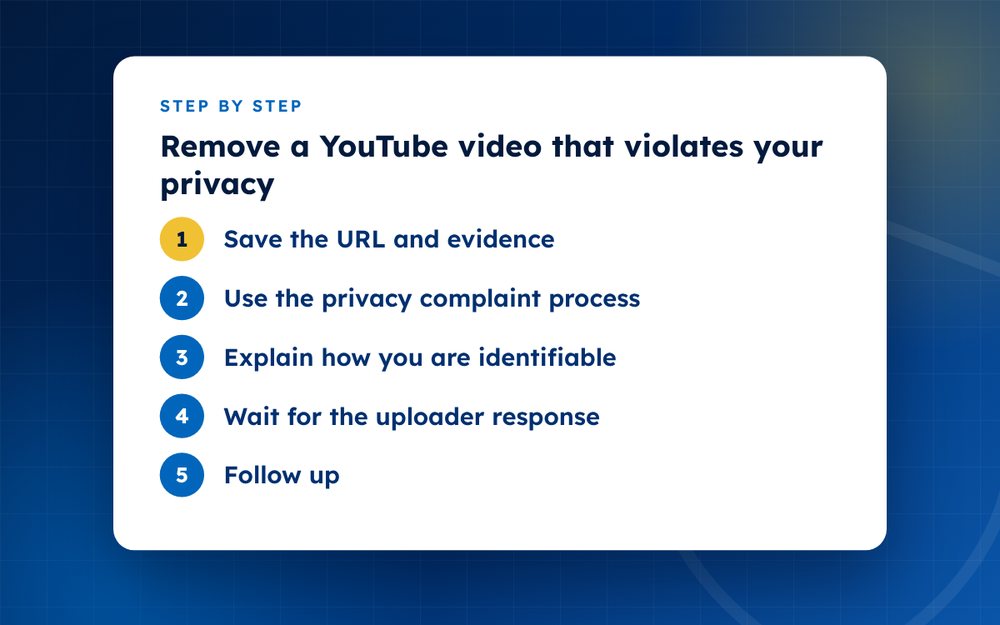
- Save the URL and evidenceCopy the video link and timestamps.
- Use the privacy complaint processFind it in YouTube's help pages and fill in the form.
- Explain how you are identifiableGive times in the video and describe the harm.
- Wait for the uploader responseThey may be given time to edit or remove.
- Follow upIf it stays, you can add information or use other routes, such as harassment reporting or legal options.
- Ask Google to remove search resultsIf the video remains, request removal from search when it qualifies.
What the guidelines look at
YouTube considers whether you can be identified in the video, whether the video shows or reveals personal information and whether there is a public interest in the content. Identifying features include your face, voice, name, contact details or other details that would let others work out who you are. Content that is clearly newsworthy or part of public debate is treated differently from content that simply targets a private person.
Preparing your complaint
- Copy the video address and note the timestamps where you appear or are identified
- Explain in a few sentences how you can be identified
- Describe the harm, such as harassment, risk to safety or exposure of your address
- Say what you would like to happen, such as removal or blurring
- Keep a record of your complaint and any replies
What happens next
YouTube may contact the uploader and give them time to edit or remove the video. If they do not, YouTube reviews the complaint and decides whether the video breaks its guidelines. You may be told the outcome. If the video stays, you can look at other options such as reporting harassment or threats, asking Google to remove search results or seeking legal advice.
Related situations
If a video contains a synthetic or altered version of your face or voice, YouTube has specific processes for that. If the video shows you without clothes or in a sexual context without consent, use the non-consensual imagery route, which is faster and stricter. If a video targets a minor, report it as such.
Email us if you need help preparing the complaint.
Frequently asked questions
Will YouTube always remove it?
No. YouTube assesses each complaint against its privacy guidelines and looks at factors such as whether you can be identified and whether there is a public interest in the content. Clear cases, such as videos that show a home address or expose private information, are more likely to be removed.
Can I stay anonymous?
You usually need to provide your details to file a privacy complaint, because YouTube must check that you are the person affected. The uploader may be told that a complaint has been made, though not always who made it. Think about what information you are comfortable sharing.
What about public figures?
Public figures have a higher threshold because the public may have a legitimate interest in information about them. That does not mean they have no privacy. Content that is clearly harassment or unrelated to their public role can still be removed.
Is it free?
Yes. YouTube does not charge for privacy complaints. Be wary of anyone who asks for money to file one for you without adding value, although specialist help can be useful if there are many videos.
How long does it take?
It depends. The uploader may be given a period to respond, which can take a few days, and YouTube's review can add more time. Keep an eye on your email, respond quickly to requests for information and follow up if you hear nothing.
What if the uploader reposts the video?
Report the new copy and refer to your earlier complaint. If the behaviour repeats, mention that in your report because repeat violations can lead to action against the channel.
Need help with this?
Every situation is different. Email us the details in confidence and we will reply with an honest assessment of what can be done.
Contact us by email YouTube Video RemovalThis guide is general information, not legal advice. DMCA Reputation is not a law firm.
Related guides
How to Get a Stolen YouTube Video Taken Down
How to get a stolen YouTube video taken down: find re-uploads, use Copyright Match, file a copyright complaint and handle counter-notices.
Read the guide · 4 min
How to File a YouTube Copyright Takedown, Step by Step
How to file a YouTube copyright takedown step by step: the webform, required details, strikes and what happens after you submit.
Read the guide · 5 min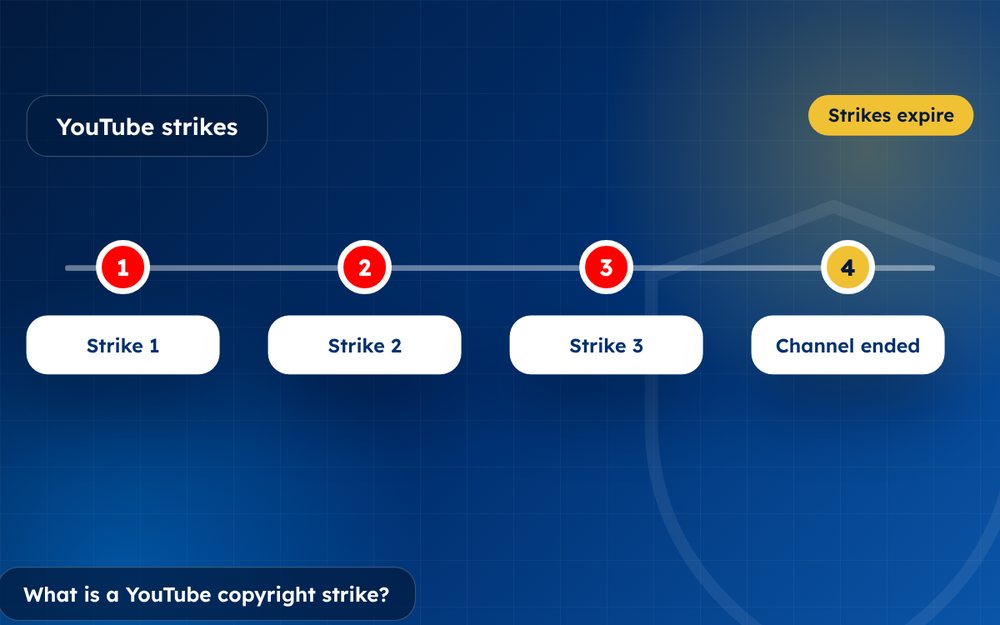
What Is a YouTube Copyright Strike and How Does It Work?
What is a YouTube copyright strike and how does it work? How strikes differ from Content ID claims, how long they last and how to respond.
Read the guide · 3 min