
Mugshots and arrest records can follow a person long after a case is closed. Removal depends on where the record appears and your legal situation. This guide covers the practical routes, but a local lawyer should advise on your record.
An arrest record or mugshot can affect jobs, housing and relationships long after a case has ended, even when charges were dropped or a person was found not guilty. Search engines make these records easy to find, and some websites republish them for profit.
The right approach depends heavily on where you live and on the outcome of the case. Legal routes such as sealing or expungement change what the official record says, and that in turn makes every other request stronger.
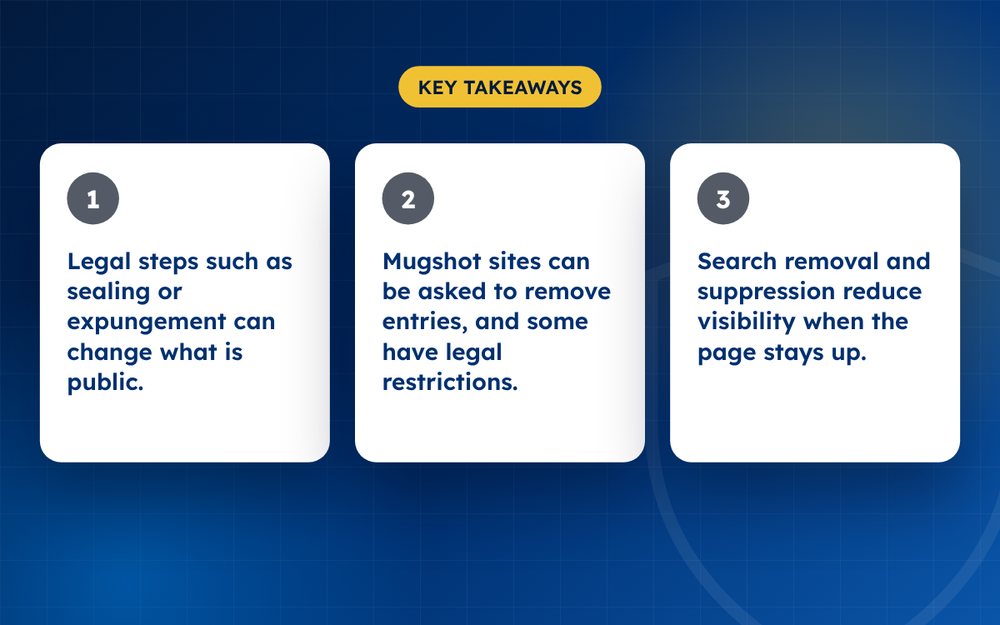
- Legal steps such as sealing or expungement can change what is public.
- Mugshot sites can be asked to remove entries, and some have legal restrictions.
- Search removal and suppression reduce visibility when the page stays up.
Where mugshots appear
- Official police or court websites
- News articles
- Commercial mugshot sites that republish public records
- Data broker and people search sites
Steps
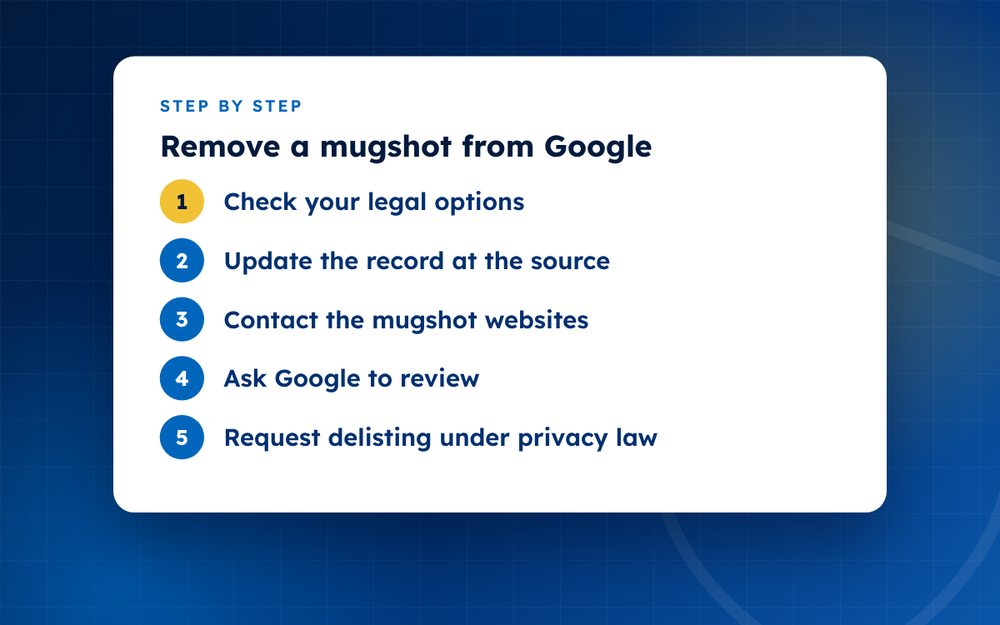
- Check your legal optionsIn many places a charge that was dropped, dismissed or sealed can be expunged. A local lawyer can explain eligibility.
- Update the record at the sourceOnce a record is sealed or expunged, ask the agency and sites to remove or update it.
- Contact the mugshot websitesSend a clear request with evidence of the outcome. Some US states limit or regulate removal fees, so be wary of paying.
- Ask Google to reviewGoogle has policies on exploitative removal practices and may delist some pages. Submit a request where it applies.
- Request delisting under privacy lawIn regions with a right to be forgotten, you may be able to ask search engines to delist.
- Suppress what remainsPublish accurate professional content so the record ranks lower.
- MonitorMugshot pages often reappear on new domains.
Why the legal outcome matters first
If a charge was dismissed, reduced or resulted in an acquittal, many jurisdictions allow the record to be sealed, expunged or restricted. Once that happens, a website that continues to publish the old record is publishing something that no longer reflects the legal position. That is a far better basis for a removal request than a general complaint that the information is embarrassing.
Eligibility rules, waiting periods and fees differ widely, and they change. A local criminal defence or legal aid lawyer can tell you quickly whether you qualify, and some community organisations offer free clinics for this purpose.
Dealing with mugshot websites
Commercial mugshot sites collect records from police websites and republish them, sometimes alongside links that offer to remove the entry for a fee. Several US states have restricted this practice, and some payment providers have cut off such sites. Before paying anyone, check the law where you live. A polite written request that attaches proof of the court outcome sometimes works without any payment.
Keep a record of every site that lists you, because the same record is often copied across several domains. Work through them one by one and note the date of each request.
Search engines and data brokers
- Ask Google to review pages that charge for removal, where its policy on exploitative removal practices applies
- Use delisting requests where privacy law gives you that right
- Contact data brokers that list arrests under background check profiles
- Check whether news articles about the arrest have been updated to show the outcome
Rebuilding what people see
Even after removals, some results may remain. A professional website, a complete LinkedIn profile and positive mentions can fill the first page of results with accurate information about who you are now. This is slow, but it often matters most to employers and landlords who search your name.
We are not a law firm. If you would like help with the practical removal work, email us in confidence.
Frequently asked questions
Does expungement remove it from Google?
It helps a great deal, but it does not automatically remove copies. After an expungement or sealing order, you still need to ask websites to remove or update their pages and then ask search engines to refresh or delist results. Keep the court order handy, because most requests are stronger when you can attach proof of the outcome.
Should I pay a mugshot site to remove it?
Be careful. Some states have laws that limit or ban charging for removal, and paying does not guarantee the record will stay off the internet because it can be republished elsewhere. Check the law where you live, try a free written request first and keep proof of any payment if you do decide to pay.
Can I remove a mugshot of a conviction?
It is harder. Where there is a conviction, the public interest in the record is generally stronger, and many places do not allow sealing for serious offences. Some jurisdictions allow it after a period of time or for minor offences, so speak to a local lawyer. Suppression and building positive content can still help.
How long does it take?
Legal processes such as expungement can take months, depending on your court. Requests to websites and search engines usually take weeks. Rebuilding search results takes several months. Plan for a staged process and keep records of each step.
Will employers see an arrest record that was dismissed?
They might if it appears in search results or on background check sites. Rules on what employers may consider vary by country and state. Updating or removing the record at source and keeping your online presence accurate reduces the chance of misunderstanding.
Can a news article about my arrest be updated?
Some publishers will add an update or anonymise names when charges are dropped, especially for minor matters. Write politely, attach proof of the outcome and ask for an update. Not every publisher agrees, but it is worth asking.
Need help with this?
Every situation is different. Email us the details in confidence and we will reply with an honest assessment of what can be done.
Contact us by email Mugshot and Arrest RecordsThis guide is general information, not legal advice. DMCA Reputation is not a law firm.
Related guides
How to Remove a Negative Article From Google Search
How to remove a negative article from Google search: contact the publisher, use Google's tools and legal routes, or suppress it when removal fails.
Read the guide · 4 min
How to Remove a News Article From the Internet
How to remove a news article from the internet: approaching publishers, correction and anonymisation requests, legal grounds and search options.
Read the guide · 4 min
How to Remove Your Name From Google Search Results
How to remove your name from Google search results: what you can remove, Google's results about you tool, data brokers and what to do about the rest.
Read the guide · 4 min