
If a friend tells you their private images were leaked, how you respond matters. Calm, practical, non-judgmental support helps far more than advice or questions about how it happened.
Your friend is likely to feel shame, fear and anger. They may be worried about being judged. The most helpful things you can offer are belief, steadiness and practical help with the tasks that are hardest for them to do alone.
You can help with evidence, reports and monitoring, and just as importantly, by listening and by keeping their secret.
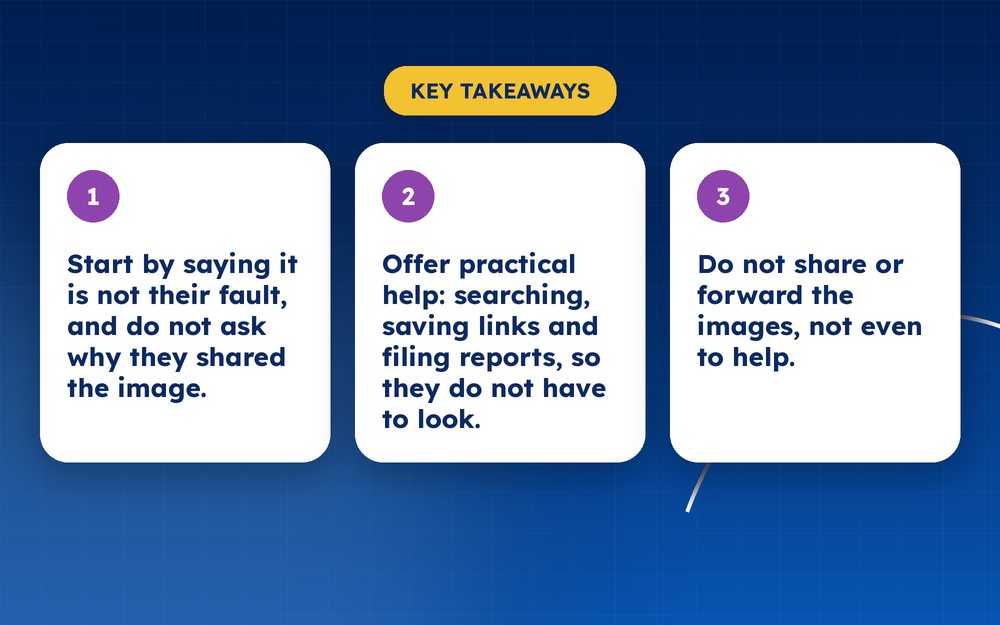
- Start by saying it is not their fault, and do not ask why they shared the image.
- Offer practical help: searching, saving links and filing reports, so they do not have to look.
- Do not share or forward the images, not even to help.
How to help, step by step
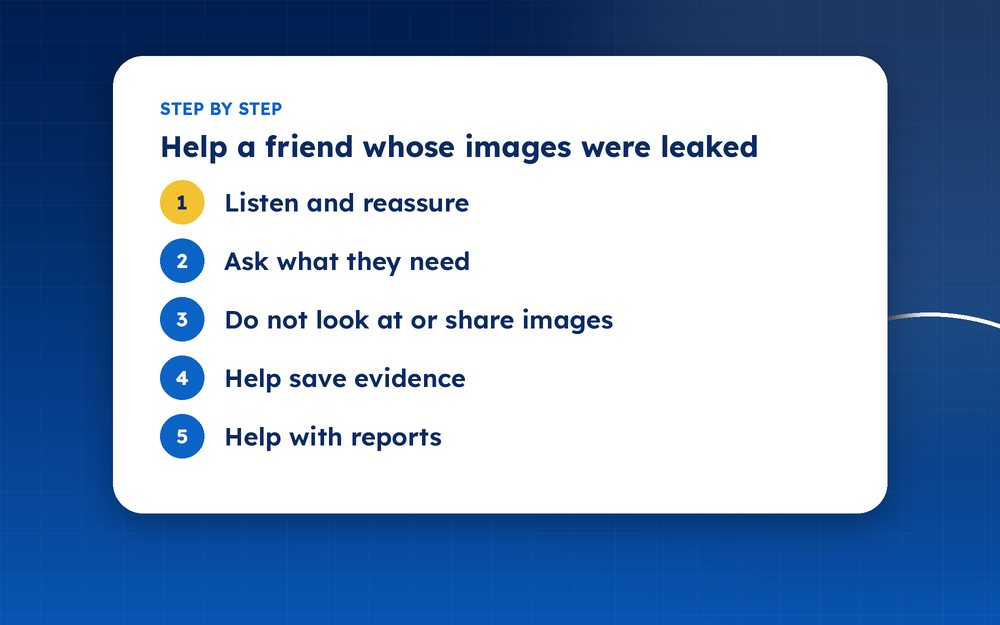
- Listen and reassureSay that you believe them and that it is not their fault. Let them lead on how much they want to talk. Stay calm, believe them and tell them it is not their fault. Avoid asking why they sent or allowed the image.
- Ask what they needOffer specific help, such as searching, reporting or being with them. Ask what they want. Some people want help with reports, others want company or space.
- Do not look at or share imagesLooking and forwarding spread the harm. Ask them to send only links. Do not search for, open or share the images. Looking can add to the harm.
- Help save evidenceTake screenshots of pages with web addresses and dates, and store them privately. Help them save links, screenshots and dates, if they want you to. Keep the evidence private.
- Help with reportsWork through platform reports and search engine requests together. Offer to help with reports to platforms and search engines, using the routes for non-consensual content.
- Support safetyIf there are threats or stalking, encourage contact with the police or a support service. Help them think about safety, such as changing passwords and telling someone they trust.
- Check in over timeLeaks can resurface. Stay available and watch for signs they are struggling. Keep checking in over the weeks. Support after the first week matters as much as the first day.
What to say, and what to avoid
Helpful phrases include "I am sorry this happened", "It is not your fault" and "How can I help?". Avoid asking why they sent the image, saying they should have known better or suggesting they could have prevented it. Blame, even implied, can make them hide the problem.
Avoid gossip. Do not tell mutual friends, and ask your friend whom they want to be told.
Practical tasks you can take on
Searching for copies, saving links, reporting and checking whether content has gone are all tasks you can do for them. Set time limits to protect yourself, and take breaks. Keep a simple log of links, dates and replies.
If it feels like too much, a professional service can take on the searching and reporting.
Signs they may need more support
If your friend seems hopeless, withdrawn or talks about harming themselves, take it seriously. Encourage them to speak to a doctor, counsellor or crisis line, and stay with them if you think they are in immediate danger. Contact emergency services if needed.
When your friend is ready to take further steps
Over time your friend may want to report to the police, speak to a lawyer or use a professional removal service. Offer to come along, help prepare a timeline or sit with them while they make calls. Let them decide the pace and the choices, since having control back is part of recovering.
You can also help by protecting their wider privacy: avoid tagging them, do not mention the leak in group chats and be ready to shut down gossip if you hear it.
What a typical case looks like
A woman tells her friend that her images were leaked. The friend says, "This is not your fault. What would help right now?" She offers to do the searching and reporting while the friend rests. She saves links, reports the images and checks in every few days. The friend later says that not being blamed was what mattered most.
Her calm response and practical help made the next steps possible.
Looking after yourself
Supporting someone through this can be heavy. Talk to someone you trust about how you feel, without sharing your friend's details, and take breaks from searching.
How a specialist can help
If the task is bigger than friends can handle, a discreet specialist team can search, report and monitor while you provide emotional support. We cannot promise every copy will be removed, but we will be honest about what is realistic. Your friend can email us in confidence.
Frequently asked questions
Should I tell other friends?
No, unless your friend asks. Privacy is part of the support.
Should I look for the images myself?
Only if your friend asks and you feel able. Searching can be upsetting, so use limits and breaks.
What if my friend does not want to report?
Respect their pace, but keep the door open. Offer to help when they are ready.
Can I report on my friend's behalf?
You can often pass on links, but some actions need the person shown. Check each platform's rules.
What if the person who leaked it is someone we both know?
Be careful about confronting them. Let your friend decide, and encourage safe reporting routes.
How do I support them if I live far away?
Check in often, help with online tasks and share links to support services.
Need help with this?
Every situation is different. Email us the details in confidence and we will reply with an honest assessment of what can be done.
Contact us by email NCII removalThis guide is general information, not legal advice. DMCA Reputation is not a law firm.
Related guides
What to Do If Intimate Images From When You Were Under 18 Are Online
What to do if intimate images of you from when you were under 18 are online: report to NCMEC and police, use Take It Down, stop spread and get support. Calm guidance.
Read the guide · 4 min
How to Stop Intimate Images Reappearing After Removal
How to stop intimate images reappearing after removal: hash matching, monitoring, search alerts, quick re-reporting and what you can realistically expect.
Read the guide · 4 min
How to Remove Non-Consensual Intimate Images (NCII), Step by Step
How to remove non-consensual intimate images (NCII): reporting, StopNCII.org, Google removal, legal options and support. A step-by-step guide.
Read the guide · 4 min