
Getting content taken down is a relief, but copies often come back. You cannot guarantee they will not, but a few steps make re-uploads less likely and easier to catch.
Images and videos spread by copying. Even after a site removes a post, someone may have saved the file and uploaded it elsewhere. That is why removal and prevention need to go together.
A realistic goal is to reduce re-uploads, find new copies quickly and remove them before they spread. Honest providers will not promise that images will never return.
- Use hash matching tools, such as StopNCII.org for adults, where platforms take part.
- Monitor your name and the content with alerts or a professional service.
- Re-report quickly and quote earlier requests, so platforms see the pattern.
How to reduce re-uploads, step by step
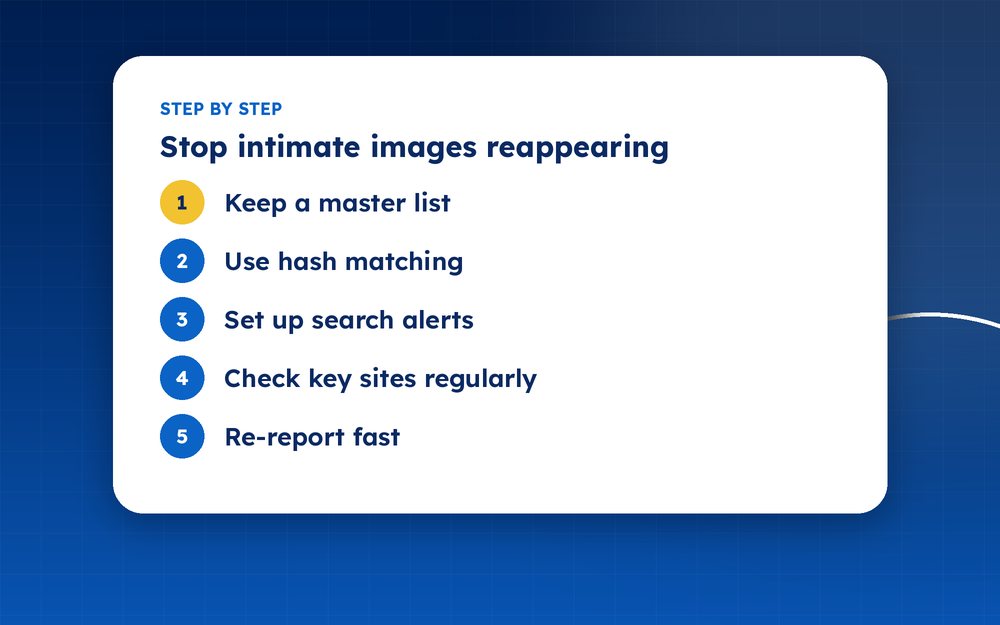
- Keep a master listRecord every link you have reported, with dates and outcomes. This helps spot copies and shows platforms a history. Record every link, platform, date and outcome in one place. Repeat reports are faster with a record.
- Use hash matchingIf you are an adult with the image, StopNCII.org creates a digital fingerprint on your device so participating platforms can block matching uploads. If you are an adult, hash matching tools such as StopNCII.org can help participating platforms block matching images. They do not cover every site or encrypted chats.
- Set up search alertsCreate alerts for your name and usernames to hear about new pages. Set up alerts for your name and handles, so new results are flagged.
- Check key sites regularlyReturn to the sites that held copies and to likely re-upload locations, or have a helper do so. Check the sites where copies tend to appear, regularly at first and then less often.
- Re-report fastWhen copies appear, report them straight away and mention your earlier reports. When a copy appears, report it quickly, quoting earlier reports.
- Keep search engine requests goingSubmit new links to Google and Bing as they appear. Keep search engine requests up to date. Submit new links as they appear.
- Secure the sourceMake sure the original files and accounts are protected so they cannot be taken again. Look at where the images came from, such as accounts, devices or backups, and tighten security.
What hash matching can and cannot do
Hash matching helps participating platforms recognise and block known images, but it only works on those that take part and cannot see into encrypted private messages. It also relies on the exact image or a near match, so edited versions may slip through. Use it as one layer, not the only defence.
Monitoring in practice
You can do light monitoring yourself with alerts and occasional checks. For wider coverage, a professional service can scan many sites and report back with links, so you do not have to look at the content.
The right frequency depends on how widely the content spread. Many people check often at first, then monthly once things quiet down.
What to expect
Some people see no further copies after the first cleanup. Others see occasional re-uploads for months. Quick reporting tends to keep them small. It is rarely possible to guarantee that content will never appear again, so be wary of anyone who promises that.
Building a simple routine
A routine makes monitoring manageable. Pick a day each week or month, run your searches, check your master list and report anything new. Keep it short, and stop when you have done the list so it does not take over your life.
If that feels too heavy, hand the routine to a trusted person or a professional service, and ask them to message you only when something needs your attention.
What a typical case looks like
A man removes an intimate video from several sites, but copies keep appearing. He keeps a master list, creates a hash case and sets alerts. When a copy appears, he reports it within a day with a note of earlier removals. After three months, new copies become rare and his checks take minutes.
Speed and a record turned a constant worry into a short routine.
Common mistakes to avoid
Do not stop monitoring after the first removal. Do not delete your records. Do not ignore small sites. And do not blame yourself if a copy returns: it says nothing about you.
How a specialist can help
Ongoing monitoring and re-reporting is repetitive work. A specialist team can scan regularly, report new copies and keep you informed without sending you graphic content. We cannot promise copies will never return, but we will be honest about what is realistic. Email us in confidence.
Frequently asked questions
Can I make sure images never come back?
No honest provider can promise that. You can reduce the risk and catch new copies quickly.
Does StopNCII.org work everywhere?
Only on participating platforms, and not in private encrypted chats.
How long should I monitor?
It depends on the case. Many people monitor closely for a few months, then less often.
What if the content is edited or cropped?
Edited versions may escape hash matching. Monitoring and reporting still apply.
Can search engines stop showing it?
They can remove links you report, and aim to filter similar content after approved requests, but new pages need new requests.
Should I tell the police about re-uploads?
If someone is repeatedly posting, yes. It can be part of a pattern the police take seriously.
Need help with this?
Every situation is different. Email us the details in confidence and we will reply with an honest assessment of what can be done.
Contact us by email NCII removalThis guide is general information, not legal advice. DMCA Reputation is not a law firm.
Related guides
What to Do in the First 24 Hours After Intimate Images Are Shared Without Consent
What to do in the first 24 hours after intimate images are shared without your consent: stay safe, save evidence, report fast and get support. A calm checklist.
Read the guide · 6 min
What to Do If an Ex Posts Your Intimate Photos Online
What to do if an ex posts your intimate photos online: protect your safety, save evidence, get the images removed and understand your options. A calm, practical guide.
Read the guide · 5 min
How to Remove Non-Consensual Intimate Images (NCII), Step by Step
How to remove non-consensual intimate images (NCII): reporting, StopNCII.org, Google removal, legal options and support. A step-by-step guide.
Read the guide · 4 min