
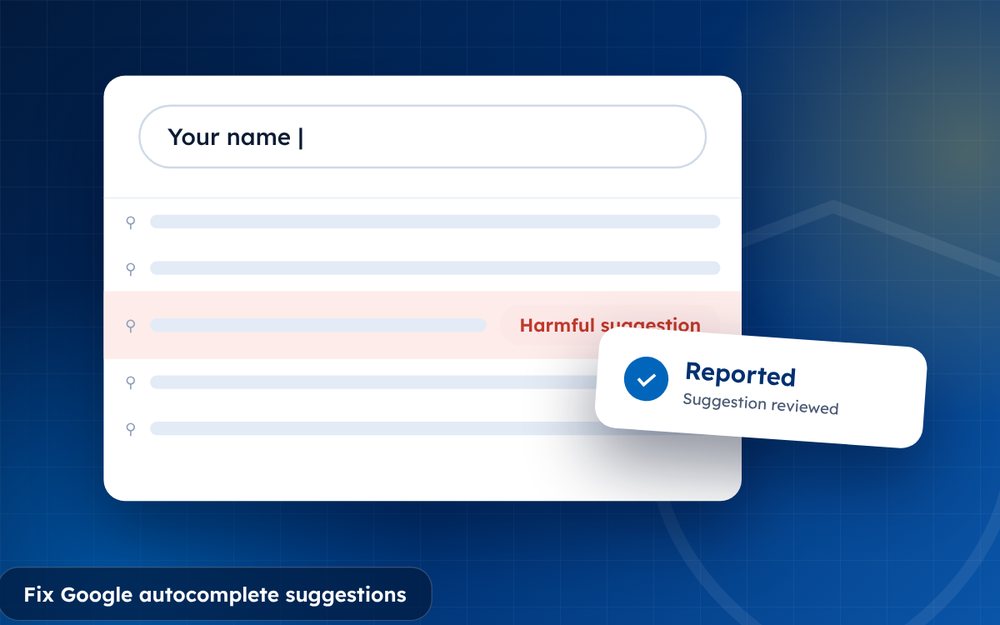
Autocomplete predictions can attach damaging words to your name. Google removes predictions that break its policies, but cannot edit others on request.
Autocomplete predictions are the suggestions that appear as you type in the search box. They can add words to your name that you would never choose, such as scam, arrested or lawsuit, and many people see them before they see any results.
Predictions are generated automatically from what people search for and other signals, and Google has policies about what it will show.
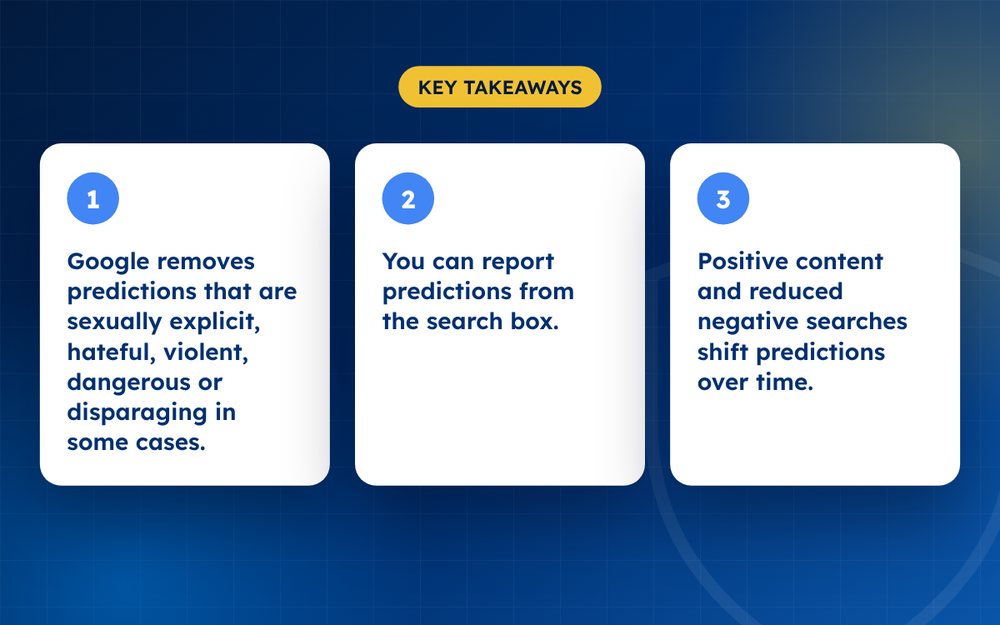
- Google removes predictions that are sexually explicit, hateful, violent, dangerous or disparaging in some cases.
- You can report predictions from the search box.
- Positive content and reduced negative searches shift predictions over time.
Steps
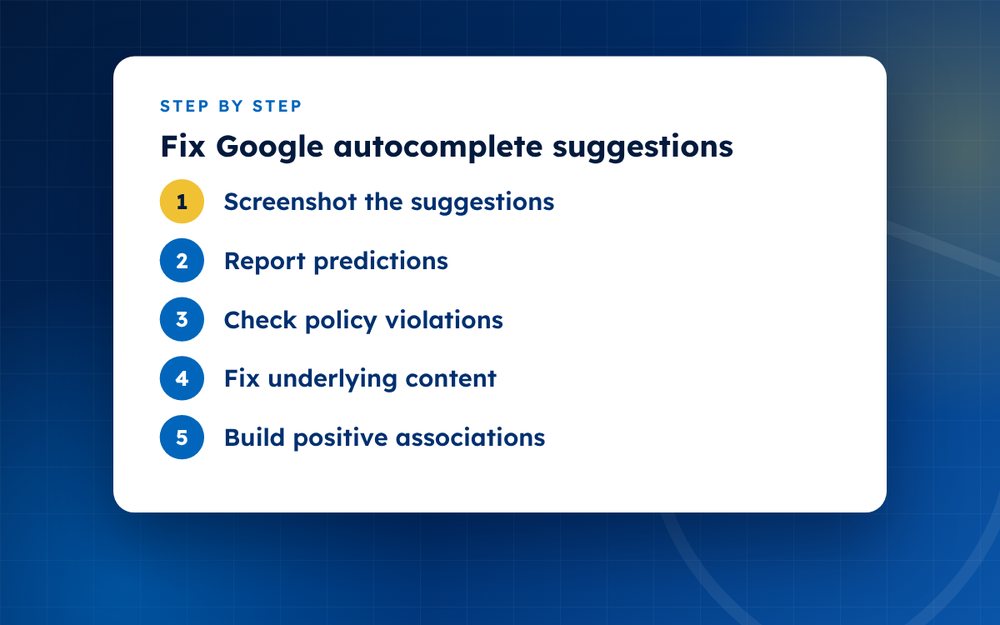
- Screenshot the suggestionsCapture the predictions with your search.
- Report predictionsUse the report inappropriate predictions option below the suggestion list.
- Check policy violationsReports are stronger when a prediction clearly breaks policy.
- Fix underlying contentPredictions reflect searches and content online.
- Build positive associationsPublish accurate content linked to your name.
- Recheck regularlyPredictions change.
How predictions work
Google's systems look at the real searches that people make, the language used, the location and the popularity of a query. They do not reflect a single person's opinion. Predictions can change from day to day, and different people can see different ones.
What Google removes
- Predictions that are sexually explicit
- Hateful or discriminatory predictions
- Violent or dangerous predictions
- Predictions that reveal personal information
- Predictions that violate legal requirements
- Some predictions that are clearly disparaging about private individuals
Reporting a prediction
Below the list of predictions there is a link to report inappropriate ones. Use it, select the reason and, where possible, explain why the prediction breaks the policy. Take screenshots first. If the prediction relates to a legal matter, there is also a legal removal process.
Influencing predictions over time
Predictions follow search behaviour. If fewer people search for negative phrases and more search for positive ones, predictions can change. Publishing positive, relevant content, getting accurate mentions and building a strong brand can all help. This takes time and cannot be controlled directly.
Dealing with a prediction that reflects a real story
If a prediction exists because many people are searching for a real event, removal is unlikely. In that case, publish a clear, factual account on your own site or in a trusted outlet. Over time, searches may include your explanation, and the prediction can shift. Also consider whether the event is still newsworthy. Predictions often fade when interest fades.
Avoid trying to manipulate predictions by encouraging people to search for particular phrases. Google considers this manipulation and it can backfire.
Email us for an assessment.
Frequently asked questions
Can I pay to change them?
No. Google does not sell changes to autocomplete predictions, and anyone who claims to be able to do this is misleading you. The legitimate routes are reports that rely on policy and long-term improvements to your online presence.
Will Google remove a true but embarrassing suggestion?
Usually not. Google's policies focus on harmful or prohibited predictions, not on accuracy or embarrassment. If a prediction reflects a lawful, accurate search topic, it may remain.
Do searches by others affect them?
Yes. Predictions reflect what people search for, among other signals. That is why they can change as interest in a topic rises or falls.
How long does it take?
Reports are handled within days to weeks. If the prediction is removed, it should disappear soon after. Changes caused by new content take longer.
Can predictions differ by country?
Yes. Predictions can vary by language, location and the laws that apply. A prediction that appears in one country may not appear in another.
What if the prediction is defamatory?
Take legal advice. A lawyer can explain whether the legal removal process is appropriate and what evidence you need.
Need help with this?
Every situation is different. Email us the details in confidence and we will reply with an honest assessment of what can be done.
Contact us by email Branded SearchThis guide is general information, not legal advice. DMCA Reputation is not a law firm.
Related guides
How to Push Down Negative Google Results
How to push down negative Google results: a step-by-step suppression strategy with owned profiles, quality content and realistic timelines.
Read the guide · 4 min
Search Suppression vs Removal: Which Do You Need?
Search suppression vs removal: how they differ, when each works best and how to decide which one you need.
Read the guide · 3 min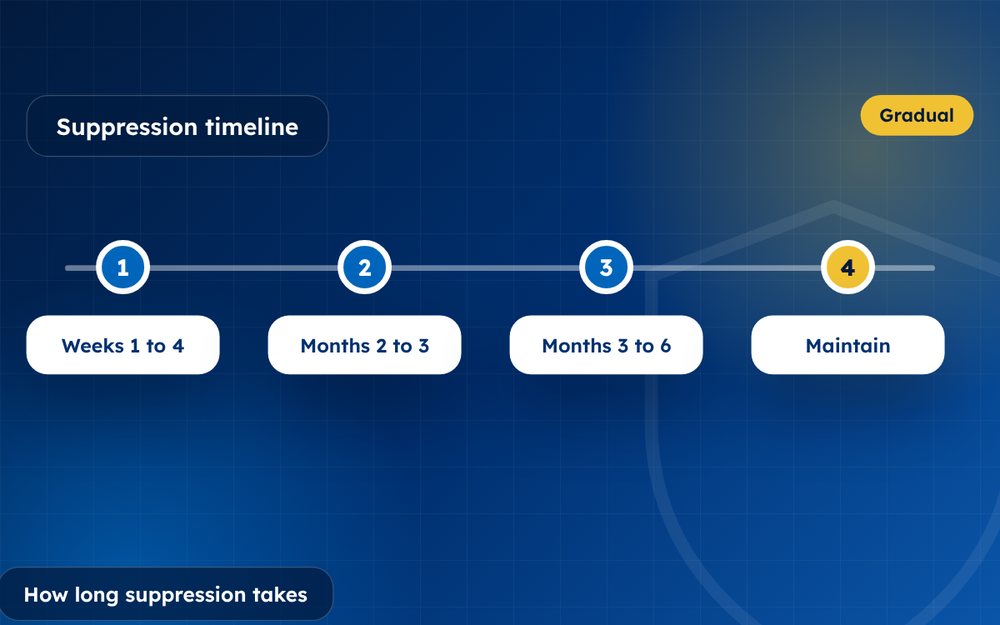
How Long Does Search Suppression Take?
How long does search suppression take? Typical timelines and the factors that make it faster or slower.
Read the guide · 3 min