
Under the GDPR, you can ask organisations to erase your personal data in certain circumstances. A clear written request is the first step.
This page is general information, not legal advice. The GDPR applies to organisations that process personal data of people in the EU and UK in many cases. The right to erasure, sometimes called the right to be forgotten, applies in specific situations, such as when data is no longer needed or was processed unlawfully. It is not absolute.
Organisations generally must respond without undue delay and within one month, though this can be extended in some cases.
The right to erasure is not absolute. Organisations may refuse where there are strong reasons to keep the data, such as legal duties or public interest. A clear, specific request makes it easier for them to say yes.
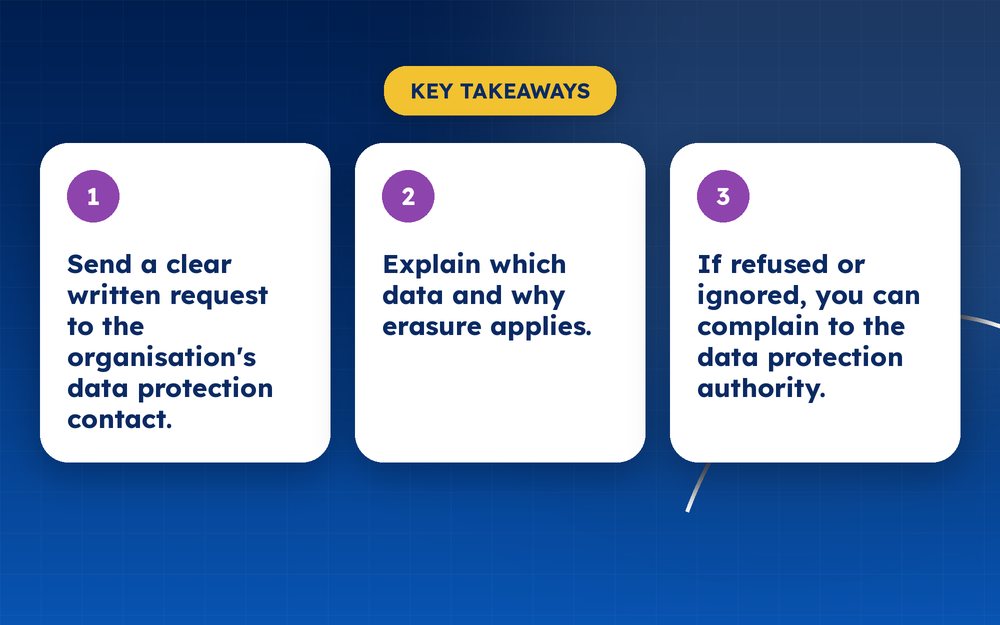
- Send a clear written request to the organisation's data protection contact.
- Explain which data and why erasure applies.
- If refused or ignored, you can complain to the data protection authority.
How to make a request, step by step
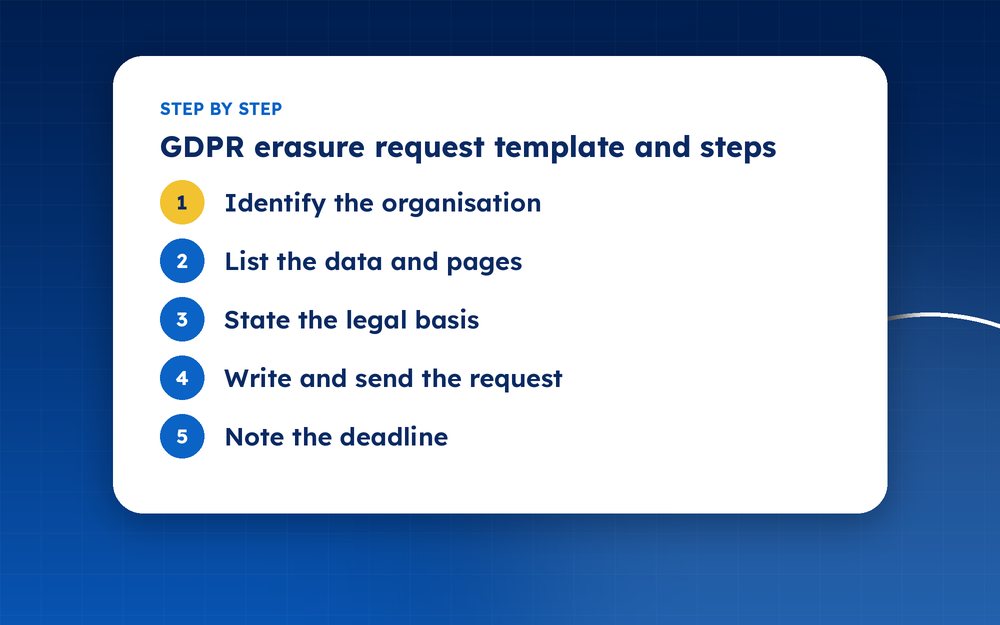
- Identify the organisationFind the company that holds the data and its data protection officer or privacy contact. Work out which organisation decides how and why the data is used, often the website owner or company. Find its data protection contact.
- List the data and pagesNote the URLs or records you want erased. List the data you want erased and the exact pages or records, with links and screenshots.
- State the legal basisExplain why erasure applies, such as data no longer needed or unlawful processing. Explain why you have a right to erasure, for example the data is no longer needed, you withdrew consent, or it was used unlawfully.
- Write and send the requestUse email or the company's privacy form, and keep a copy. Write a short, polite message identifying yourself, the data, the legal basis and the action you request. Send it to the data protection contact.
- Note the deadlineExpect a reply within about one month. Organisations usually have around a month to respond, subject to rules. Note the date you sent it.
- Follow upIf no reply, send a reminder. If you hear nothing, send a reminder quoting your first message.
- Escalate if neededComplain to your data protection authority. If the organisation refuses or ignores you, you can contact the data protection authority in your country, and a lawyer can advise.
A simple template
Subject: Request for erasure under Article 17 of the GDPR.
Body: I request that you erase the personal data you hold about me, specifically [describe data and give links]. I rely on [ground, for example that the data is no longer necessary or was processed unlawfully]. Please confirm erasure and let me know if you need any further information. My contact details are [email]. [Name].
Adjust the wording to your situation, and keep it short.
Exceptions
Organisations may refuse in some cases, such as when processing is needed for freedom of expression, legal obligations or legal claims. This is why news articles are often treated differently from marketing databases.
Search engines
Search engines also receive erasure requests and can delist results for searches on your name in certain cases. They balance privacy against public interest. Check each engine's forms.
If your request is refused
You can ask for an explanation, appeal and complain to the data protection authority. Legal advice can help with more complex cases.
What a typical case looks like
A person finds an old directory listing with her address. She emails the company's data protection contact with the link, says she has not consented and asks for erasure. The company replies within three weeks and deletes the listing. She then asks the search engine to remove the result, citing the deletion.
Her short, specific request led to quick action.
A simple structure for your message
Include your name and contact, the data and links, the legal basis, the action you ask for and the deadline you expect. Keep it to one page and attach evidence.
Common mistakes to avoid
Do not send vague requests. Do not forget to name the data. Do not skip follow-up. And do not assume erasure is automatic.
How a specialist can help
A specialist team can prepare requests, send them to organisations and search engines and follow up. We are not a law firm and cannot give legal advice. Email us in confidence.
Frequently asked questions
What is a GDPR erasure request?
It is a request asking an organisation to delete personal data about you, under data protection law in the EU and UK.
Will they always delete it?
No. There are exceptions, such as legal obligations or freedom of expression.
How long do they have to reply?
Generally about a month, though it can be extended in some cases.
What if they refuse?
You can complain to the data protection authority and take legal advice.
Does it apply outside Europe?
Similar rights exist in some other places, but rules differ.
Is this legal advice?
No. It is general information, and laws differ by country. For advice on your situation, speak to a qualified lawyer.
Need help with this?
Every situation is different. Email us the details in confidence and we will reply with an honest assessment of what can be done.
Contact us by email DMCA takedown serviceThis guide is general information, not legal advice. DMCA Reputation is not a law firm.
Related guides
UK Online Safety Act: How It Helps With Removal
UK Online Safety Act: how it helps with removal of harmful content, what platforms must do, how to report and what the regulator can and cannot do. General information.
Read the guide · 3 min
EU Digital Services Act Notices: How to Use Them for Removal
EU Digital Services Act notices: how to use notice and action tools for removal, what a notice must contain, appeals and what to expect from platforms. General information.
Read the guide · 4 min
How to Send a DMCA Takedown Notice (With Template)
How to send a DMCA takedown notice: what to include, who to send it to, a free template, counter-notices and common mistakes.
Read the guide · 5 min