
Some pirates avoid public pages and sell your course through direct messages on Instagram, Telegram, WhatsApp or Facebook. It is harder to see, but it can still be reported.
Direct-message selling often starts with a public post or story that advertises "courses for sale" and asks buyers to message. The selling happens privately, which makes it hard to prove without a screenshot from a buyer or a contact.
Public adverts, accounts and payment links give you something to report, and your audience can help if you ask.
Direct message sales are hard to see, and you often learn about them from a buyer or a follower. Your strongest evidence usually comes from the people who were approached.
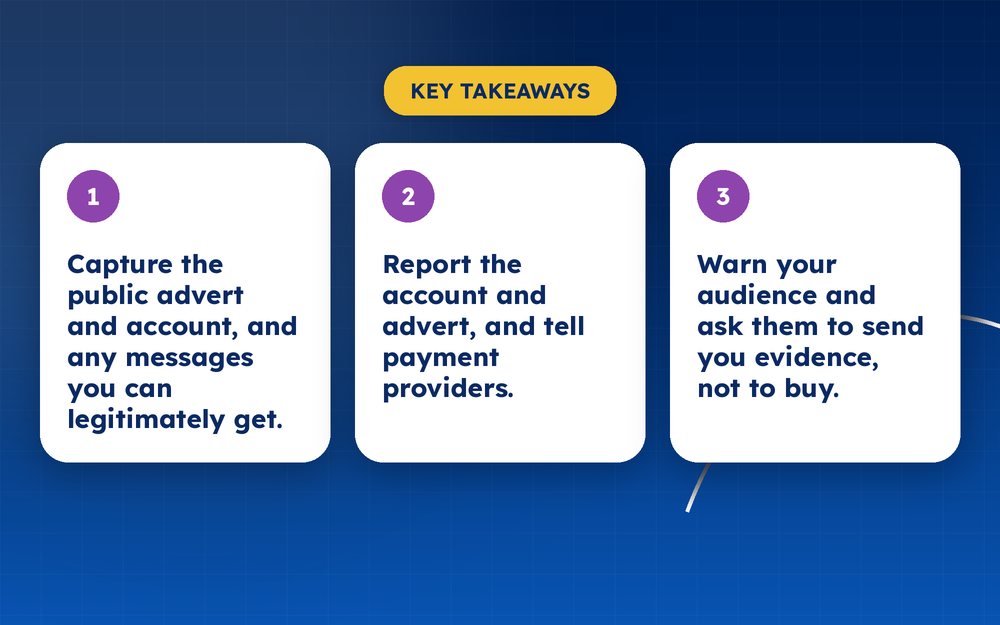
- Capture the public advert and account, and any messages you can legitimately get.
- Report the account and advert, and tell payment providers.
- Warn your audience and ask them to send you evidence, not to buy.
What to do, step by step
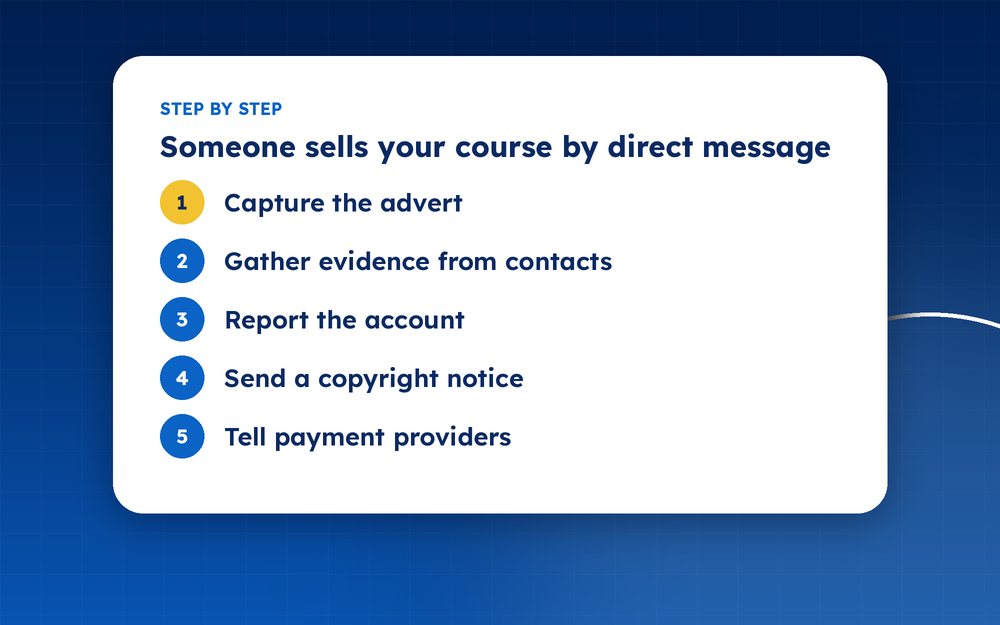
- Capture the advertScreenshot the post, story or profile that advertises your course, with the account name and date. Save the advert, profile and any posts. Record the account name, link and date.
- Gather evidence from contactsAsk followers or customers who were offered the course to send screenshots, without buying. Ask people who were contacted to share screenshots and any payment details. Do not pose as a buyer unless advised.
- Report the accountUse the platform's copyright, scam or counterfeit routes. Report the account for scams or infringement, with your evidence.
- Send a copyright noticeName your course, link to your original and list the account and posts. Send a copyright notice to the platform with links and proof of ownership.
- Tell payment providersIf the seller uses a payment link, report it. If money is taken, tell the payment providers and any relevant bank. They may block the account.
- Warn your audienceSay that you only sell through official channels, and how to report fakes. Warn your audience that you only sell through official channels, and how to check.
- Monitor for new accountsSellers return under new names. Keep a log. Accounts return under new names. Search regularly and report quickly.
Why audience help is useful
Your followers often see adverts you do not. Make it easy to report by giving a clear address or form, and thank them. A short post about official channels can also protect buyers from scams.
Avoiding buyer traps
Do not ask someone to buy the course on your behalf. It can create legal and safety problems, and funds the seller. Use screenshots of adverts and messages offered to you instead.
Reporting to platforms
Platforms differ in how they classify the report. Choose copyright, intellectual property or scam, whichever is available, and include links to your original product. Add details about repeated use if the account has posted several times.
Reducing the appeal
Consider offering payment plans, discounts for students or affordable tiers, which reduce the pull of cheap pirated copies. This is a business decision, but it can help alongside enforcement.
What a typical case looks like
A coach learns that an account is offering her course in private messages. A follower sends screenshots and the payment link. She reports the account, sends a copyright notice and tells the payment provider. The platform bans the account within three days. She also posts a short notice about official sales.
Screenshots from the follower were the key evidence.
Common mistakes to avoid
Do not engage with the seller. Do not publicly shame accounts without evidence. Do not rely on one report. And do not forget to log everything.
How a specialist can help
A specialist team can find advertising accounts, send reports and notices and monitor for new sellers. We cannot promise every seller will be stopped, but we will be honest about what is realistic. Email us in confidence.
Frequently asked questions
Can I stop someone selling my course privately?
You can report the account and payment provider, though private chats limit what you can see.
What evidence do I need?
Screenshots of the offer, the account and payment details, and proof you own the course.
Should I pretend to be a buyer?
It can create risks. Consider advice first.
How do I warn buyers?
Post a short notice about official sales channels.
Will the account come back?
Possibly. Monitor and report.
Is this legal advice?
No. It is general information. For claims or court action, speak to a qualified lawyer.
Need help with this?
Every situation is different. Email us the details in confidence and we will reply with an honest assessment of what can be done.
Contact us by email Piracy monitoringThis guide is general information, not legal advice. DMCA Reputation is not a law firm.
Related guides
How to Handle Leaks From Kajabi, Teachable, Thinkific and Udemy
How to handle leaks from Kajabi, Teachable, Thinkific and Udemy: what the platform can do, how to trace buyers, send notices and protect your course going forward.
Read the guide · 3 min
How to Remove Pirated Templates, Presets and Software
How to remove pirated templates, presets and software: find the copies, send DMCA notices to sites and hosts, report marketplaces and protect licences going forward.
Read the guide · 4 min
How to Send a DMCA Takedown Notice (With Template)
How to send a DMCA takedown notice: what to include, who to send it to, a free template, counter-notices and common mistakes.
Read the guide · 5 min