
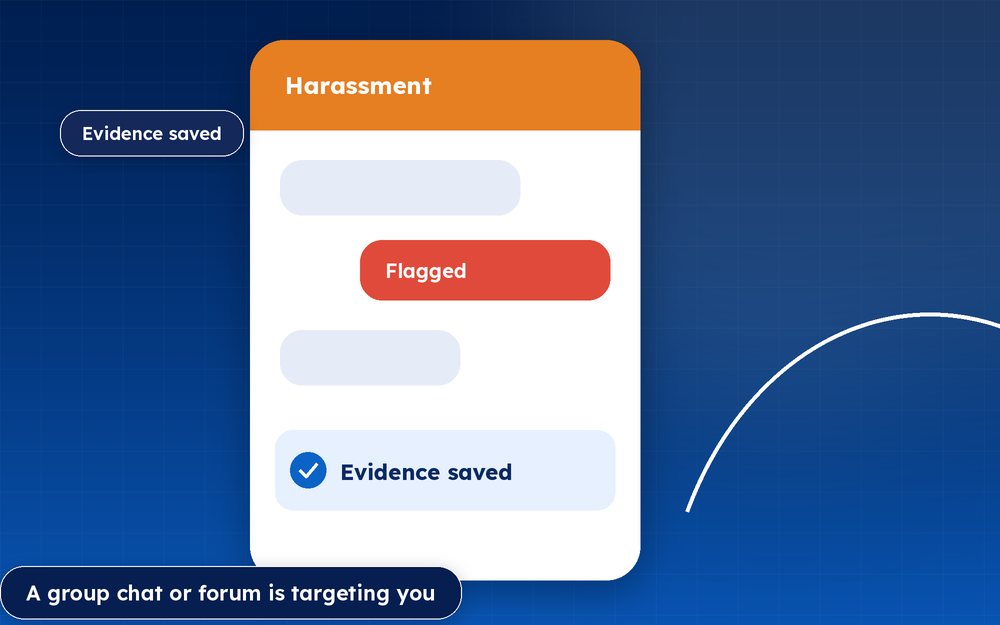
Being targeted by a group is isolating, especially when you cannot see everything being said. Evidence, reports and support are your main tools.
Groups may share your photos, personal details or rumours, or coordinate attacks. Some are forums, others are private chats, and some spill over into brigading on your accounts.
The aim is to document, report, limit exposure and get help.
A particular difficulty is that you may not be able to see the conversation at all. Private chats, invite-only servers and closed forums hide the worst content, and people often only learn about it when a screenshot reaches them. You can still act on what you do know, and you do not have to read everything to respond well.
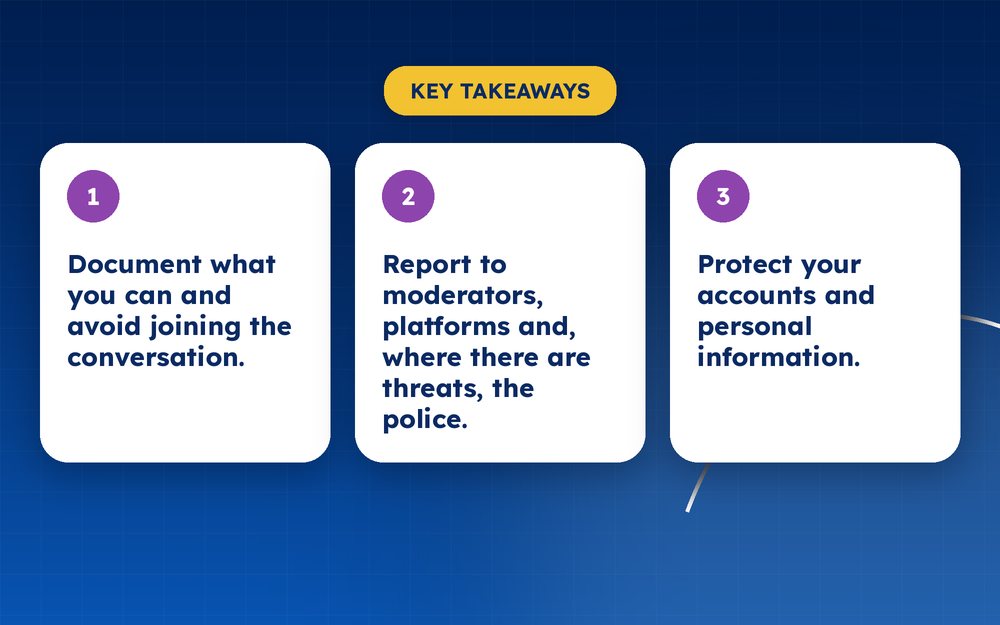
- Document what you can and avoid joining the conversation.
- Report to moderators, platforms and, where there are threats, the police.
- Protect your accounts and personal information.
What to do, step by step
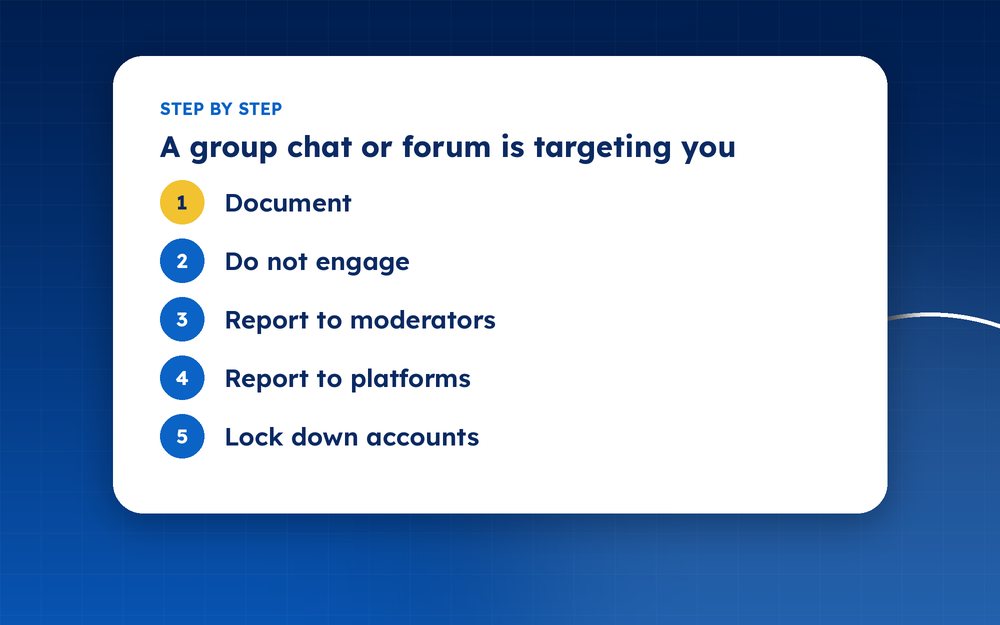
- DocumentCapture posts, usernames and dates. Ask a trusted person to help if you cannot look. If you cannot face reading it, ask a trusted friend to capture posts and usernames for you, or to read it with you and summarise. Keep the screenshots and dates in a folder, and note where each one came from.
- Do not engageReplying often escalates. Arguing in the thread gives the group more material and more attention. Silence feels unfair, but it removes the reward for the people trying to provoke you.
- Report to moderatorsAsk moderators to remove posts and ban members. Many communities have moderators who care about their rules. Send a short, polite message listing the posts, the rule they break and what you want, such as removal and a ban. Keep a copy of the message.
- Report to platformsUse harassment and privacy routes. Use the platform's own report tools for harassment, private information and impersonation. Reports about specific posts work better than a general complaint about a group, though you can add context about the pattern.
- Lock down accountsMake profiles private, review followers and change passwords. Make accounts private, remove people you do not know, check your tags and review which apps can see your profile. Change passwords on accounts the group might know about.
- Remove personal dataCheck where your information is posted and request removal. Search your name, phone number and address, and request removal of anything the group has copied to public sites. This is especially important if they are sharing personal details.
- Get supportTalk to friends, support services or professionals. Being targeted can affect sleep, work and mood. Tell someone, take breaks from checking, and consider a counsellor or helpline. You do not have to keep monitoring to stay safe.
Brigading
If a group directs attacks at your accounts, restrict comments, use moderation tools and report accounts. Document patterns for platform reports.
When there are threats
Report to the police and share your documentation. Threats of violence or stalking are serious.
Private groups
Private chats are hard to see. If someone shares screenshots or links, use them as evidence, and consider the police for serious cases.
Your wellbeing
Targeting by groups can be deeply upsetting. Take breaks from monitoring, and reach out to people you trust.
What a typical case looks like
A person leaves a community after a disagreement, and members start sharing her photos in a private chat, with jokes and her workplace name. A friend sends her screenshots. She saves them, messages the moderators of the public forum where it began, and reports the specific posts. The moderators remove the posts and ban three accounts. Because her workplace was named, she also asks the search engine to remove two pages that copied the details, and tells her manager what has happened.
The private chat remained out of reach, but the public posts and search results were the part that could harm her, and those could be handled.
When to take it further
If the group shares your address, threatens violence or organises contact at your home or workplace, treat it as a safety matter and contact the police. Share your log and screenshots, and ask them to note the platform names and usernames involved.
Common mistakes to avoid
Do not retaliate. Do not delete evidence. Do not ignore threats. And do not isolate yourself.
How a specialist can help
A specialist team can monitor, report and follow up so you do not have to read what is said. We cannot promise results, but we will be honest about what is realistic. Email us in confidence.
Frequently asked questions
Can a group chat or forum be shut down?
Platforms can ban accounts and close communities that break their rules, and moderators can remove posts. This depends on the platform and on how clear your evidence is. Private chats are harder to reach, so focus on public posts and anything that exposes your details.
Should I join the chat to see what is said?
It is usually better not to. Joining can put you in the middle of the abuse, and members may notice. Ask a trusted person to capture what they can, or work from screenshots people send you.
What if the group is made up of people I know?
Evidence still matters. Save it, talk to someone you trust, and consider whether a school, workplace or club has a process for complaints. For threats or stalking, involve the police.
Can I remove posts about me that are already shared widely?
Posts that break rules can often be removed, and search engines can remove results that expose personal information. You may not remove every copy, so monitor for reposts for several weeks.
How do I protect my information?
Tighten privacy settings, opt out of data broker sites, use strong passwords with two-step sign-in and avoid sharing details with people you do not trust. Search your name regularly to see what is public.
Is this legal advice?
No. It is general information. For threats, stalking or claims, speak to the police and a qualified lawyer.
Need help with this?
Every situation is different. Email us the details in confidence and we will reply with an honest assessment of what can be done.
Contact us by email Harassment and doxxing responseThis guide is general information, not legal advice. DMCA Reputation is not a law firm.
Related guides
What to Do If You Are Being Cyberstalked
What to do if you are being cyberstalked: stay safe, keep evidence, block and report, secure devices and accounts, and contact police and support services.
Read the guide · 4 min
How to Document Online Harassment So It Can Be Used in Court
How to document online harassment so it can be used in court: what to capture, how to preserve it, building a log and working with police and lawyers.
Read the guide · 4 min
What to Do When You Are Doxxed: A Step-by-Step Guide
What to do when you are doxxed: safety steps, removing personal information, reporting, securing accounts and getting support.
Read the guide · 4 min