
Good documentation can make the difference between a report that is taken seriously and one that is dismissed. Capture the right details, in the right way.
Courts and police need clear, dated evidence. Screenshots alone may not be enough, and content can disappear, so capture the context.
This page is general information, not legal advice. Ask the police or a lawyer what format they prefer.
Think of your documentation as a story that someone who has never met you can follow. They should be able to see who posted what, when, where and what it meant for you, without needing you to explain. The more complete and consistent your records, the easier it is for police, platforms and lawyers to take you seriously.
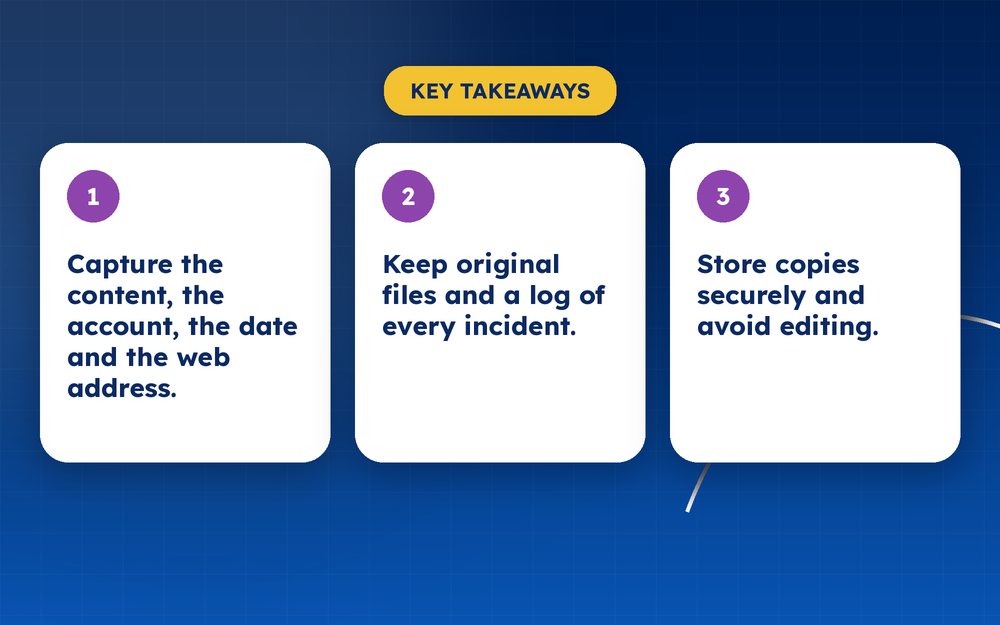
- Capture the content, the account, the date and the web address.
- Keep original files and a log of every incident.
- Store copies securely and avoid editing.
How to document, step by step
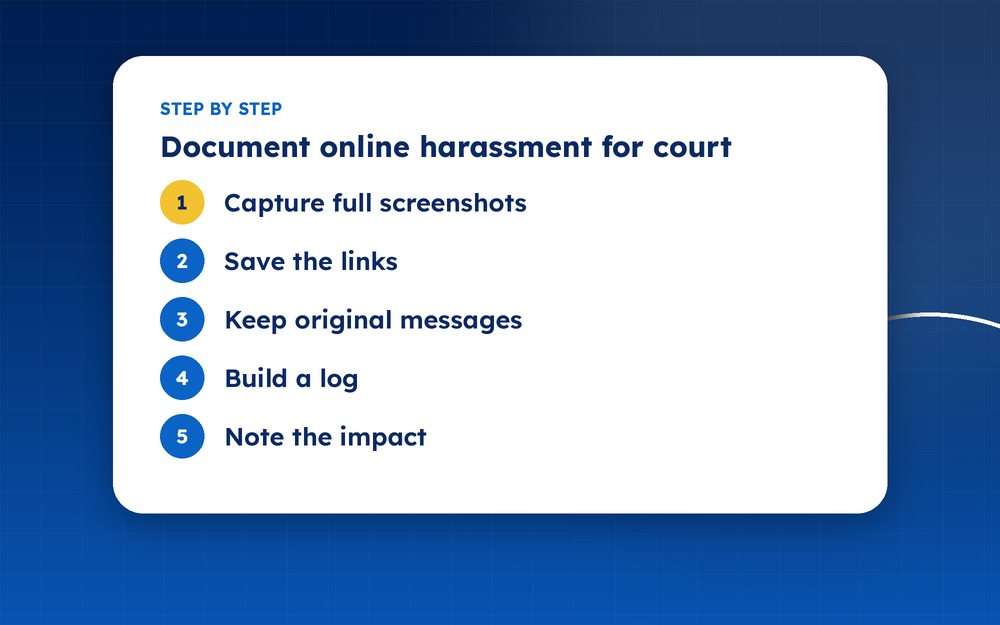
- Capture full screenshotsInclude the username, date, time and web address. Capture the whole screen, not just the message. Include the username, profile name, date, time and the address in the browser bar. On a phone, capture the full thread and then the profile page of the sender.
- Save the linksRecord the exact addresses. Copy the exact web address of each post and profile, and paste it into a log. Addresses let others find the original even if the screenshot is questioned.
- Keep original messagesDo not delete chats. Export them if possible. Do not delete chats, even upsetting ones. Where the app allows it, export the conversation, which keeps dates and sender details. Keep voicemails, emails and call logs too.
- Build a logList each incident with date, time, platform and description. Create a simple table with date, time, platform, what happened, link and evidence file name. Add entries as soon as things happen, because details fade quickly.
- Note the impactRecord how the harassment has affected you. Courts and police care about harm. Note any effects on work, sleep, safety, money and relationships, and keep copies of sick notes or messages from your employer if relevant.
- Back up securelyStore copies in more than one safe place. Keep copies in at least two places, such as an encrypted drive and a private cloud account. Name files with the date so they sort in order.
- Share with police or lawyersProvide organised files when asked. Ask the police or your lawyer how they want evidence delivered. Some prefer printed copies with files on a drive, and some accept links to a secure folder.
What makes evidence strong
Dated, complete and unedited evidence is strongest. Show the account, the content and the time. Where possible, capture how the content appears in context.
Avoiding common errors
Cropping out the date or username weakens evidence. Editing images or text may raise doubts. Keep originals untouched and make copies for working.
Third-party capture tools
Some tools and services can capture web pages with timestamps. Ask the police or a lawyer whether they accept them.
Protecting your privacy
Store evidence securely, since it may contain sensitive information. Share it only with those who need it.
What a typical case looks like
A person is harassed by an anonymous account over several months. At first she only takes screenshots, which show the message but not the account. After advice she starts a log, saves the profile link and the address of each post, and records how the posts affect her work. She also keeps a backup in two places. When she later reports to the police, she gives them a folder named by date and a one-page summary. The officer can follow the timeline in minutes, and the report is taken forward.
The difference between her first and second approach was not effort. It was structure.
A simple log you can copy
Use these columns: date and time, platform, account name, link, what was said or done, evidence file name, and how it affected you. Fill it in the same day. If you cannot face it, ask a trusted person to help you keep it.
Common mistakes to avoid
Do not rely on memory. Do not delete evidence. Do not alter files. And do not wait until content disappears.
How a specialist can help
A specialist team can capture and organise evidence in a structured format and handle removal. We are not a law firm and cannot give legal advice. Email us in confidence.
Frequently asked questions
Are screenshots enough as evidence?
They are a good start, but they are stronger with the web address, date, username and context. Courts and police may also want original messages or exports, so keep those as well.
Do I need a notary or special service?
Usually not for the first stages. Some lawyers use capture services or notaries for important cases. Ask a lawyer whether it is worth it for yours.
How long should I keep the evidence?
Keep it until the matter is fully resolved, and longer if a lawyer or the police advise. Back it up securely and do not delete it when posts come down.
Can I record phone calls?
Laws differ between countries and regions, and some require consent from everyone on the call. Check the local rules before recording, and ask a lawyer if unsure.
What if the posts are deleted?
Your saved evidence still matters, and the log shows what happened. Tell the police and the platform that you have copies, and keep them secure.
Is this legal advice?
No. It is general information. Ask the police or a qualified lawyer what format they need.
Need help with this?
Every situation is different. Email us the details in confidence and we will reply with an honest assessment of what can be done.
Contact us by email Harassment and doxxing responseThis guide is general information, not legal advice. DMCA Reputation is not a law firm.
Related guides
How to Remove Photos of Your Children Posted Online
How to remove photos of your children posted online: ask the poster, report to platforms, contact schools and clubs, use search removal and protect privacy going forward.
Read the guide · 5 min
What to Do If Your Workplace Harassment Story Ends Up Online
What to do if your workplace harassment story ends up online: assess your goals, protect privacy, understand risks, remove personal data and get support. General information.
Read the guide · 4 min
What to Do When You Are Doxxed: A Step-by-Step Guide
What to do when you are doxxed: safety steps, removing personal information, reporting, securing accounts and getting support.
Read the guide · 4 min