
A fake nude made with AI is still abuse. The image is not real, but the harm is, and you have the same routes to get it removed as with real intimate images.
AI tools can now take an ordinary photo and produce a fake nude image or video of a real person. Victims often feel violated and confused about whether they can do anything, because the body in the image is not theirs. They can.
Platforms, search engines and, in a growing number of countries, the law treat sexual deepfakes as a form of intimate image abuse. The practical steps are close to those for real images: evidence, reports, search removal and monitoring.
A fake image is still a violation, even though it is not a real photo. Platforms and search engines increasingly treat these images as non-consensual intimate imagery, and you do not have to prove that it looks convincing. You only need to say it is a fake of you and that you did not consent.
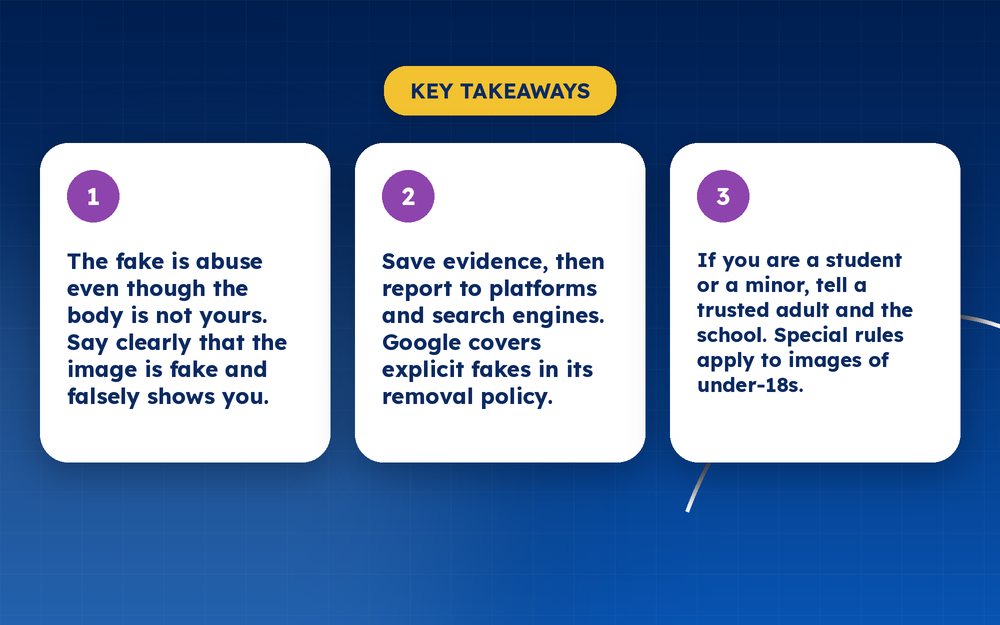
- The fake is abuse even though the body is not yours. Say clearly that the image is fake and falsely shows you.
- Save evidence, then report to platforms and search engines. Google covers explicit fakes in its removal policy.
- If you are a student or a minor, tell a trusted adult and the school. Special rules apply to images of under-18s.
What to do, step by step
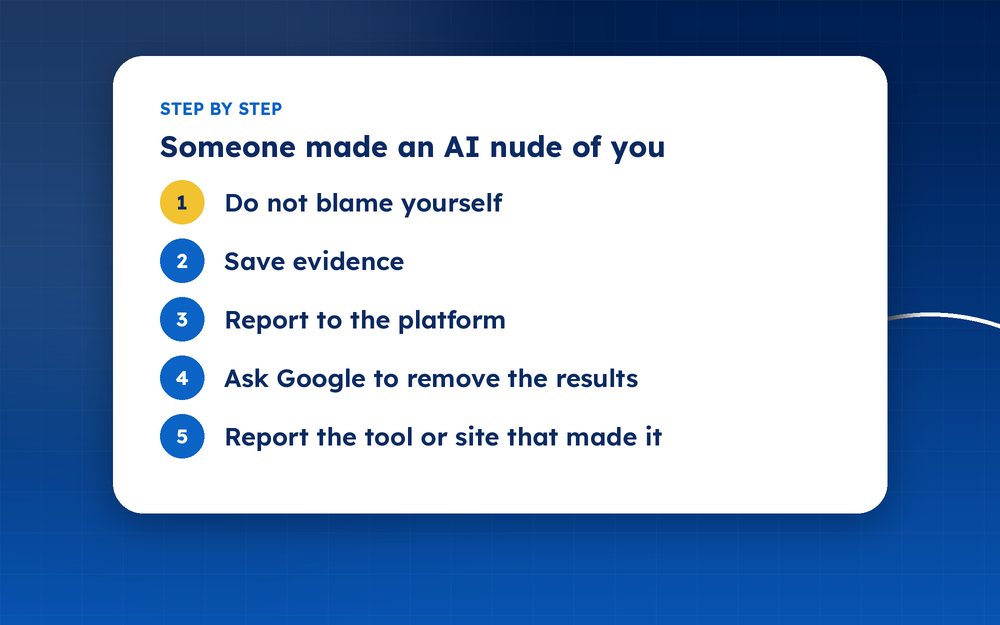
- Do not blame yourselfSomeone else chose to make and share this. A normal photo of you does not make it your fault. This is not your fault and does not say anything about you. Take a breath, tell one trusted person, and take the next steps in small pieces.
- Save evidenceScreenshot the images with web addresses, account names and dates. Save any messages that show who made or shared it. Save the links, usernames, dates and screenshots, in a private folder. If you cannot look, ask a trusted person to do it for you, or use a service.
- Report to the platformUse the report option for sexual or intimate content shared without consent, and say that it is a fake created to look like you. Use the report options for non-consensual or sexual content. Say that the image is fake, that you did not consent and that it uses your likeness.
- Ask Google to remove the resultsUse Google's form for non-consensual explicit imagery, which covers fakes. Google says it aims to filter similar results after approved requests. Google has a process for removing non-consensual explicit imagery, including fakes. Submit the links and ask it to filter similar results.
- Report the tool or site that made itSome nudify services and sites have abuse contacts. Report the content and, where relevant, the service itself. If you know which app or site made it, report it to its host, payment provider and the stores that distribute it.
- Consider the policeMany places now treat sexual deepfakes as an offence. A report creates a record and can support further steps. Depending on where you live, creating or sharing such images may be a crime. The police can tell you what applies and record your report.
- Get supportTalk to a friend, a counsellor or a helpline. You do not need to look at the content to report it, so ask someone to help with searching. Talk to a friend, a helpline or a counsellor. Looking after yourself is part of the response.
Why the "it is fake" point matters
Platforms and search engines usually ask whether the content shows you in a sexual way without your consent. A fake does exactly that: it falsely depicts you. State plainly that the image is AI-generated and shows your face or likeness without permission. That wording helps reviewers match your report to the right policy.
You do not have to prove who made it. Reports are assessed on what the content is and whether it falsely shows you.
If it is circulating among people you know
Spread through school or work groups can feel overwhelming. Ask the people sharing it to stop and delete it, if that feels safe, and report to the platform and to the school or employer. Schools and employers often have a duty to act on harassment. Keep a record of whom you told and when.
If you were under 18 in the original photo
If the fake depicts someone under 18, it is treated very seriously. Do not share the image. Contact the police and, in the United States, the NCMEC CyberTipline, which offers a Take It Down tool. Tell a trusted adult.
What a typical case looks like
A young professional learns that a fake explicit image of her is circulating in a group chat and on one site. A friend saves links and screenshots for her. She reports the image to the site as a non-consensual fake and asks Google to remove the results. The site removes the image within two days, and Google removes the search results within a week. She also reports to the police, and a support service helps her through the next weeks.
Acting step by step, with a friend's help, made it manageable.
Common mistakes to avoid
Do not forward the fake as evidence. Do not reply to the creator. Do not assume that nobody will believe it is fake, since removal does not depend on that. And do not delete the source photos from your accounts in a panic before saving evidence.
How a specialist can help
AI fakes can be generated and reposted quickly. A specialist team can search, report and monitor on your behalf so you do not have to look at the content. We cannot promise every copy will be removed, but we will be honest about what is realistic. Email us in confidence.
Frequently asked questions
Is a fake nude image illegal?
Laws differ, but many places treat creating or sharing sexual deepfakes without consent as an offence. The police or a lawyer can tell you what applies where you live.
Can fake images be removed?
Often yes. Many platforms and search engines treat them as non-consensual intimate imagery and remove them on request.
Do I need to prove it is fake?
You usually only need to state it is a fake of you and that you did not consent.
Should I tell the police?
You can, and it may be useful, especially if the image is used to threaten you.
What if someone is blackmailing me with it?
Do not pay. Keep evidence and report to the police and the platform.
Is this legal advice?
No. It is general information, and laws differ by country. For claims or court action, speak to a qualified lawyer.
Need help with this?
Every situation is different. Email us the details in confidence and we will reply with an honest assessment of what can be done.
Contact us by email Deepfake removalThis guide is general information, not legal advice. DMCA Reputation is not a law firm.
Related guides
How to Report Deepfake Porn to Google, X and Telegram
How to report deepfake porn to Google, X and Telegram: what to say, what evidence to include, how to follow up and how to handle the copies that keep coming back.
Read the guide · 4 min
How to Remove Images Made by a Nudify App
How to remove images made by a nudify app: how these apps work, how to report the images and the app, remove search results and protect your photos from future misuse.
Read the guide · 4 min
How to Remove Deepfakes of Yourself
How to remove deepfakes of yourself: documenting evidence, platform reports, search removal and legal options for AI-generated fake images and videos.
Read the guide · 4 min