
A cloned website copies your design, text and sometimes your name to trick customers or steal traffic. Fast, documented action with the host and registrar usually works.
Clone sites range from lazy copies used for ad revenue to full imitations used for fraud. Either way, they use your content and brand without permission, which gives you copyright and trademark routes.
If the clone takes payments or logins, treat it as fraud, report it quickly and warn your customers.
A clone can be a lazy copy that nobody visits or a convincing replica that takes payments. Check quickly which one you face, because a clone that collects money or logins needs action within hours, not days.
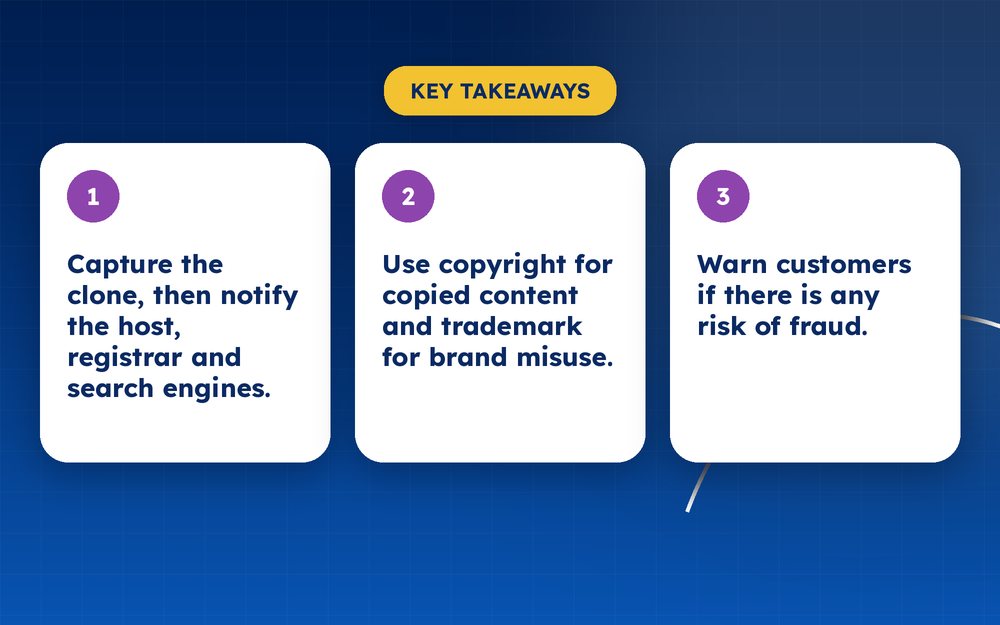
- Capture the clone, then notify the host, registrar and search engines.
- Use copyright for copied content and trademark for brand misuse.
- Warn customers if there is any risk of fraud.
What to do, step by step
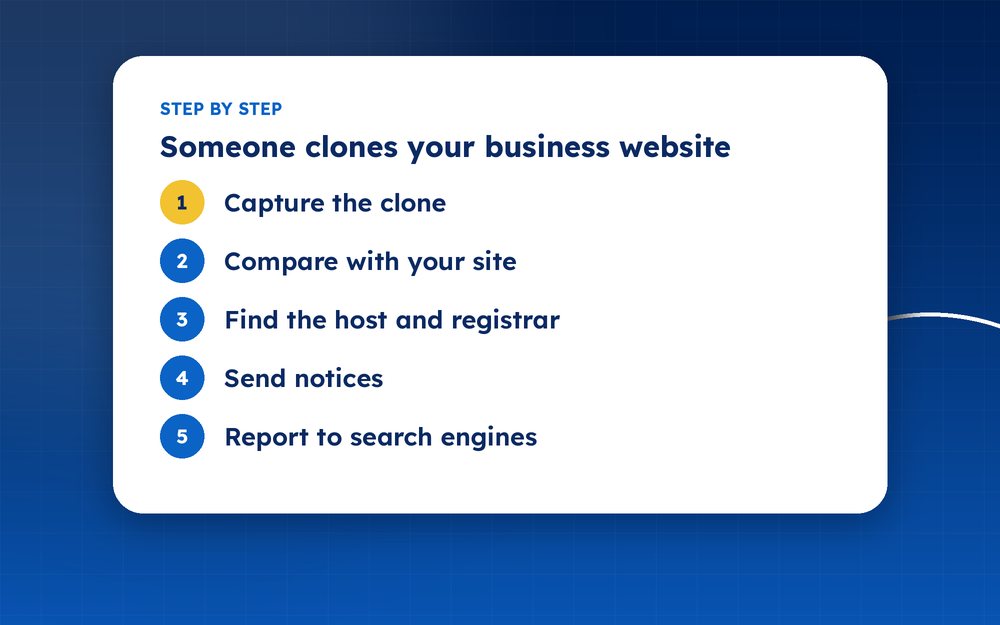
- Capture the cloneScreenshot pages with dates and save the web addresses. Take full-page screenshots, save the page source if you can and note the domain, date and time. Capture the checkout or login page if there is one, since that shows the harm.
- Compare with your siteNote copied text, images, logos and design elements. List what was copied: text, images, code, logo, product pages. Matching text and images, with your original publication dates, is your proof of ownership.
- Find the host and registrarUse lookup tools to identify them. Look up who hosts the clone and which company registered the domain. Both usually have an abuse form, and either can act.
- Send noticesSend copyright and brand misuse notices with your evidence. Send a copyright notice to the host and a short abuse report to the registrar. Include exact links, your original pages and a clear statement that you own the content.
- Report to search enginesRequest removal of the clone from results. Ask the search engine to remove the clone from results, and report it to safe browsing services if it is used for fraud. This reduces traffic quickly.
- Warn customersPost a notice on your official channels if there is a risk of fraud. Post a short notice on your site and social channels with your real address, so customers can check. Keep it factual and calm.
- Monitor for new clonesSearch distinctive phrases regularly. Clones often return on new domains. Search for distinctive sentences from your site every few weeks and act quickly on new copies.
Why clones appear
Scrapers copy popular sites to capture traffic, and scammers copy brands to trick people. Clones often keep your text word for word, which makes them easy to find with quoted search.
Using copyright and trademark
Copyright covers your text, images and design. Trademark covers your name and logo. A notice that cites both gives hosts and registrars clear reasons to act.
If customers are being tricked
Report to the police or fraud bodies, and tell payment providers the clone is using your name. Warn customers where you reach them, such as email and social channels.
Protecting your site
Use unique wording, watermark images and register your brand where you can. Monitor with alerts for your name and distinctive phrases.
What a typical case looks like
A small online shop finds a site with its photos and prices at a slightly different domain. Customers have emailed asking about orders they never placed. The owner saves screenshots, finds the host and registrar, and sends notices to both with her original product pages as proof. The host suspends the site within two days. She posts a notice on her real site, and asks the search engine to remove the clone. A week later a second clone appears, and the same steps work faster.
Speed and a ready evidence folder were what made the second case easy.
Common mistakes to avoid
Do not contact the owner with threats. Do not delay evidence. Do not ignore the registrar. And do not forget to warn customers.
How a specialist can help
A specialist team can find clones, send notices to every layer and monitor for new ones. We are not a law firm and cannot give legal advice. Email us in confidence.
Frequently asked questions
Can I get a cloned website taken down?
Often yes. Hosts and registrars usually act on clear copyright or fraud reports, especially where customers may be tricked. Provide exact links and proof that the content is yours.
Who should I contact first?
Start with the host and the registrar, because either can suspend the site. If customers are being defrauded, also report to safe browsing services and your payment provider.
Does it matter if the clone does not use my name?
Copyright can still apply to your text, images and design. A name or logo also allows a trademark complaint if you have rights.
What if the clone is overseas?
Many overseas hosts and registrars still respond, and search engines remove pages regardless of location. Use several routes at once.
Should I warn customers?
Yes, briefly and factually, with a way to verify your real site. Do not name accusations you cannot prove.
Is this legal advice?
No. It is general information. For claims or court action, speak to a qualified lawyer.
Need help with this?
Every situation is different. Email us the details in confidence and we will reply with an honest assessment of what can be done.
Contact us by email Brand infringement removalThis guide is general information, not legal advice. DMCA Reputation is not a law firm.
Related guides
How to Report a Phishing Site Using Your Brand
How to report a phishing site using your brand: capture evidence, report to the host, registrar and browsers, warn customers and speed up takedown.
Read the guide · 4 min
How to Remove Fake Customer Support Numbers That Use Your Brand Name
How to remove fake customer support numbers that use your brand name: find listings, report to search and map platforms, warn customers and cut off the scammers.
Read the guide · 3 min
How to Protect Your Brand From Fake Social Media Accounts
How to protect your brand from fake social media accounts: registration, verification, monitoring and a fast takedown process.
Read the guide · 3 min