
When an ex keeps posting about you, it can feel like there is no escape. You can document it, report it and limit what they can see, while keeping yourself safe.
Posts may include accusations, private details, photos or messages designed to embarrass you. Some are harassment, some are defamatory and some may be crimes.
Start with documentation, then use platform tools, and take advice about the police and legal options for serious cases.
This situation is hard because it is personal. You may feel tempted to reply, defend yourself or ask mutual friends to intervene, and each of those can make the posts last longer. A calm record and a few well-aimed reports usually achieve more than any argument.
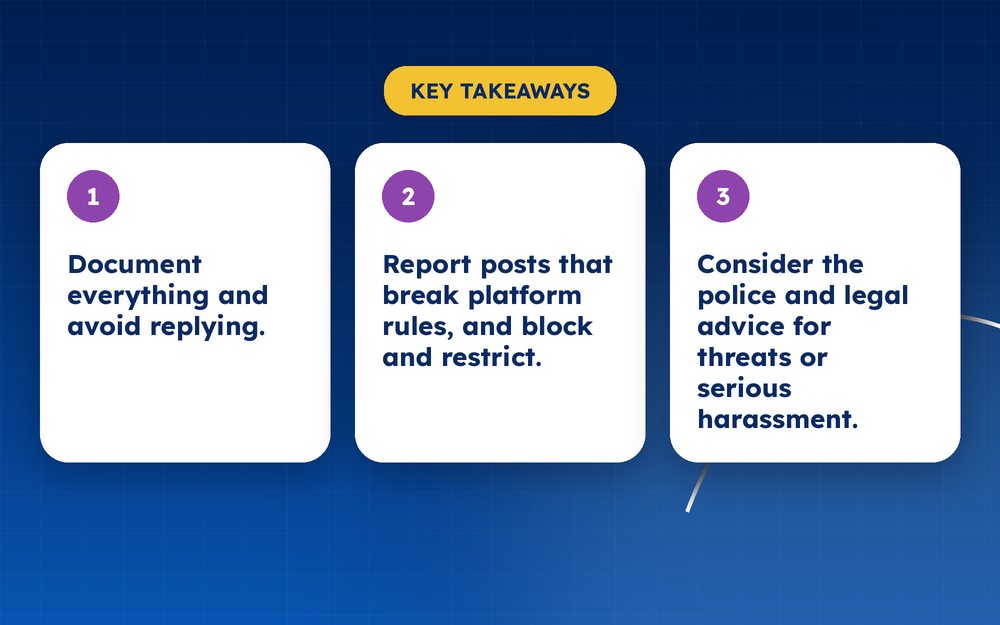
- Document everything and avoid replying.
- Report posts that break platform rules, and block and restrict.
- Consider the police and legal advice for threats or serious harassment.
What to do, step by step
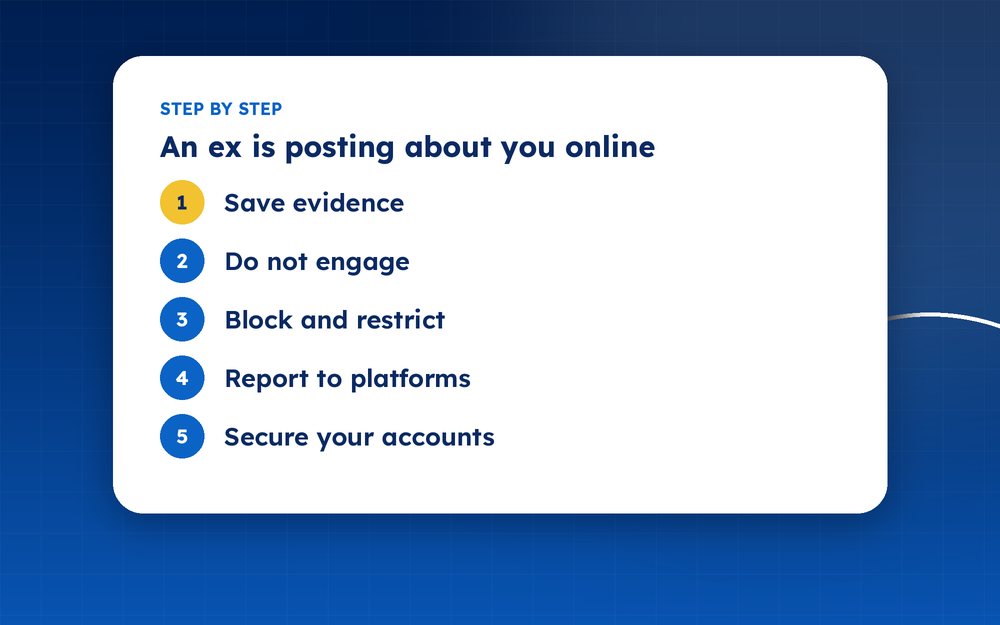
- Save evidenceCapture posts, dates and accounts. Capture each post in full, including the username, the date and the web address. Include comments and shares, because they show how far it spread. Store copies somewhere your ex cannot reach, such as a new email account or a private drive with a fresh password.
- Do not engageReplying can fuel the situation. Replying gives the posts more reach and can give your ex material to screenshot and use against you. If you feel you must respond, wait a day and have a trusted friend read it first. Often the better answer is none.
- Block and restrictLimit their access to your accounts and information. Blocking stops direct contact, but remember it may also hide new posts from you. Ask a friend to check occasionally, or use a monitoring service. Restrict who can see your own posts, tags and friends list.
- Report to platformsUse harassment, privacy and impersonation routes. Choose the category that matches the content: harassment, private information, intimate images, impersonation or false information. Quote the platform's own rule in a sentence if you can. Reports that match a clear rule are far more likely to succeed.
- Secure your accountsChange passwords and review shared devices. Change passwords, turn on two-step sign-in and check which devices and apps are logged in. Shared accounts, old streaming logins and cloud photo backups are common ways an ex keeps access.
- Tell trusted peopleMake sure someone knows what is happening. Tell at least one friend or family member what is happening so you are not carrying it alone. They can also help watch for new posts and act as a witness if things escalate.
- Consider police and legal adviceFor threats, stalking or false claims. Threats, repeated unwanted contact, sharing intimate images and false accusations that could harm your job are the main triggers. A short consultation can tell you whether protective orders or other remedies fit where you live.
When it crosses a line
Threats, stalking, sharing intimate images or repeated unwanted contact may be crimes. Report to the police and keep your log.
Private details and photos
If they post private information or intimate images, use the specific reporting routes for personal information and non-consensual imagery.
False statements
False claims of fact may be defamatory, but legal routes are slow and costly. Platform reports and evidence may achieve more quickly. Speak to a lawyer for serious cases.
Looking after yourself
This is draining. Rely on friends, support services and professionals, and let someone else help monitor if you can.
What a typical case looks like
After a breakup, someone starts posting vague accusations about her on social media, then shares a screenshot of a private message and tags her employer. She saves everything, stops replying and blocks the account. She reports the private message post as sharing private information, and reports the tagging as harassment. The platform removes the screenshot and warns the account. She also tells her manager early, with the evidence, so the employer hears her side first. Over the next weeks the posts slow down once nobody responds.
Her success did not come from one clever step. It came from evidence, quiet reports and a trusted person at work.
Protecting your job and reputation
If posts name your employer or tag colleagues, consider speaking to your manager or HR before others do, with your evidence ready. A short, calm explanation is usually received better than silence. You can also ask platforms to remove posts that identify your workplace as part of harassment.
Common mistakes to avoid
Do not post back. Do not delete evidence. Do not ignore threats. And do not try to handle it all alone.
How a specialist can help
A specialist team can find posts, report them and monitor so you do not have to keep looking. We are not a law firm and cannot give legal advice. Email us in confidence.
Frequently asked questions
Can I make my ex stop posting about me?
You cannot control another person directly, but reports can remove content and suspend accounts, and in serious cases courts can issue orders. Start with evidence and platform reports, and ask the police or a lawyer about orders if the behaviour continues.
Is it harassment if they only post once in a while?
Repeated, targeted posts that are meant to humiliate or intimidate you can count as harassment on platforms and under some laws. The pattern matters, so keep a dated log even if each post seems minor.
Should I go to the police?
If there are threats, stalking, intimate images or repeated unwanted contact, yes. Take your evidence and ask for a reference number. For lower-level posts, platform reports are often the quicker first step.
Will the platform remove posts about me?
If the post breaks a rule such as harassment, private information or intimate images, often yes. Posts that are only critical opinions are harder to remove, so frame your report around the specific rule broken.
What if they post false things about me?
False statements of fact can be defamatory, but legal action is slow and costly. Platform reports, search removal and building accurate content may help more quickly. A lawyer can explain whether a claim is realistic where you live.
Is this legal advice?
No. It is general information. For protective orders or compensation claims, speak to a qualified lawyer.
Need help with this?
Every situation is different. Email us the details in confidence and we will reply with an honest assessment of what can be done.
Contact us by email Harassment and doxxing responseThis guide is general information, not legal advice. DMCA Reputation is not a law firm.
Related guides
What to Do When a Group Chat or Forum Is Targeting You
What to do when a group chat or forum is targeting you: document the harassment, report to platforms and moderators, protect your privacy and seek support.
Read the guide · 5 min
What to Do If You Are Being Cyberstalked
What to do if you are being cyberstalked: stay safe, keep evidence, block and report, secure devices and accounts, and contact police and support services.
Read the guide · 4 min
What to Do When You Are Doxxed: A Step-by-Step Guide
What to do when you are doxxed: safety steps, removing personal information, reporting, securing accounts and getting support.
Read the guide · 4 min