
Clinics that offer high-cost, high-emotion treatments are common targets for fake reviews, from competitors, scammers and disgruntled third parties. A methodical response works better than a rushed one.
Fake reviews on these clinics often follow patterns: a sudden burst of negative reviews, accounts with little history, similar wording or claims that do not match your services. Competitors and extortionists sometimes use them for leverage.
The steps are to document patterns, report to each platform with specific policy references, and build genuine reviews. This guide is general information, not legal advice.
Clinics in these fields attract fake reviews from competitors, review brokers and people who want something in return. Patterns are your best evidence, because individual reviews can look genuine.
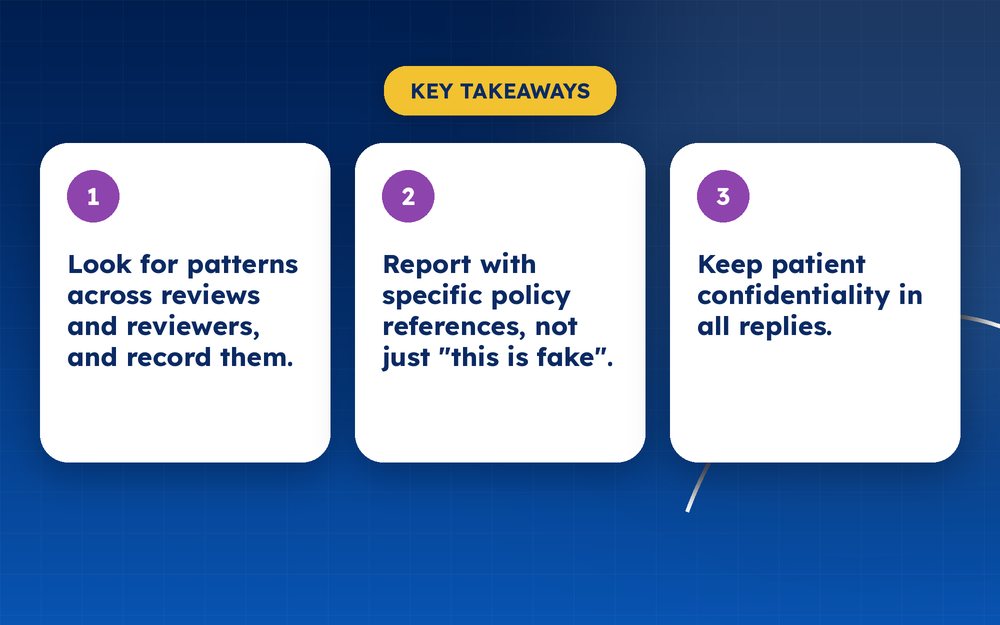
- Look for patterns across reviews and reviewers, and record them.
- Report with specific policy references, not just "this is fake".
- Keep patient confidentiality in all replies.
What to do, step by step
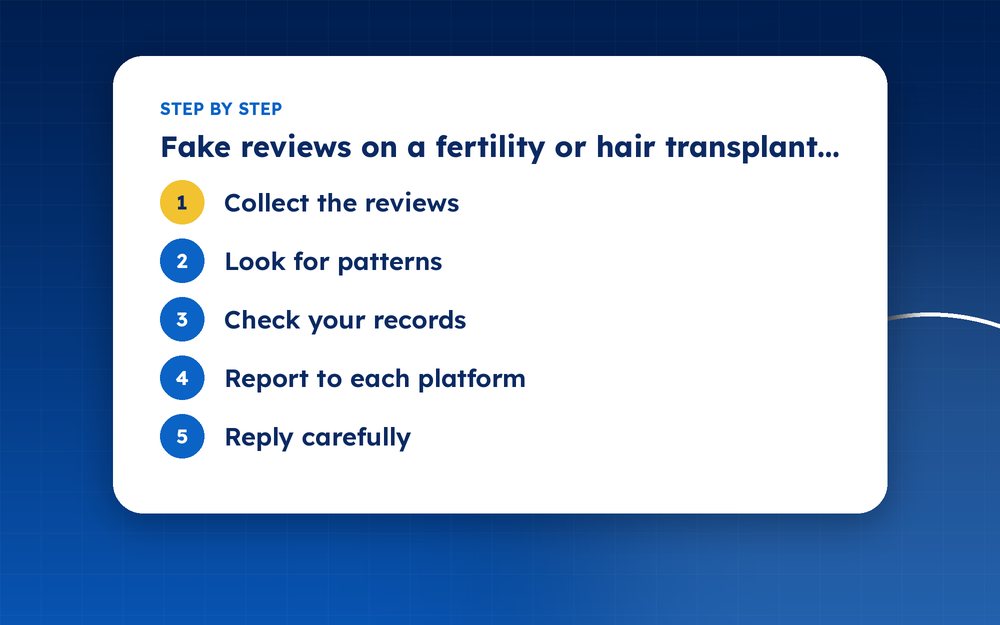
- Collect the reviewsScreenshot each review, the reviewer profile and the date. Save each review with the date, account name and link. Put them in a spreadsheet.
- Look for patternsNote similar wording, posting times, reviewer histories and links between accounts. Look for similar wording, accounts that review only one clinic, and bursts of reviews in a short time.
- Check your recordsSee whether the reviewers match any patients. Do this internally and do not share details publicly. Check whether the reviewers match any patients or enquiries. Do this internally and do not share patient details in reports.
- Report to each platformUse the relevant policy for fake or conflict-of-interest reviews, and attach your pattern evidence. Report each review on its platform, naming the policy it breaks and noting the pattern.
- Reply carefullyRespond politely and generally, without confirming treatment. Reply briefly and generally, without confirming patient status. Invite the person to contact you.
- Watch for extortionIf someone demands money to remove or avoid reviews, save the messages and consider contacting the police. If someone asks for payment to remove or avoid a review, keep the messages and do not pay. Report it.
- Strengthen real reviewsInvite genuine patients to share their experience on the platforms you use. Ask real patients for reviews, in line with platform and professional rules.
Why these clinics are targeted
High prices and strong emotions raise the stakes of reviews. Competitors may want to damage reputation, and scammers may try to extort clinics. Reviews can also come from people with unrealistic expectations or from unrelated disputes.
Handling extortion attempts
If a person threatens to post fake reviews unless you pay, do not pay. Save the messages, report to the platform and consider the police. Paying often leads to more demands.
Evidence that helps platforms
A clear summary of why you think a review is fake, such as reviews that describe services you do not offer, reviewers who never booked or accounts that appear to be linked, is more persuasive than a general complaint. Keep it factual.
Looking after your team
Fake reviews can demoralise staff. Share the plan, point out that you are handling it and focus on caring for patients.
What a typical case looks like
A hair clinic sees six one-star reviews in a week, all with the same phrases and from accounts with no other history. The team saves each one, notes the pattern and reports them under the fake engagement policy. The platform removes five. The clinic also receives a message demanding a fee to stop more reviews, which it saves and reports. It then invites recent patients to leave honest reviews.
The pattern and saved messages gave the platform solid grounds to act.
Common mistakes to avoid
Do not accuse reviewers publicly. Do not offer incentives for positive reviews. Do not reveal patient details. And do not let it distract from patient care.
How a specialist can help
A specialist team can analyse patterns, prepare reports for each platform and follow up. We cannot promise removal, but we will be honest about what is realistic. Email us in confidence.
Frequently asked questions
How can I tell if reviews are fake?
Look for similar wording, new accounts, bursts of reviews and accounts with no other history.
Can fake reviews be removed?
Often yes, if you show they break policy. Genuine negative reviews stay.
What if someone demands money?
Do not pay. Save the messages and report to the platform and the police if needed.
Can I name the person in a reply?
No. Keep replies general and protect privacy.
How do I rebuild my rating?
Collect genuine reviews and respond politely to feedback.
Is this legal advice?
No. It is general information, and laws differ by place. For claims or court action, speak to a qualified lawyer.
Need help with this?
Every situation is different. Email us the details in confidence and we will reply with an honest assessment of what can be done.
Contact us by email Google review removalThis guide is general information, not legal advice. DMCA Reputation is not a law firm.
Related guides
How to Handle Unfair Google Reviews for a Wedding or Event Business
How to handle unfair Google reviews for a wedding or event business: flag policy breaches, respond well, use contracts as evidence and build genuine reviews.
Read the guide · 3 min
How to Handle Unfair Reviews for a Golf or Country Club
How to handle unfair reviews for a golf or country club: member disputes, policy-breaking reviews, how to reply and how to protect member privacy. General information.
Read the guide · 3 min
How to Remove a Google Review: A Complete Guide for Business Owners
How to remove a Google review: what Google will remove, how to report it, how to appeal and what to do if it stays. A guide for business owners.
Read the guide · 6 min